Ahmet and Mahmut — An Anatolian Folk Tale
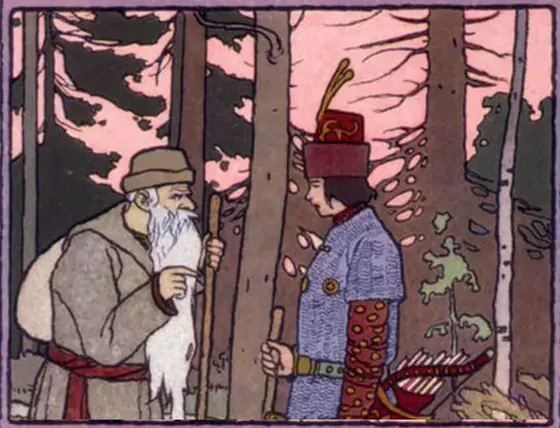
Photo: Mark Coenraads / Unsplash (Unsplash License)
ℹ️ This is an English translation of a Turkish oral folk tale. The regional dialect of the source text could not be fully preserved in translation. Read the Turkish original Ahmet ile Mahmut (Anadolu Masalı).
Ahmet and Mahmut is an Anatolian folk tale. It begins with the worry about an heir felt by a padishah who for a long time had no child.
ℹ️ This is an English translation of a Turkish oral folk tale. The regional dialect of the source text could not be fully preserved in translation. Read the Turkish original here: Ahmet ile Mahmut (Anadolu Masalı).
#### Ahmet and Mahmut
Once upon a time there was a padishah. For a year, for five years, for a good long time, the padishah had no child. As he had none, the padishah's wife said:
"My padishah, every trouble has its cure. Go and look for a cure for your trouble. You are a padishah."
The padishah gathered his vizier, his ministers, and his wise men.
"I have a great deal of wealth. When I die, where will this wealth stay? I have no child. He who gives the trouble gives its cure too. Let us set out and search."
They got their horses ready. Taking leave of their families, they set out on the road. After going for a while, they came to a place of meadow and grass. They let the horses loose in the meadow. They themselves went to a fountain. They performed their ablutions and stood for prayer.
At the end of his prayer the padishah gave the salutation to his right, and just as he was about to give it to his left, a bearded man came.
"Greetings, my padishah."
"Greetings, father dervish. You knew I was a padishah, so you must know what is in my heart."
"Of course I know. You have no child, and you have set out to look for a cure for your trouble."
"Since you know my trouble, you must know its cure."
"Of course, I know that too," said the dervish, and he took an apple from his pocket and cut it in two. The dervish said:
"You will eat half of this, and your wife will eat half. You will have two children. One will be yours, and one will be mine. Do you agree to this word?"
"I agree. May God give two sons, and may one be yours and one mine."
The dervish and the padishah came to an agreement. Then the dervish bade the padishah farewell and went away from there.
The padishah and those with him turned back. When they arrived, the padishah's wife asked:
"What did you do? Did you manage to find some cure for the trouble?"
The padishah told his wife what had happened. That night he and his wife ate the apple and went to bed.
In time the padishah had two sons. There were no words for the padishah's delight and happiness. These children grew in a day what others grow in a month, and reached school age. They had reached school age, but they had not yet been given names. The children said:
"Father, won't you give us our names?"
On the day he gave the apple to the padishah, the dervish had said: "Do not name the children before I come."
So they always called the children "come nameless, go nameless."
There was an old woman. This old woman was coming from the fountain with a jug in her hand. The children shot an arrow and pierced the jug in the old woman's hand. The old woman saw the water streaming out of the jug. She looked back and saw that it was the padishah's sons who had shot the arrow. In anger the old woman said:
"You are not good people anyway. If you were the sons of a good man you would have names. You are b...s,"1 she said. At this the boys came home. They said to their mother:
"Mother, we are b...s."
"Who told you that?"
"Such-and-such an old woman. If we were not b...s, you would have given us our names."
"No! You are the sons of a padishah."
"No, Mother, either you give us our names or we will kill you."
Well, evening came and the padishah came home.
"May the padishah live long! Today they called the children b...s because they have no names. Why are we not naming these children? Otherwise the children will kill me."
"My dear wife, how can we name them? Father dervish said, 'Do not name them until I come.'"
"Years have passed, and he does not come..."
"What shall we do then?"
"Give your feast, prepare the food, gather your men, and let us name the children."
Cauldrons were set up and meals were cooked. When all the work was finished, it came time to name the children. Those who were present went into the palace.
"What should their names be?" they asked.
One said "Ahmet," one said "Mehmet," one said "Muhammed." Each was saying something different. While they were trying to find names in this way, the dervish appeared. When the padishah saw the dervish, he recognized him, went to meet him, and seated him in the place of honor.
"Friends! These children are by the grace of father dervish, so father dervish will name them."
"Is it good news? Is there some good deed you are doing?"
"Father dervish, these children have come of age. The children have no names, and they call them b...s. They do not let them live in the village. We were about to name the children, and you came, so you will name them."
"The name of one of these children is Mahmut, and the name of the other is Ahmet."
"Sit down, father dervish."
"There is no sitting for me, standing is forbidden. I am going to take one of these children and go."
"Father, how can that be? Be our guest today."
"No! I give you a week. After a week I will come and take my child."
They could not decide whom to give.
"Ahmet is a bit simple, Mahmut is clever. Let us not give Mahmut. Let us give Ahmet," they thought.
The children's mother dyed both of their hands with henna and lined their eyes with kohl. A week passed. The time the dervish had given was up. The dervish came and gave his greeting:
"Come on, give me my child."
"Here, take Ahmet."
"No. Ahmet is yours, Mahmut is mine," he said, and took him and left.
After a good while they came to a place like Halilbaba,2 and when they arrived he said:
"Oh my son Mahmut!"
"Yes, Father."
"Do you see that palace below?"
"I see it, Father."
"That is our homeland. Now I am sleepy. Some weakness has come over me, and I will lie down. You wait a little, and when I wake up we will go."
He sat Mahmut down and lay on his lap. When he had fallen asleep, Mahmut grew weary, took his head off his lap and laid it on the ground. He picked a flower from the ground. There are many flowers on the mountain. Picking a flower from here and a flower from there, he wandered quite far away. Then a white-bearded man came from over there:
"Greetings, Mahmut."
"Greetings, Father. How did you know my name, Father?"
"What are you doing here, my son?"
"My father is asleep up there, and when he wakes up we will go home."
"Is he your father?"
"My father."
"He is a dev with a talisman."3
"Don't say so!"
"I have said it, and it is said."
"Now, that bag he carries with him, he will say to you, 'My son Mahmut, there is flour in this. Knead it, sweep the oven, and let us bake it and fill our bellies, we are hungry.' And you say, 'Father, however hard I try, I don't know how. You do it first and show me.' When he goes into the oven, shut the lid."
Having said these things, the old man vanished. The boy threw away the flowers in his hand. A pang came over him. He went to the dev, took the head from the ground and laid it on his lap, and a little later the dev woke up too.
"Look, my son Mahmut, how long I have slept like this."
"Yes, Father, you slept a little."
Anyway, they walked on from there and came to the palace. When they came to the palace, this man said:
"My son, we are hungry. There is flour in this bag. Sweep the oven. By the time the oven heats up, let the dough be kneaded."
"Father, I don't know these things. First show me. After that I will do it, and we will eat together."
"Very well, my son."
Then the dervish opened the oven with his talisman and went inside. When he went in, the boy shut the lid, and as soon as he shut it, flames roared up inside. The man, from inside:
"Don't, Mahmut, don't do it, Mahmut, I am burning, Mahmut," he was saying, but Mahmut, out of fear, could not open the lid. Some time passed and the boy said:
"Let me open this oven and have a look. What has happened, I wonder?"
He opened the lid of the oven, and when he opened it, a heap of ash lay there.
"Let me poke through this ash," said Mahmut.
He thrust a stick into the ash. A huge chain caught on the stick. He drew the chain out and saw that forty keys hung on the chain.
Mahmut quietly took the keys. He opened a door there, and there was something. He opened another, and there was something. Behind all the doors there was something. He opened one of the doors, and what should he see? Water as yellow as gold was flowing. He washed his hands and face with that water and rubbed it on his hair. Suddenly one side of his hair became like gold.
He opened another door. From there water like silver was flowing. There too he washed his hands and face and rubbed it on his hair. This time one side of his hair became gold and the other side silver.
He opened yet another door. In it were two sets of clothes. He took one of the sets. He opened yet another door, and there were two riding horses. He filled one compartment of the saddlebag on the horse with gold and the other with silver. He took the saddle. He fastened the saddle at seven places, put on his clothes, and mounted the horse. When he was about to set out, he left a note for his brother. He said:
"O my brother Ahmet, if you are alive and come looking for me, and come across this place, open this door: there is gold. Open this door: there is silver, there are clothes, there is a horse. If you want to follow me, follow the poyraz.4 Come."
Mahmut locked the door and set out. After going a little and going far, he saw a huge plane tree:
"Let me leave the horse here and lie down a little, and then I will go," he said.
He lay down at the foot of the plane tree, and just as he was about to fall asleep, a clamor broke out, but the sound was bringing the heavens down. He raised his head and looked, and what should he see? A huge dragon-serpent had wrapped itself around the plane tree and was going upward. In that tree there were the chicks of the Ankayızümrüt bird.5 Every year this dragon ate the chicks.
The boy drew his sword and killed the dragon. Meanwhile the mother heard the chicks' cries. To drop it on the enemy who was eating her chicks, the mother bird had tied a huge rock to her wing. After killing the dragon, the boy lay back down in the same place. The Ankayızümrüt bird took the boy for her enemy. Just as she was about to drop the rock, the chicks said:
"O Mother! That is not our enemy, he is our friend. Here is our enemy, on the ground."
The Ankayızümrüt bird looked at the ground and saw that a huge dragon was lying there. Then she dropped the rock from her wing to the ground. The boy woke up and found a huge bird before him. The bird said:
"O human! Ask of me what you will."
"You are a bird. What should I ask of you? I wish you health."
"Your wishing me health is of no use to you. Make your wish."
"What should I ask of you? I ask for a pair of chicks. One now, one in the future..."
"Alas, human! You have asked something very hard. For forty years I have hatched chicks, and the dragon ate them every year. My children kept dying. Rather than have them die, it is better that I give my chick to you."
He took the Ankayızümrüt chick. After a long time had passed, he came to a place. He saw that water was flowing there. When he saw the water he said:
"I am thirsty. Let me tie the horse here, and there is a spring of this water in the forest, I will drink," and he went toward the forest.
As he went he heard a groan, but the sound was bringing down earth and sky. He came up to look, and what should he see? A thorn6 had pierced the lion's paw. It had festered and was causing the lion great pain. To drain the pus, he came quietly up to the lion and pierced its paw with his sword. The lion said:
"O human! If you fell into my hands, I would pull twice and tear once."7
When the filth flowed out and the lion felt relief, he said:
"If you fell into my hands, I would give you your share of this world, and I would not meddle with your hereafter."
"I am here."
"Make your wish of me."
"What should I wish of you? You are a lion."
"Make your wish."
"What should I wish? I wish you health."
"No. Your wishing me health is of no use. Make your wish."
"I want a pair of cubs, one now, one in the future."
"Very well."
The lion roared. All the cubs came, and from among them he took one lion.
The man said to the lion cub (it had a tiger for an uncle):
"Go and tell your uncle. Let him give a pair of cubs. One now, one in the future."
The tiger roared. The tigers gathered and came.
"Uncle, you will give a pair of cubs. One now, one in the future."
"Very well, my child."
The lion, the tiger, and the Ankayızümrüt bird were going along together, the three of them. After they had gone a little, gone far, and gone a good while, they saw a city at the foot of a mountain burning fiercely.
"Let me stay in this city. This city is a dead city."
He left the lion, the tiger, the Ankayızümrüt bird, and the horse in a place like Halilbaba. He took only two hairs from the horse. The horse was a horse of talismans. When the horse's hairs were rubbed together, the horse would come. And they would come along with the horse. As he was going toward this city, a flock of sheep came before him. To the shepherd:
"Peace be upon you."
"And upon you peace."
"You will give me a yearling for meat."
"Father, how can I give it to you? Every one of them has an owner."
"The meat is yours, the hide is mine. Brother, how much does a yearling fetch here?"
"Fifty lira."
"Here is a hundred lira for you. Have you anything more to say?"
"No, what more could I say."
They slaughtered the sheep there.
"Let us exchange clothes too."
"All right, let us exchange."
They exchanged clothes, and he set out on the road. The shepherd had a provisions bag too, and he took that as well. When the heat settled on his brain, he would pull the hide over his head. Having pulled the hide over his head, he became Keloğlan.8 He continued on his way. Going and going, he came to a wall. This wall had no garden gate and no window. He wanted to get inside. The place of entry was not to be found by searching. He saw that water was flowing through a channel. He said:
"If I dive into this water, I can get through to the other side," he said. He jumped into the water. He passed through to the other side. His clothes were soaked. He took off the wet clothes and dried them as best he could. He wrapped the hide around his head again. He sat down at the edge of a pond. After he had stayed there a little, his clothes were thoroughly dry, and he began to wander about. As he wandered, the padishah's gardeners saw him:
"What are you doing wandering here? Are you human or jinn?" they said, and began to beat him. Then one of them said:
"Friends, why are you beating him? It would be best to take him to the head watchman."
They took him and brought him to the head watchman.
"Head watchman! This one got into the padishah's garden. We caught him at the edge of such-and-such a pond."
"What are you doing wandering here?"
"Brother! I was hungry and I came. I fell in here."
"Throw him outside."
"Don't. I will live again on the crumbs of your bread. Don't, I will groom your horse, I will look after your horse, I will serve you. Are you driving me away too?"
"Don't touch him, and let him eat the leftover food too."
They left Keloğlan there. When quite some time had passed, he began to become friendly with the head gardener.
The padishah had three daughters, and every day three bunches of roses were taken to these girls.
"Today let me take them, head gardener."
"Get away with you! She doesn't like what we take, and she will like yours?"
"Let me pick them, and let her not like them."
While they went off in that direction, he went off in this one. He took one of each rose. He pulled a hair from one side of his head and a hair from the other, and tied the roses with gold and silver. He put them on a tray and covered it. He took them to the head gardener.
"All right, Keloğlan, you take them today too, and you take the scolding."
Keloğlan took them and gave the roses to the maid. When the maid took them and gave them to the girls, the youngest girl took notice. She saw that the flowers that were tied with string every day were tied today with gold and silver. To the maids:
"Who brought these roses?"
"A Keloğlan brought them."
"Call him here."
"Very well."
They sat down together.
"Is there a goose ready? Fry the goose in fat and bring it," said the girl.
"Very well, my lady."
They fried the goose nicely in fat and brought it. They also put a handful of gold inside it and set it on a tray. They covered it and handed it to Keloğlan. As he carried it away, he scattered the gold along the road and tucked one piece into his bosom. He threw the goose away too. He came to the head gardener.
"What happened, Keloğlan? I hope you are well."
"They gave me something that says 'quack, quack.' And they gave me something yellow, like a broken bit of horseshoe nail. When I went through the city I threw them on the road. The children gathered them up, you should have seen!"
"What would a horseshoe nail be doing in the padishah's house? What was it like?"
"It was yellow. Wait, there was one here."
"What is this?"
"A horseshoe nail."
"May you go blind! What horseshoe nail, it is gold, this is gold."
"I don't know about gold like this. It was a handful, and I threw all of it away."
"Next time, whatever they give you, bring it back. All right?"
"All right."
The next day he again tied the roses and took them. Again they had a goose fried, filled it with gold, and gave it to him. He took it and went to the head gardener. The head gardener saw that it was gold. When he himself went, they never gave anything like this.
The next day Keloğlan again picked flowers and took them. The youngest girl called Keloğlan to her:
"Keloğlan, give my greeting to the head gardener and tell them to clean the pool. And let them set you over it as watchman. We will come at such-and-such an hour. And let them go off to the other side of the garden."
Keloğlan went and told the head gardener what the youngest girl had said. They washed and cleaned it at once. They left Keloğlan as watchman. They withdrew. Keloğlan began to wait for them. When the hour the girl had named came and went, thinking that surely they would not come, he took off the hide on his head and dived into the water. Meanwhile the girls arrived in a carriage. The youngest girl was alert.
"You stay here, and I will go and look at the pool and come back," she said.
The gleam of gold and silver showed on the trees. Bending low, she went from there and looked, and a young man like a lion, gold on one side and silver on the other, was swimming in the water. The girl liked the young man very much. She went back and did not even tell the others.
When the girl called to the boy, the boy came out of the water in a hurry. He pulled the hide over his head. Pressing his clothes to his chest, he ran away. From there the girl too returned to her sisters and went back.
"Sister, why were you late?"
"I went around to see whether anyone was there."
Anyway, they had come. They washed in a perfunctory way and left. Keloğlan again took flowers the next day. The girl said to Keloğlan:
"Give my greeting to the head gardener and tell him to send three watermelons. One should be rotten, with its inside eaten away. One should be half rotten and half sound. And one should split in the middle when the knife strikes it. In this way I want three watermelons. Tomorrow my father is giving a banquet. His viziers and wise men will come."
Anyway, the next day they gathered, and the head gardener brought three watermelons. When the meal had been eaten, they cut the watermelons. The first watermelon cut turned out to be rotten.
"What does this mean?" they said.
They cut the other one. Half of it was rotten and half was sound. The last was just ripe for eating. The padishah's alarm filled the room. One of those present stepped forward:
"May the padishah live long! The big watermelon you cut is your eldest daughter, and her time has passed. The second you cut is your middle daughter, and her time is about to pass. The third you cut is the youngest daughter, just ripe for eating. Marry them off, why do you wait?"
"Should I give them by force? How should I give them?"
"Give them by God's command. Now we will offer them to everyone, from seven to seventy. We will have a golden ball made for the girls. Whoever's head they drop it on, they will marry him."
They had the town crier announce:
"Whoever trusts his horse and his dog, there is a ceremony! Whomever the padishah's daughter likes, she will drop the golden ball on his head, and she will marry him..."
Everyone from seven to seventy passed before the palace. The eldest girl threw the golden ball to the son of the senior vizier, and the middle girl to the son of the junior vizier. The youngest girl, however, although everyone passed, threw the golden ball to no one. The padishah said:
"Is there anyone left?"
"My padishah, your gardeners are left."
The head gardener and Keloğlan came to the square as well. Keloğlan was at the very back. When the girl saw Keloğlan, she threw the golden ball to him. The head gardener objected:
"The girl threw the ball to me, but when Keloğlan stepped forward it touched him," he said.
They saw that this would not do:
"Pass one by one," they said.
Everyone, the head gardener included, passed one by one, and the girl threw the ball to no one. Keloğlan was left for last. The girl threw the golden ball to Keloğlan.
"My padishah, God's command is like this. You will have to give your daughter."
"Man, how can I give a daughter to the watchman of my gate? He has no place to come from and no place to go. Clean out the goose shed, at least let them sleep there."
They gave them a chest and one set of bedding. They lived there.
The padishah fell ill with this worry. They brought doctors, physicians, hajjis, and hodjas. They found no cure. They said:
"This can only be cured with lion's flesh and tiger's milk. There is no other cure for it."
When the doctors said this, the viziers' lads9 took gold, horses, soldiers, and weapons and set out. Keloğlan placed a plank between himself and the youngest girl and said:
"This is my talisman. If I turn toward you, may it strike my liver. If you turn toward me, may it strike your liver."
"What kind of miracle is this?"
"Be patient about this too. Go and tell your mother to give me a horse, and I will go."
He also gave the girl five kuruş. And he asked for a straw basket. The girl came back with the horse and the straw basket. As he went, the city children laughed and stoned him, saying, "The padishah's bald son-in-law is going hunting."
He held the basket over his head and protected himself. After leaving the city, he sent the horse off.10 He rubbed one hair against another. The gray horse came. With the Ankayızümrüt bird on it, a lion on one side and a tiger on the other, they bowed and kissed his knees. Straightening up, they kissed his eyes. He fastened the horse's saddle at seven places. He said:
"Let us pile up some wood here tonight."
The lion and the tiger cut wood. They piled up wood like a mountain. They set the wood alight.
After going a little and going far, the viziers' lads saw this fire.
"Let us go to that fire," they said.
When they arrived, they saw that a pride of lions was there and a pack of tigers was there. And a young man like a lion was sitting at their head. He had laid his whip on the ground. And an Ankayızümrüt bird as big as a dev was flying.
"Peace be upon you."
"And upon you peace."
"So what we were looking for was here, and we have worn holes in our feet from wandering."
"What happened? I hope you are well."
"Don't ask. Our padishah has a youngest daughter. She married a Keloğlan. Grieving over that, he fell ill with this sickness. They said he can be cured only with lion's flesh and tiger's milk."
"Nothing is easier than that."
"If only we had a brother-in-law like you."
"You do, but he is in the goose shed."
"Friend, give us the lion's flesh and the tiger's milk. We will give you whatever you want. Sell them to us."
"No, I want nothing. Let me stamp each of you with the shoe of this horse on your backsides,11 and that is all."
"That will not do, friend. We will give you your weight in money."
"No, it is my custom. I heat this shoe red and press it on your backsides, and then it is settled." The son of the senior vizier said:
"He will not give it for money, and we have come all this way, let us not go back empty-handed. Besides, who will know about this?"
Keloğlan threw the horseshoe into the fire. He stamped each of them with a brand. He gave them the lion's flesh and tiger's milk they wanted. They went away.
Meanwhile the padishah's enemies declared war and demanded land. The padishah said:
"I have no land to give to anyone. If he wants war, then I want war too," he said.
When the time of battle came, they joined in war. Keloğlan said to his wife:
"Go and tell your mother to give me a horse, and let me go to the war."
He gave her five kuruş too, and asked her to get a straw basket. They gave him a lame horse. As he passed through the city, the children stoned him. His basket was torn to pieces. After he left the city, he rubbed one hair against another. The lion, the tiger, the Ankayızümrüt bird and the gray horse came. He fastened the gray's saddle at seven places.
He arrived and saw that two armies were fighting. This boy came just as the padishah's soldiers were about to be defeated, and routed the enemy soldiers. The padishah went up on a hill and looked, and saw that a single brave man was saving the army that was about to be defeated. Evening came. The padishah went to him:
"Are you human or jinn?"
"I am neither human nor jinn. I am a servant of God, who created you and me. My father heard that you were at war with your enemies and sent me to help you. I am the son of the padishah of Iran."
"Come now, does a man stay here? Let us go home."
"I will not leave the soldiers here and go. I will fight the enemy, and after that I will come."
"Don't, my son, don't do it!"
"No, Father."
"God did not give me a son like you, and He did not give me a son-in-law like you either."
"You do have one, but he is in the goose shed."
The padishah understood nothing. He came home from there.
"Wife, the Shah of Iran heard that I was at war, and he sent his son to help me. The lion, the tiger, the Ankayızümrüt bird, the gray horse, and he himself went in from one side and scattered the unbelievers. But he camped there in a meadow-like place. I could not bring him home."
"Don't, my padishah, does a guest stay out there?"
"Man, what can I do, he did not come."
"What did you do, what did you talk about?"
"I said, 'God did not give me a son like you, and He did not give me a son-in-law like you either.' And he said to me, 'You do have one, but he is in the goose shed.'"
"My padishah, can that not be Keloğlan?"
"Go about your business, wife! Who is Keloğlan, and who is he? The man is gold on one side and silver on the other, and he has a horse like a bull calf. Are you putting him on a par with Keloğlan?"
The next day it was war again. Keloğlan, the lion, the tiger, the Ankayızümrüt bird and the gray horse came again. They scattered the enemy to the winds. He came to the padishah. The padishah said:
"Come on, we are going home."
At that moment he saw that the boy's wrist was bleeding. The padishah took out the handkerchief his youngest daughter had embroidered for him over seven years and bound Keloğlan's wound with it. From there the padishah came home. After a while the boy came too. After eating and drinking he went to bed. And his wife, sitting in a corner, saw that on the boy's arm was the handkerchief that she had embroidered for her father. The girl said:
"Mother, Mother!"
"What is it?"
"Mother, I embroidered a handkerchief for my father, you know. Ask what my father did with that handkerchief."
"All right, I will ask, my daughter."
The woman went to the padishah:
"My padishah, your daughter embroidered a handkerchief for you. What did you do with that handkerchief?"
"Ah, don't ask, wife! I tied that handkerchief on the arm of that hero."
"Good heavens!"
"What is it?"
"So that is our Keloğlan, then."
"Don't say so."
"I have said it, and it is said."
They went out at once and looked, and on Keloğlan's arm the handkerchief they had tied was there. Without waking Keloğlan, they brought him to the palace on a litter. When he got there and slept a little longer, he woke and looked, and he and his wife were in the palace. Keloğlan said:
"Wife, get up!"
"Why?"
"We have come to the palace. If your father sees, he will kill us."
From there the padishah knocked at the door and came in.
"No, my son, no. That place is yours," he said. They ate and drank and attained their hearts' desire. The boy said:
"My padishah! I am here on account of my thieves," he said.
"My son, who are your thieves?"
"One is the son of the senior vizier, and the other is the son of the junior vizier."
"My son, these two have never even gone abroad. How could they be thieves?"
"If you do not believe me, open up and look at their backs."
He opened and looked, and there were horseshoe brands.
"All right, my son, these are your slaves. Their sisters are your maids too. They will serve you."
They ate and drank. Again they held a wedding for forty days and forty nights.
After quite a long time had passed, the boy said:
"My padishah! I have a mother and a father too. Let me go and see them, and then I will come back."
He set out on the road. As he went, he came to a town. In that town a call came from God. A call came from God:
"O my son Mahmut! Look up," it said.
Mahmut, lost in thought, looked up and turned to stone up to his knees. Whereas if he had said "Lailaheillallah," he would have been saved. Again:
"O my son Mahmut! Look up," it said. The lion, the tiger, the Ankayızümrüt bird, the gray horse, and he himself all turned to stone. They stood frozen.
His brother Ahmet's mother and father had died. His throne had fallen apart. Ahmet, left with no one, said:
"Let me at least go and find my brother Mahmut."
He bought clothes at the place where Mahmut had bought clothes. He took the lion, the tiger, and the Ankayızümrüt bird. And a bearer of glad tidings went to the padishah:
"My padishah! Your son-in-law is coming," and they went out to meet him.
They ate and drank. Evening came, and they went to bed. When he went to the house, Ahmet stuck his sword in between Mahmut's wife and himself:
"You are my sister-in-law, and I am Ahmet. You are my brother's wife."
From there he got up and made himself a separate bed. In the morning the girl got up and said to her father:
"Father, we have struck the axe on a stone."12
"Why, my daughter?"
"This is not Mahmut, he is his brother Ahmet."
The padishah and those close to him begged Ahmet's pardon. Ahmet said:
"This is not the time for apologies. Give me leave, for I am going to look for my brother," he said. He set out on the road.
After he had gone quite a way, he came to the town from which the call had come.
"O my son Ahmet! Look up."
He looked, and it was written "Lailaheillallah Muhammederrasüllullah." He repeated it three times, and read it on the third. They came back to life. Brother with brother, lion with lion, tiger with tiger, Ankayızümrüt with Ankayızümrüt bird, and gray horse with gray horse were reunited.
After they were reunited, Mahmut said:
"My brother, what is there, what is not, in our homeland?"
"My brother, our mother and father have died. Our nest is ruined. Our crown and throne have fallen apart. We have nothing left there."
"If nothing is left there, there is something here."
On the way back, the blind devil turned Ahmet's head. He wanted to take all the wealth and property for himself.
"My brother, you go on, and I am coming," he said. When he had gone a little way ahead, he drew his sword, and just as he was about to strike, wisdom came to his heart:
"All you have is one brother. When you strike him too, what will become of you? Where will you be left?" he said.
There he lowered the sword. He went to Mahmut's side. When they drew near the city, a bearer of glad tidings went to the padishah: "Your son-in-law is coming with his brother." They ate and drank. Mahmut asked:
"What is to become of this brother of mine, my padishah?"
They got the senior vizier's daughter for him too. They held a wedding for forty days and forty nights. Eating and drinking, they attained their hearts' desire.
They attained their desire; may the same come to us all.
Translator’s Notes
1. The Turkish text masks the insulting word as "p..." (in "p... siniz", "p… mişiz", and so on). The context, in which the boys fear they are "without a name" because of their parentage, suggests "piç" (bastard), so it is rendered "b...s". [verification needed] ↩
2. "Halilbaba gibi bir yere" ("a place like Halilbaba") is kept as it stands. It appears to describe a remote or open place, but the Turkish text does not explain it. [verification needed] ↩
3. The dev is a giant or ogre-like being of Turkic and Persian folklore. The Turkish word is kept here and throughout. The "dervish" who has taken Mahmut is revealed here to be a dev. ↩
4. "Poyraz" is a cold northeasterly wind. ↩
5. "Ankayızümrüt" seems to be a form of Zümrüdüanka (the emerald Anka, a mythical bird like the phoenix or simurgh). The name is kept in its Turkish form. [verification needed] ↩
6. The Turkish word is "yarman". "Thorn" is the most probable meaning from the context (something that pierced the lion's paw and festered), but it is uncertain. [verification needed] ↩
7. The lion's two utterances are idiomatic ("iki çeksem, bir yırtsam"; "dünyalığını versem, ahretliğine karışmasam") and are translated literally. The sense seems to be a threat that turns into a pledge of reward. [verification needed] ↩
8. Keloğlan ("Bald Boy") is a stock hero of Turkish folk tales. Here Mahmut becomes "Keloğlan" by pulling the sheepskin over his head. ↩
9. The Turkish says "vezirlerin uşakları" (literally "the viziers' servants" or "lads"). Later the text calls them "bacanak" (brothers-in-law) and "the son of the senior vizier", so they are probably the viziers' sons who married the elder daughters. [verification needed] ↩
10. The Turkish verb is "güvermiş", which is unclear. "Sent off" or "let go" is the most probable sense from the context. [verification needed] ↩
11. The Turkish text masks the word ("g…ünüze", "g…lerine"). "Backsides" is inferred from the later line "look at their backs" ("arkalarına bak"). [verification needed] ↩
12. "Baltayı taşa vurmak" ("to strike the axe on a stone") is an idiom for making a blunder or running into an obstacle. ↩
Source
İbrahim Çetingöz (named at the end of the Turkish text; the text does not say whether he was the narrator or the collector).
Anadolu Türk Masallarından Derlemeler (Compilations from Anatolian Turkish Folk Tales), Prof. Dr. Necati Demir, Ötüken Neşriyat.


