Fate — An Uyghur Folk Tale
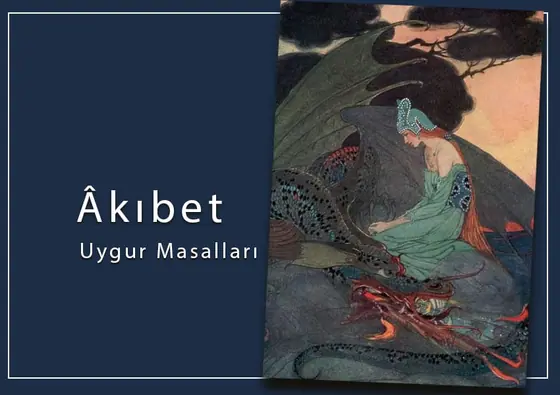
Photo: Matteo Di Iorio / Unsplash (Unsplash License)
ℹ️ This is an English translation of a Turkish oral folk tale. The regional dialect of the source text could not be fully preserved in translation. Read the Turkish original Âkıbet (Uygur Masalı).
Âkıbet (Fate) is an Uyghur folk tale; it tells of the mysterious events that befall Tursun, a handsome young man who hears his name called as he passes a graveyard in the moonlight.
ℹ️ This is an English translation of a Turkish oral folk tale. The regional dialect of the source text could not be fully preserved in translation. Read the Turkish original here: Âkıbet (Uygur Masalı).
#### FATE1
Long ago there was a handsome young man named Tursun. One night when the moonlight shone bright, this young man was walking along the road beside a graveyard when he suddenly heard a girl call to him: "Tursun, come this way!" Bewildered, the young man turned toward the sound of the voice and saw a path running straight through the camel thorn and reeds of the cemetery. His mind was confused; he thought, "Was there a path like this here before?" As he looked at the path, it was as if someone pushed him from behind and sent him into the cemetery. Tursun's heart pounded. Tursun wanted to turn back, but at that very moment he heard the voice of the girl from before say, "Do not be afraid, come!" Tursun went forward unwillingly and entered the tall tamarisks2 beside a ruined dome. And what should he see before him but a beautiful girl, in a pure white gown that suited her slender figure well, her braided hair reaching to the ground, her face fair as milk and red as a rose. Tursun was stirred at the sight of the girl; fire fell into his heart, the blood in his veins began to race wildly, and he could not take his eyes off her. The girl said to him:
"Oh brave one, do not be so agitated. Last year, on a moonlit night, while you were singing and reaping the grain, I saw you and took a liking to you. Today we have met. Take this book and go, enter seclusion3 for forty days and read it, and after that I will come to you," she said. As Tursun took the book from the girl's hand with reverence, he said, "I will do as you say." The girl said:
"But if you tell this secret to even one person during the forty days, at that moment you will bring suffering upon both me and yourself." Tursun promised that he would tell this secret to no one. "For now, farewell," said the girl.
The young man lifted his head from his bow of respect, and before him there was nothing but the thick tamarisks; when he turned back, he found himself at once on the broad road along the canal.
After Tursun came home, he bathed, cleansed himself, and began to read the book the girl had given him. His mother, seeing that her son had been reading for days without lifting his head, was glad and said to herself, "He is reading books that will earn him merit."
A month passed, and one day Tursun's elder brother, who lived nearby, came to visit. When the elder brother entered his brother's room, he saw the book.
"Dear brother, will you give me this book?" he said.
"Brother, could you please not ask for this book?" said Tursun.
"In that case let me have a look."
"Looking is not possible either!"
"Then at least tell me the name of the book."
"It is a book that has no name."
A quarrel broke out between the elder brother and the younger. The elder brother was a man of experience; he had taken three wives and divorced all three, and had then married a fourth; he was a scheming and literate man. As Tursun was closing the book, he had glanced through it in an instant, and he sensed that this was not a book belonging to the world of human beings but a book of another kind. The elder brother saw that the younger brother, who had always shown him the greatest respect, was now acting foolishly in this matter and did not even think it necessary to say the book's name, and his suspicion and curiosity about the book only grew.
Tursun, worried that his brother would be hurt, said to him:
"Brother, do not ask me for this book; I bought it with great difficulty."
"Where did you buy it?" his brother asked again.
"In the city."
"In the city?"
"Yes!"
"From whom did you buy it?"
"From a bookseller."
"Do not deceive me! This is not a book that would be sold at a market," said his brother, who did not believe him.
"Believe it or not," said Tursun, and he took the book and went out.
The elder brother went to the market and, in exchange for his goods, took two fat sheep and one black lamb4, filled his big saddlebag with odds and ends, and came back. After the greetings and pleasantries, he laid out all sorts of silk cloths on a cover, and their mother was astonished that her son was so generous. The elder son, on the verge of tears, pleaded:
"Merciful mother, if my brother gives me the book he is reading, I will give him the sheep and all that I have gathered."
"Oh my child, you need not have gone to such trouble! Would your brother begrudge you a book?" said their mother. After hearing what his brother and mother had said, Tursun said:
"Forgive me, dear mother, I cannot give this book to anyone."
The elder son wept in a choked voice. He wept until his beard was wet, and again he said to his mother:
"Dear mother, take the book from my brother, win my brother over to this, and I will give you everything I have."
The mother was very undecided. In the end the worldly goods the elder son wished to give blinded her:
"My child, is your brother not like a father to you? Do not do this; at least give him the book until next market day," she said, pressing Tursun.
Tursun, helpless and torn and not knowing what to do, said:
"Dear mother, do not force me to do this; I cannot give the book. I cannot give it only to my brother, and I cannot give it even to you."
The mother grew angry:
"Tursun, think carefully whether you will ever see a good day if you turn your face from your brother over an old book, and break my heart as well!" she said.
Tursun shed tears and sat down silently without answering.
"Oh Tursun, you have now become an ingrate who keeps secrets even from his own brother and even from his mother; may the milk I gave you be forbidden to you!" said his mother, who had grown very angry. Tursun had never imagined that he would hear such harsh words from his loving mother. He could not bear his mother's words; he went out, weeping, and was gone. Then, when he came back, he found that the book was no longer there. Tursun lost himself in cries and lamentation and fainted. When he came to, his mother said:
"Open your eyes, my child; do not grieve so much over one book. I will fatten the lamb of the sheep your brother brought and sell it, and I will marry you wherever you wish."
Without saying a word, Tursun went to his room; that same evening the dark news of his brother came. Tursun's elder brother had sent his wife and children to his father-in-law's house, and he had sat down alone in his room to read the book that had been spoken of. The book turned with a "whoosh" into a piece of fire and clung to him, and after burning Tursun's elder brother to ashes, it leapt to the house. In this way the book burned the elder brother himself, his house and home, and his goods and property to ashes. After that a storm arose, lifted the ashes toward the sky and carried them away, and left nothing behind.
After hearing this dark news, Tursun's mother fainted and fell, and Tursun's state began to be wretched.
The next day at noon, while he was alone in his room, a fairy maiden5 suddenly came into the house, very sorrowful and grief-stricken. Tears flowed from her eyes, and bright red sparks of fire came out of her mouth and nose. Tursun recognized the girl, sighed "Ah!" and said:
"Oh fairy maiden, I could not keep my word, forgive me!" The fairy maiden said:
"Oh pure-hearted brave one, it would not be right to blame you or to take this as your doing. The greed and scheming of human beings have become an unending misfortune for me as well. I had not thought these things would happen; I have caused your young life to be cut short, forgive me," and the fairy maiden could not hold herself back and wept. Tursun could not bear it either and began to weep, and he stretched out his hands toward the fairy maiden.
The fairy maiden said:
"Do not touch me; the fire within me would set you alight too, and then your mother would not even find your ashes. For I have now burned and wasted away completely; I am about to turn to ashes."
Footsteps were heard at the door, and the fairy maiden became invisible. Tursun's mother came in. Tursun said:
"Mother, I will die in a little while. I have words to say to you before I die; help me."
His mother, weeping bitterly, helped her son.
"Mother, the book from the other day was really a book of magic. If my late brother had not taken it away, today you would have become the mother-in-law of a fairy maiden. Both of us would have been happy. Now you are left alone. After I die, bury me at the foot of the tamarisks growing in the cemetery beside the road you know," he said, and with a sigh he gave up his soul.
After Tursun had been laid in his grave, a mullah stayed on at the graveside. When he came back from the side of the irrigation channel, where he had gone to perform his ablutions, he heard a girl's terrible cries and lamentations. The mullah looked around in astonishment: a piece of fire was circling and circling around Tursun's grave.
Days went by, weeks went by, and the mother who was left alone died a thousand deaths and revived a thousand times each day. People would always hear the cries from her house: "Oh my child, forgive me!" At last Tursun's mother, who could not bear the longing of separation from Tursun, died as well.
Translator’s Notes
1. The Turkish title and heading, "Âkıbet," means fate, outcome or final end (of a person or a matter). It is rendered here as "Fate." ↩
2. The source word is "ılgın" (also written "yılgın" in two places), which most probably means tamarisk (a shrub or tree growing in dry, sandy places). Translated as "tamarisk" throughout. [doğrulama gerekli] ↩
3. "İtikâf" is a period of devout seclusion for prayer and reading, traditionally in a mosque or a secluded place. ↩
4. The source sentence says he "exchanged" (değiştirmiş) two fat sheep and one black lamb, without saying what he gave in exchange. From what follows, he came back with sheep and other goods. The exact transaction is unclear. [doğrulama gerekli] ↩
5. A "peri" is a fairy-like supernatural being of Persian-influenced storytelling; "peri kızı" is rendered as "fairy maiden." ↩
Source
This is how greed and malice destroyed a peaceful and happy family.
(Taken from issue 1, 1983, of "Yéñi Qaştéşi.") Edited by Nur Kerem.
Uygur Halk Masalları (Uyghur Folk Tales), master's thesis by Arzu Ardoğan, advisor Prof. Dr. Şuayip Karakaş, Ankara, 2009.
Translated from the Turkish. The Turkish original is published in this archive as Âkıbet (Uygur Masalı).


