Lion's Milk Brought from Kafdağı — A Trabzon Folk Tale
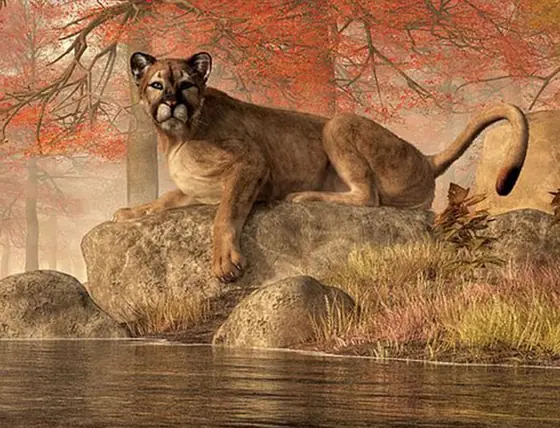
Photo: MARIOLA GROBELSKA / Unsplash (Unsplash License)
ℹ️ This is an English translation of a Turkish oral folk tale. The regional dialect of the source text could not be fully preserved in translation. Read the Turkish original Kafdağı'ndan Getirilen Aslan Sütü (Trabzon Masalı).
Lion's Milk Brought from Kafdağı is a folk tale collected in the dialect of the Trabzon region; it tells of the intertwined fates of a horse and a child born on the same night.
ℹ️ This is an English translation of a Turkish oral folk tale. The regional dialect of the source text could not be fully preserved in translation. Read the Turkish original here: Kafdağı'ndan Getirilen Aslan Sütü (Trabzon Masalı).
### Lion's Milk Brought from Kafdağı (Trabzon Folk Tale)
A man has a horse and he has a wife. The moment the horse became pregnant, the woman became pregnant that same evening. The two were born at the same time. The man's was a boy, and the horse's was a male too. Raising the child was hard, and so was raising the animal. When the child cried in his cradle, the foal cried in the stable, and cried out in the field. He came into the world just like the child. That is how it was. Little by little, when the boy reached twelve or thirteen years of age, his own mother died. When she died, his father married again. But this woman looked down on the boy in the house. The man loved his son very much.
"My son, what do you want from me?"
"Father, you will have a suit of clothes made for me, the like of which does not exist in the world. And a sword. And you will have the saddle fittings1 of my animal made of gold," he says.
The man has them made.
"Good, he will not ask for anything more."
The boy roams about night and day. When he comes home, his stepmother plots against him2, that is, she schemes against the boy's life. Just then the horse neighs in the field. The boy goes right over to it. He puts his ear to the horse. The horse says:
"Your mother3 is going to kill you, so keep your wits about you!"
One way and another, they get hold of a witch of an old woman4. They poison this boy's clothes. As soon as the boy comes inside:
"Come, my son, you have been sweating; change your clothes and go to bed."
Well, what happens? These clothes will poison him. They give him poisoned food; he does not eat. They give him water; he does not drink. The animal warns him of the dangers. The animal tells him everything.
"I will put the clothes on, all right, Mother, you go to your room."
She goes to her room, and the boy takes the clothes and burns them, and a blue flame rises from them. This time the horse says:
"Your time is up. They will kill you. They will throw you into the fire, they will burn you. Flee!"
"Well, what should I do to flee? What shall I do with you?" he says to the horse.
"All right, take one each of these hairs from my brows5. Don't lose them6 — if you lose them, I will not come, mind you! Put them somewhere safe. When you are in distress, rub them against each other, and I will come."
"All right."
Both of them go into a forest. In the forest the horse gives him one each of his brow hairs, and one goes off to one side, the other to the other side... The boy goes to a city, and there he wanders about hungry and thirsty. Every evening he and the horse come together. Meeting up like this, the boy goes to serve an agha7... And who is this agha? A padishah! He goes to serve him as a servant.
"Peace be upon you."
"And upon you peace."
He becomes the padishah's field watchman. The padishah has three viziers. But the padishah has a trouble. What is it? His eyes have gone blind. Behind Kafdağı8 there is a lion. Yes, a piece of wood has pierced its paw. There is milk in its teats. Whoever gets some of this milk and rubs it into the padishah's eyes will find the cure; his eyes will open. Is that so? That is so. One day his viziers went to get the milk. A man was wandering in the mountains, a sheep shepherd. They right away gave him a bottle of black milk. The men took it and went and gave it to the padishah, saying that it was like this and like that. The padishah took it and rubbed it into his eyes. His eyes got even more blind.
One day the viziers set out again.
One day the padishah's daughter said to the servant:
"If you were to set out too, perhaps it would bring some good for my father's eyes, and they would think of you as somebody worthwhile."
In truth, the girl has it in mind to marry him. But she cannot.
"Yes, let me go," he says.
He sets out, he goes. He goes straight to the far side of Kafdağı. He takes his arrow. He goes with that arrow. He goes even with his own horse. Right away he shoots an arrow at the wood. When the arrow is shot, the wood comes out of the lion's paw. When the wood comes out, the lion faints. When it faints, right away the servant boy goes and takes milk from its teats. He puts it in a bottle and comes back. As he comes back, the viziers are going too, to get the padishah's milk, for instance.
"Heey, is there anyone who buys lion's milk?" the servant boy shouts at them.
"I will buy it, friend. How much?"
"One bottle is two bottles, two bottles are three bottles9. That is how much money you will give."
"All right," he said.
So they went and rubbed it into his eyes, and it got even worse. The girl went to her father's side.
"Father, here, our boy, the, well, the shepherd, went and brought milk for you. Take it and rub it into your eyes, and let us see."
He took it and rubbed it into his eyes, and his eyes opened. One of the viziers said: "It is from my milk."
Another said:
"It is from my milk."
They paid no heed to it.
"Hey, call that Keloğlan10 here, let us see."
They called him, and he came, and the padishah said:
"My son, where did you get this milk?" he said.
"I sold that black milk. But I sold them black sheep's milk. I did not sell them lion's milk," he said.
"How did you get it?"
"I got it like this."
"No, we brought it."
"My padishah, all right, let them smear my milk on their backsides11. If mine burns and theirs does not, the matter will come out."
They rubbed it on for a little while, and it burned.
"How did you get this milk?"
"Ha, this is how I got this milk."
Then the padishah gave that girl to the servant. And three apples fell from the sky for me too. One rolls toward the tree12, one is İsmail Kalyoncu's13, and one is mine.
Translator’s Notes
1. The word "namuzlar" is unclear in the dialect text; it is rendered here as "saddle fittings" (decorative metal parts of the saddle) on the strength of the context. [verification needed] ↩
2. The dialect phrase "huğa puşluk guruyor" is unclear (possibly "ona kurnazlık/kötülük kuruyor"); the following clause in the text, "she schemes against the boy's life", is used to fix the meaning. [verification needed] ↩
3. The text says "annen" (your mother), although the speaker means the stepmother; the original wording is kept. ↩
4. "Cazı gocagarısı" is most probably a dialect form for a witch-like old woman (Turkish cadı kocakarısı). The meaning is uncertain. [verification needed] ↩
5. "Gaş" is taken to be "kaş" (eyebrow), so the horse gives hairs from its brows. This is the most probable meaning but uncertain. [verification needed] ↩
6. The dialect word "yutturma" is uncertain: it could be "yitirme" (do not lose) or literally "do not swallow". "Do not lose" is chosen because it fits the warning that follows. [verification needed] ↩
7. An agha (ağa) is a lord, landowner or master; here it turns out to be the padishah himself. ↩
8. Kafdağı (Mount Kaf) is the legendary mountain at the edge of the world in Turkish and Persian-influenced tradition. ↩
9. The price formula "bi şuşesi iki şuşe, iki şuşesi uç şuşe" is obscure; it is translated literally, and its exact meaning (how much the viziers must pay) is uncertain. [verification needed] ↩
10. Keloğlan ("the bald boy") is the best-known hero of Turkish folk tales. The text applies the name to the servant boy only here, at the end. ↩
11. The dialect word "kıçlarine" is rendered literally as "on their backsides". The sense of the test (the lion's milk burns the skin, the sheep's milk does not) is clear from the context. ↩
12. The words "ağaci yuvarlanır" are unclear. This is part of the closing formula about the three apples that fell from the sky, and the translation is tentative. [verification needed] ↩
13. The name appears as "İsmail Kalyoncu" in the tale text but as "İsmail Koyuncu" in the source details; the spelling is kept as in each place. [verification needed] ↩
Source
Narrator: İsmail Koyuncu.
Trabzon Masalları Üzerine Bir Araştırma (A Study on Trabzon Folk Tales). Compiled by Yılmaz Akgün. Advisor: Asst. Prof. Dr. Yılmaz Önay. Van, 2000.


