Şehrihan and Gülbahar — An Anatolian Folk Tale
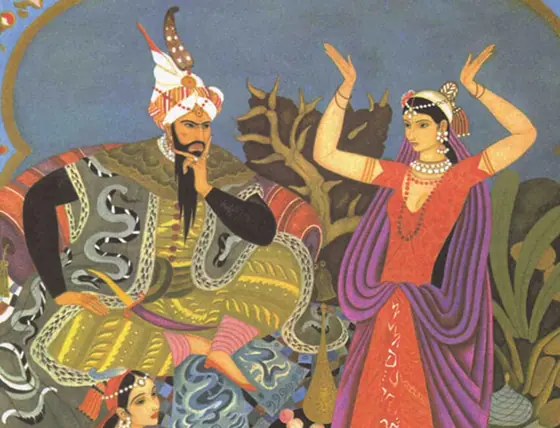
Photo: Yoksel Zok / Unsplash (Unsplash License)
ℹ️ This is an English translation of a Turkish oral folk tale. The regional dialect of the source text could not be fully preserved in translation. Read the Turkish original Şehrihan İle Gülbahar (Anadolu Masalı).
Şehrihan and Gülbahar is an Anatolian folk tale; it begins with the story of the padishah Şehrihan, who ruled in Horasan and had no children at all from his hundred concubines.
ℹ️ This is an English translation of a Turkish oral folk tale. The regional dialect of the source text could not be fully preserved in translation. Read the Turkish original here: Şehrihan İle Gülbahar (Anadolu Masalı).
#### ŞEHRİHAN AND GÜLBAHAR
Many, many years ago, in Horasan, the land of the Persians1, there lived a padishah named Şehrihan. This padishah had a very large palace, hundreds of men in his service, and in his harem a hundred concubines who had not been able to give him even a single girl child, and who were not fertile. Not having even one child grieved the padishah deeply.
One day the padishah was sitting and chatting in the audience hall with the notables of the land, his viziers and his emirs and soldiers, and the talk turned to his having no children and no one to whom he could hand over the throne left by his forefathers. Although those around him tried to console him, saying, "Oh, my padishah, may God give you a long life, wait a while, you are still young," it was of no use.
Just as this conversation was going on, one of the padishah's servants entered the hall. He stopped before the padishah, bowed down to the ground, greeted him, and said, "My padishah, outside there is a merchant, and with him a young captive girl, the most beautiful of the beautiful. The merchant wishes to see you and to give you a gift." The padishah replied, "Send them in, and let us find out what he wants."
Shortly afterward two people came in.
When the padishah saw the captive girl who had come in, he did not know what had happened to him. Or rather, when he saw her eyes looking out from beneath a veil... Those eyes, those eyes that looked out so dark, pierced the padishah's heart like a poisoned arrow. They were eyes that seemed able to heal a sick person with a single glance. The padishah ordered the merchant to remove the girl's veil. The merchant unfastened the veil, which was of green silk with blood-red stripes on it. In an instant the room seemed lit by the brightness of the sun. But this brightness was not from the sun; it was from the girl's beauty. Her hair, as black as her eyes, hung in braids down to her ankles. And she also had a very beautiful body. Her small movements were calm and soothing, like the movements of a rose on its branch, as if she were dancing.
The padishah was simply spellbound by the girl's beauty. His admiration was at its height. He turned to the merchant and asked, "I suppose you wish to sell your captive to me. What is it that you want, man?" The merchant replied, "My padishah, I bought the captive from her first owner for two purses of gold. Since I bought her, I have spent as much as three purses of gold on her. My reason for bringing her here is not to sell her to you, but to give her to you as a gift." This speech moved the padishah greatly. For everyone who came before him always wanted something from him. But the merchant was the first person who wanted to give him a gift. The padishah accepted the gift offered to him and gave the merchant enough clothing to last his whole life and a thousand purses of gold. The merchant kissed the padishah's hand and hem, thanked him, saying that he was abashed by his generosity, and left the palace.
The padishah, in the best of spirits, turned to his women servants and ordered, "Take this girl at once to the bathhouse. Wash her well until all the dust and dirt is gone. Then apply sweet perfumes and massage her with oils so that she can rid herself of her weariness," and he added, "give her one of the larger rooms that look out over the sea." All these orders were carried out within the same hour.
The young girl, washed and perfumed, was taken to a room whose large windows looked out over the boundless sea, and word was sent to the padishah. He went to the girl's room at once. When he entered and saw that out of respect the girl did not rise to her feet, he thought to himself, 'This girl must have been raised by ignorant people. She probably does not know what to do where.' In any case he was so moved by the beauty of her face, the pinkness of her skin and her lovely body that he did not even mind her lack of courtesy and let it go. "Thanks be to my Lord who created you," he said, and sat down beside the girl, embraced her tightly, held her to his breast and stroked her long hair. In the face of the padishah's actions the girl simply sat there, utterly unresponsive. She said not a single word, neither resisting nor seeming willing. It was as though she acted as if the padishah were not there.
Thinking she might be hungry, the padishah had a feast table prepared for the girl. Then he began to feed her with his own hand. Between mouthfuls he asked her questions without frightening her, wanting to learn who she was, where she came from and what her name was. But not a single word came out of the girl's mouth, and she did not even lift her head to look at the padishah. 'Perhaps she is mute. Oh, my Lord, You could not create such a beauty mute; have You deprived a servant You made with so much care of a voice?' the padishah thought to himself. Then he turned to the women servants in the room and asked, "Did she speak with you at all while you were preparing her? Did she say even a single word?" His intention was to find out whether she was mute. One of the servants answered, "Our dear Padishah, we never heard her speak while we were washing her, perfuming her and dressing her in fine clothes. She expressed no opinion as to whether things were good or not. She did not even move her lips. We could not tell whether she did not speak because she looked down on us, or because she did not know our language, or because she was mute, and we stopped trying to talk to her."
Hearing this, the padishah thought, 'Her silence may be from sorrow; if we entertain her, perhaps she will forget her sorrow and her tongue will be loosened.' Thereupon word was sent to every corner of the land and announcements were made: "All jesters and jugglers who are confident of themselves, and everyone who thinks he can do something to amuse his audience, is invited. These people will be rewarded by our Padishah."
Shortly afterward a crowd kilometers long had gathered in front of the palace. Everyone longed to enter, to give a performance in the palace and to be rewarded for it by the padishah. Those in line were admitted one by one and brought before the padishah and the girl, who sat quiet and silent. At the performances the padishah and everyone around him, except the girl, were doubled over with laughter. One, three, five, everyone laughed; but the girl did not even raise her head to look at what was going on. The padishah grew weary, and suddenly shouted, "Enough!" "That is enough. Let everyone disperse. Let the performers be rewarded." The crowd that filled the hall dispersed in an instant. Silence settled over the place.
"Why are you doing this, beautiful girl? I do not even know your name yet," he said, but the padishah received no reply. He leaned his head on the girl's shoulder; she smelled so sweet that he became a prisoner of that scent. He thought that he could not live without smelling it. Indeed, even if he wanted to leave the girl's side, he could not. His chest tightened and his heart pounded violently. He did not understand what kind of thing this was, but for a whole year, without leaving the girl's side, he devoted himself to her as if he were her captive. He took an interest in nothing but her. In spite of everything, not a single word, neither agreeing nor objecting, came out of the girl's mouth.
One day, as the padishah sat beside the girl, he laid his head on the shoulder of his beautiful captive as he always did. "Oh, my beauty of beauties. Look how much time has passed, and still you are silent. Do you not see what I am sacrificing for you? My concubines in the harem have not seen me for a year, and the affairs of the land have been left to themselves. No, I am not complaining about it, but you too must understand me. Do you not see how mad I am for you? You are my fate, my fortune. What I ask of you is this: if you are mute, tell me so by signs. Tell me, so that I need not long for the day when you will speak. And if you are not, and you are silent out of sorrow, may God show me how to take your sorrow away. And if neither is the case, may He grant me a son by you, so that I do not leave the throne left to me by my forefathers ownerless and abandoned. If there is even a little pity in you for me, speak, speak to me: will you give me a child? I beg you, speak, for God's sake," he said.
At these entreaties of the padishah, for the first time a faint smile appeared on the lips of the girl, who since her arrival had sat utterly unresponsive to everything, her hands on her knees and her head bowed. Just a faint smile... The padishah could not believe his eyes when he saw it. To him it was a sign from God. With that smile it was as though the room filled with light. The padishah's eyes burned as if he had come out of darkness into the light. For him this was the greatest of signs. He was now so sure the girl would speak that he threw himself at her feet. "My God, You are great, You are great," he kept saying. With his mouth wide open, he waited there on the floor to hear a single word from the girl's mouth. His eyes were on her lips... And suddenly the girl lifted her head and said: "O our Padishah, O our lord. O bravest of the brave, you must know that God has heard your prayers. You must also know that I am carrying your baby in my womb. And the time of my delivery is near. You ask for a son; but be sure that I do not know, and cannot know, whether the little baby in my womb is a girl or a boy. All I know is that I will bear your child. Were it not so, I would neither speak with you nor look into your eyes."
The padishah, who had given up hope that the girl would speak at all, was so overjoyed when he heard the words from her mouth that he began to cry out with joy on the floor. Then he straightened up, but could not say a single word. He swallowed, he coughed. He stood up; it was as though he did not touch the ground. He went close to the girl and began to kiss her hands and her face. "My God," he said, "thanks be to You, that You have granted me this happiness, that You have heard me, thanks be to You."
Having taken the girl's leave, he sat on his throne in great happiness. He called his vizier to his side at once and told him everything. "I am so happy, my vizier, I cannot believe I have lived to see these days," he said, expressing his joy. Now everyone shared the padishah's happiness. Excitement and joy enveloped the whole land. "Distribute gold to the widows and to everyone in need," ordered the padishah, "let this be a thank-you to my great God."
Returning to the girl's room in no time, the padishah kissed and caressed her and said, "My beloved, my sultana. I will ask you something; please answer me honestly," and went on, "why did not a single word come from your mouth for so long? What made you break your silence?" The girl replied, "How could I not be silent, my padishah? Far from my family and my homeland, in captivity, how could I speak?" The padishah said, "Ah, my beauty of beauties, my sultana. I understand your sorrow at being separated from your family and your land. But you are mistaken about being a captive. I, the ruler of a great land, fall at your feet; the real captive here is I, your captive. Never say such a thing again. And do not grieve over your family either; if you wish, I can send my men and have them brought here."
At these words the girl said, "That is very difficult, my Padishah," and went on, "my name is Gülbahar. I was born in an undersea land. My father was the padishah of that land. After he died, problems began to arise between me and my mother, who became sultana, and my brother, who became prince. We could not settle these problems at all. So I decided to leave that place, to come ashore and to marry the first man I met. One night, at an hour when the moon had sunk deep into the water, I left the palace. I came ashore on the edge of an island and fell asleep, both from the gently blowing wind and from weariness. I woke because someone was shaking me. And what should I see but that a net had been thrown over me! The man who caught me threw me on his back and carried me to his house. I begged him to let me go, I screamed. He wanted to examine me; I kicked with all my strength and bit his hand. When he saw that he could not handle me, he said, 'Am I going to bother with you?' and took me to the market to sell me, and put me up for auction. Then the merchant who brought me to you bought me. He was a good man, he did nothing bad to me and brought me to you. That is my story. Of course, it does not end here. Then you, most insistently, never left my side. You kissed me, you loved me. You pressed me very hard to speak. I was so tired of this situation that I had decided to escape from here and return to my palace under the sea. But as time went by, I saw that your behavior toward me never changed, that you were always loving, warm and kind, and I was moved by this. I decided that you truly loved me. I know that you have not entered your harem even once since I came. You are also neglecting your throne because of me. In short, when I learned that I was pregnant as well, I gave up on going home entirely. Besides, if my mother and my brother learn that I became pregnant by a man who lives on the earth, they will die of grief. Even if I say that the padishah of Horasan is the most humane and the most exalted of men, they will not believe me, my padishah," she concluded. Then deep sorrow came over her face. The padishah asked the girl, "But why is this sorrow on your face?" The girl said, "There is only one problem, and it concerns my delivery, which will happen soon... We cannot give birth as easily as people who live on the earth. No doctor or midwife here can help me. My mother must be at my side, but how, I thought for a moment." The padishah said, "But since your delivery is so near, how am I to get word to your family, and how and where shall I find them?" The girl said, "Easy. Go into the next room and look once at me and once out of the window at the sea. That will be enough." The padishah, very curious about what would happen, went into the next room at once. And he did as the girl said.
At the same time, Gülbahar placed in an incense burner a dried herb she had kept hidden in her bosom, one that grows in the places where she lived, and burned it. Smoke rose from the herb, and strange words came from the girl's mouth. A kind of magic... At that moment the sea surged, then swelled and split in two. From within it came a tall young man, so handsome that he would make the gods themselves jealous. This was Gülbahar's brother, Prince Melik. Behind him came an old woman with snow-white hair, who in spite of her age was vigorous and lively. This was her mother, Saliha Sultan. And last, five girls who looked just like Gülbahar, as if all cast from the same mold; they were her nieces. They walked from the shore toward the palace to the place beneath Gülbahar's room and, through the open window, leaped inside in a single bound. Her brother, her mother and her nieces threw themselves on Gülbahar's neck and began to kiss her, all speaking at once: "Why did you do this to us? For so many years we have lived in anxiety, not knowing where you were. We did nothing but think of you, weep and groan." Gülbahar embraced her mother, her brother and her nieces one by one, and apologized for having grieved them so. Then she sat down with them and told them everything that had happened to her. Her mother said, "My daughter, when we first saw you in this palace we thought you were unhappy and being held by force. We were ready to take you away. But you have told us how happy you are. From now on there is nothing for us to do but be happy with you. And what else could we ask for?"
The padishah heard the whole conversation between Gülbahar and her family from the next room, and his heart was at ease. He wanted to go to them to get to know them and introduce himself. He entered the room, and all were very pleased with this meeting. Then they sat down at the table prepared in honor of the guests, ate with pleasure and talked together.
Until the birth, festivities never ceased in the palace. Everyone was very happy. When the baby was born, the happiness doubled. Especially the padishah, who took in his arms a beautiful boy, plump and moon-faced, said, "Is this my son now, really? Let festivities begin throughout the land," and wanted to share his happiness and joy with everyone. They named the child Gülenay.
Gülbahar's brother took the baby in his arms, kissed him and smelled him, but then suddenly, with the baby, he jumped from the window, plunged into the sea with a splash and disappeared from sight. The padishah, left staring after him, did not know what to do; he was beating his head with his fists and saying, "My poor child, my poor son." But Gülbahar, without losing her calm, took her husband's arm and tried to soothe the padishah, saying, "There is nothing to be afraid of. That child carries my blood as much as yours, so he can breathe easily in the water. He can even live there. Besides, his uncle will bring him back safe and sound in a moment, be sure of it." At that very moment the sea surged again, and Prince Melik came out of the water with the baby in his arms, walked toward the palace and, in a single bound, came in through the window. Baby Gülenay, in his uncle's arms, was as calm and happy as in his mother's arms, and was smiling.
The padishah drew a deep breath of relief. Prince Melik explained: "I can guess that you were afraid. But this was a rite I had to perform. By doing this I helped him develop in his body, for the whole of his life, a shield of protection against drowning, swallowing water, in short against every danger that can come from water. Now there is no danger from water for my nephew." The padishah expressed his satisfaction at this.
Prince Melik gave the baby into his sister's arms and took a purse from his belt. He opened its mouth and poured its contents out on the carpet. Precious stones of a size the padishah had never seen and could never have seen, diamonds, pearls, emeralds and rubies, were scattered over the precious carpet. And at that moment such a light, such a brilliance filled the room that it is beyond description. Prince Melik turned to the padishah and said, "When we first came our hands were empty. Because we did not know what we would meet before coming here, I had not brought anything. But I have seen you, I have come to know you, and I have witnessed how happy my sister is. These gifts are little beside your glory; forgive me." The padishah replied, "Your gift has both surprised me greatly and made me very happy. I do not know how to thank you." Then they embraced each other tightly.
Gülbahar's family, Saliha Sultan and the others, asked the padishah for leave to return home. After the pleasant time they had spent, the guests were seen off from the seashore with a great feast of love. Because the padishah was afraid of water he could not go very near the shore, and could only wave from afar behind them.
Little Gülenay nursed until the age of four on his mother's milk, which carried all the strength and beauty of the sea. The child was so beautifully and healthily nourished that as he grew all this began to be visible. By the time he was fifteen, he was very different from his peers in every respect, both in body and in physique. His sturdy frame, tall stature and dark eyes enchanted all who saw him, while his speech and his talent in every field enchanted them in another way.
The padishah, who was deeply attached to his son, decided that the time had come to leave the throne to him. He gathered his vizier and the notables of the land and announced his decision. They showed their respect and approved the decision the padishah had made. A great ceremony was held. Gülenay was made to swear an oath of allegiance, and the padishah's crown was placed on his head. His father Şehrihan, to show that all authority now belonged to his son, bowed before his son and kissed first the ground, then the hem of the robe he wore, and, after rising, his hands, and then went and sat in his place at the right of the throne.
Days chased days and months chased years. From the time he ascended the throne Gülenay became a hardworking and trustworthy ruler and made many innovations. His father always supported him. When Gülenay was sixteen, his father died. Mother and son lived through this deep grief without letting anyone see it, and wept for a whole month without ceasing.
His family did not leave Gülbahar and Gülenay alone in those times but were always at their side. The young padishah, after his father's death, could not attend meetings or deal with the affairs of the land for a long time. Only after he had pulled himself together a little did he mount his throne and begin to attend to the work he had put aside. This went on for a year.
One day Prince Melik came to the palace to see his sister and his nephew. After inquiring after each other's health, the conversation turned to Gülenay. Gülenay was sitting on a couch half lying down. So as not to take part in the conversation between his uncle and his mother and to let the two siblings talk freely, he closed his eyes where he sat and pretended to be asleep. His uncle, Prince Melik, said, "My dear sister, you know that your son will very soon be seventeen. That age is now his marrying age. Since he is everyone's favorite, it is almost inevitable that he will meet with some very unpleasant things. To avoid that, I thought it fitting to marry him to one of the mermaids," and he began to list the girls he thought suitable. Gülbahar objected to everyone her brother named, saying, "No, I do not want that one... no, I do not want this one..." Prince Melik said, "Since you have objected to so many of those I named and found excuses, I wonder what excuse you will invent for the one I am about to name." Then he bent to his sister's ear and quietly said the name of the one he had in mind. "The ruler's daughter, the undersea sultana İnci?..." Gülbahar cried out loud. "Shhh, quietly. Do not wake Gülenay," Prince Melik warned his sister. Then, in a low voice again, he began to speak of the sultana's beauty. "Tall as a cypress, graceful of figure, bright as the sun... but her father is such a difficult man that he has had everyone who has asked for his daughter beaten and thrown out of his palace. It is hard to face him." "There," said Gülbahar, "a beautiful girl worthy of my son." Having witnessed this conversation, Gülenay felt great peace and excitement in his soul, and in his chest a heart beating fast.
Gülenay, who could not sleep all night, decided to get up early the next day and take a walk. He went to his uncle and asked him to accompany him. As uncle and nephew walked along the beach, Gülenay suddenly stopped, turned to his uncle and asked, "Dear uncle. Can you hear how my heart beats?" and went on, "My heart has fallen for a beauty; I have been dazed without seeing her. I know that the sultana of my heart is as white as a pearl and as delicate as coral." Prince Melik understood at once that his nephew had overheard the conversation he had had with his sister the day before. "My dear nephew. Did you secretly listen to the conversation I had with your mother, eh?" he asked. When he received the answer, "Yes, uncle, you described that girl to my mother so beautifully that I want to marry her at once," he said thoughtfully, "Fine, good, all well and good, but you do not know what a difficult man her father the shah is. And of course you do not know that he has had many who loved İnci and wished to marry her kicked and beaten out of his palace. How we are to tell him, how to explain this to him, I do not know either." "Please, uncle, let us go at once and ask for İnci. If we try to consult my mother now, she will drag the matter out, so let us get there quickly and clear up the situation," said his nephew. Unable to resist his nephew's insistence, Prince Melik took from his finger a ring with many names written inside it and held it out to his nephew, saying to him, "Put this on. This ring protects you from the dangers you may meet under the sea and gives you all the abilities I have. Come, put it on and jump into the water after me, as I jump," and dived into the water and disappeared from sight, and after him Gülenay.
Prince Melik first wished to show his nephew the place where he lived. It was a great palace with a front built of shimmering stones. Gülenay followed his uncle into the palace and went to his old grandmother. Saliha Sultan, suddenly seeing her grandson before her, was overjoyed. "How are you, sun of my palace, my one and only grandson? And how is your mother?" she asked. Gülenay said, "My mother and I are very well. My mother sends you her love and greetings." In fact this was a lie. For his mother did not know that he had gone beneath the sea. When his cousins learned that Gülenay was in the palace, they too soon filled the palace. They ate and drank. They asked Gülenay to tell them about the world above. And he told them about his own world with pleasure. Then the cousins left the hall with Gülenay in order to show him the unrivaled beauty of the palace. Taking this as an opportunity, Prince Melik quickly told his mother of the conversation between himself and Gülbahar and of the pangs of love his nephew, who had witnessed that conversation, had fallen into. And he said, "He has come here to ask for the girl from her father. Whatever I did, whatever I said, I could not dissuade him." "Ah, my son, do you not know the cruel Kokoloz, the ruler of one of the sea lands? How insolent, how foolish he is?... Do you not know how he has treated, up to this day, the young princes who came before him to ask for his daughter, whom he guards almost like the apple of his eye? When we heard of it, how we pitied those young princes. Are we now to fall into a pitiable state ourselves? How could you speak of İnci in a room where your nephew was, knowing that he could hear you?..." said Saliha Sultan. Prince Melik said, "Yes, you are right in whatever you say, dear mother; but there is nothing to be done now, what is done is done. And why not, after all? Gülenay belongs to a family as well known and as noble as İnci Sultan's family. Moreover he is the powerful ruler of a land on earth. If this Kokoloz is foolish and gives me a contrary answer, believe me, I will shame him. If he tells me they are rich, I shall say Gülenay is richer; if he speaks of İnci's beauty, I shall say Gülenay is more handsome; if he says 'my daughter is of noble birth,' I shall say Gülenay is nobler, and I shall not leave his presence until I can find no negative answer for him to give me, and I shall wait until he consents to their marriage. Since I am the cause of this business, whatever the outcome, I am with Gülenay to the end." Saliha Sultan said, "Very well, you go and do what you can, I will not interfere; but my heart will not consent to Gülenay going with you and being exposed to the bad words of that ill-mannered and impolite ruler. Go on, set out, and come back with good news," and she saw off her son, who set out with two sacks of precious stones to be given to the ruler.
Prince Melik, with two servants, mounted a thoroughbred sea-horse and set out for the ruler's palace. When he reached Kokoloz's palace, he told the guard waiting at the gate that he had come to speak with the ruler, was invited in, and was brought before the ruler. When he was brought before the ruler he bowed before him, then ordered his men to pour the jewels they had brought before the throne. The jewels were of incredible beauty. Kokoloz looked at these jewels and said, "Tell me, in return for these, what do you want from me that is at least as valuable as they are? Speak, so that we may understand whether I can do for you what you ask," he said. Melik bowed once more before the ruler and said, "O ruler of rulers, had I thought it impossible, I would not have committed the folly of appearing in your presence. I know that to ask for the impossible is impudence and not a behavior the other side would receive kindly. I have been sent as an envoy to ask of you something that can be done. O most exalted ruler, my nephew, Padishah Gülenay, the son of Padishah Şehrihan and my sister Gülbahar, wishes to marry your daughter, your only pearl, your jewel, İnci, who could never be given a price," he said. Kokoloz, the ruler of the sea land, on hearing what was said, first began to laugh and then to roar with laughter. He laughed so much that he fell backwards from the seat on which he was sitting onto the floor. Lying where he had fallen, he drummed his feet on the floor, working himself up even more. Then he suddenly calmed down, got up and sat on his throne. "I know you and your family very well, Melik, but I did not know you were this foolish. You are very foolish, and so is the family that sent you here to ask this of me. How dare you come before me with such a request, what audacity is this?..." he roared. Melik said, "My ruler, my nephew Gülenay is a very handsome man. A caftan cut to the measure of my sultana İnci. And he comes from a family at least as noble as hers. And he is a padishah. If you do not give your daughter to my nephew, to whom will you give her? Or do you not want her to marry? Will your daughter become an old maid?" At this the ruler sprang up in anger, so violently that his throne toppled over. "You are all wretched, you, your sister and your nephew, you are wretched creatures. How dare you, with your two pennies' worth of wit, come before me like a fool..." he shouted, and turning to his men he said, "Seize this man at once, break his bones and lock him up somewhere," foaming at the mouth.
The guards leaped on Melik to seize him firmly and throw him to the ground, but Melik was so agile that in one move he slipped from among them and darted outside. And what should he see but about a thousand mounted soldiers of his own palace waiting there, armed from head to foot and clad in steel vests. Melik understood at once that the soldiers had been sent there by his mother Saliha Sultan, to protect him should anything happen to him. "Let us go in and seize that arrogant shah," he shouted to his soldiers. Then, with Melik in front, about a thousand soldiers dismounted from their horses, girded on their swords, and made their way behind him to the hall where the throne stood. When the ruler saw Prince Melik enter the hall and so many soldiers behind him, he shouted to his own soldiers: "Seize that charlatan and the scoundrels behind him." Such a clash began in the hall... The sound of swords resounded everywhere. Wounded soldiers begged for help. "Attack, attack," the ruler kept shouting; but his soldiers could do nothing against Melik's soldiers and fell one by one. Melik stood before the throne and, at a moment the ruler did not expect, put his sword to his neck. "Here you are, you conceited, insolent creature. I would like to destroy you here, but..." he said. The soldiers took Melik's hand, bound the ruler's hands and arms, and took him captive. Melik looked for the two men who had come with him to the palace and poured the jewels at the shah's feet, but could not find them.
Meanwhile the two men who had been with Prince Melik when he first appeared before the ruler, and who had spread out the jewels before the throne, had fled the place when Kokoloz grew angry and began to shout. They returned to their own palace and told Sultan Saliha what had happened. Thereupon Saliha Sultan sent her mounted soldiers to Kokoloz's palace to help Melik. Gülenay heard what was told from behind a door. He was so ashamed, holding himself responsible for what had happened to his uncle, that he decided he could never again look his grandmother the sultana in the face. He secretly left to return to his mother, to his palace. But since he did not know the way, he swam about, bewildered. From somewhere he came out onto a deserted island. He felt so tired that as soon as he laid down his head he fell asleep. When he opened his eyes, he saw a bright moon shining from the top of a tree. "Thanks be to my God who created the moon to light our nights!" he said aloud. Then, looking more carefully, he saw that it was not the moon, but a girl with a face at least as round and bright as the moon. He thought he knew her. Could she be the İnci Sultan of whom his uncle had spoken in praise?
"Excuse me," he said, "why are you at the top of the tree? I think I know you. Come down." The girl said, "I am İnci, the daughter of Kokoloz, the ruler of the sea lands. I fled from my palace, because Prince Melik has put all our guards to the sword and has taken my father captive. He must be looking for me now," and she began to cry. The girl's tears fell on the face of Gülenay, who stood below. Gülenay said, "O sultana of my days and nights. I am Gülenay, the son of Gülbahar, one of the dwellers of your sea. I fell in love with your face without seeing it, with your voice without hearing it. I have become your captive, I have fallen in love with you, do you not know?" In one leap İnci jumped down from the tree. "So you are Gülenay, are you? Is my father so blind as to deprive his daughter of a husband as handsome and as lionlike as you? How can he say no to someone like you? Ah, my Gülenay, padishah of padishahs. My heart too has fallen for you, I too have fallen in love with you," she said. Then she drew close to him, tore off a piece of his hair, and at the same moment began to whisper meaningless words. At the end of these whispers Gülenay was changed into a huge bird. İnci said in a low, angry voice, "Because of you and your family many of the men in our service have died. My father has been taken captive and put in chains. Do you now think I can love you? What a fool you were," and she called to the helper woman who was on the island with her and ordered her to take Gülenay, who had become a bird, to Kör Ada2. "Let him go and stay there until the end of his life. In any case he will die there of hunger and thirst in two days," she said. The servant's heart could not bear to imprison such a young and handsome youth on the island. She said, "Very well, my sultana," but took Gülenay to another island and left him there. Gülenay was in a state of not knowing what to do. He thought of flying away to his own land, but could not even lift his wings for their weight.
Meanwhile a bird-catcher on that island saw Gülenay and thought to himself, 'In my whole life I have never seen such a big bird with such beautiful, colorful feathers. I must catch this bird at once and sell it at a good price when I return home.' And as he thought, he threw a net over it and caught it, returned to his country, and sold it at a good price to the padishah of his country. The padishah called his wife to him to show her the bird he had bought. But when the sultana saw the bird she said, "Oh my God, this is a human being. And what is more, a padishah too," and added, "the whole country is buzzing with this gossip, my padishah. Did you not understand? Could there ever be such a big bird?" Then, using her skill in sorcery, she turned him back into a human. When Gülenay told the padishah and his wife what had happened to him, the padishah decided to help Gülenay return to his country.
Gülenay, who returned to his land after months on a great ship placed at his disposal, found when he arrived at the palace that his mother was still weeping for him despite all the time that had passed. His uncle, his grandmother and his aunts were also in grief together with his mother. When they saw Gülenay they were overjoyed, and orders were given for festivities to begin in the land.
Meanwhile Gülenay learned that Kokoloz, the ruler of the sea lands, was being held captive in his own palace3, and had the captive summoned to him. He apologized to Kokoloz for what had happened and bowed before him with respect. "Untie his hands at once, he is no longer a captive; he is here as a guest of my palace," he ordered. Kokoloz, whose hands were untied, said, "I thought that when I came to the palace you would have my head cut off; I was wrong," and added: "you are a good man, worthy of my daughter. You have a good heart and fine eyes that look with a bright gaze. If, after all that has happened, you still want to marry my daughter, I consent to this marriage." Gülenay said, "Your daughter turned me into a bird with her magic. What followed is a long story; but I was restored to my former shape by a lady sultana who understands the arts of magic, and it is thanks to their help that I was able to return to my land. In spite of all the bad things that have happened to me, I continue to love your daughter more than anything. If your daughter, Sultana İnci, wants me too, we will hold a wedding unlike any seen in my land, and I will keep her happy to the end of her life."
Sultana İnci was brought to Gülenay's palace, together with her servant, from the island where she had been living since she fled the undersea palace. She was overjoyed to see her father safe and sound, and shed tears of joy, saying, "My dear father, I thought you were dead." Kokoloz said to his daughter, "Now the bad days are behind us. No more crying and complaining. Look, Gülenay has put an end to my captivity, and he still has his heart set on you; and what do you say?" She said, "My heart too has fallen for Gülenay. Since I saw him I have not been able to forget him. But to save you from him I turned him into a bird, and now I am sorry."
Wedding preparations began in the palace. A beautiful wedding gown made from the most precious stones of the land was sewn for Sultana İnci. For her hair the most precious pearls of the sea were brought out, and a beautiful crown was made from them.
The wedding lasted forty days and forty nights. Gülenay and İnci had three children named Ay, Yıldız and Deniz, and they all lived happily together to the end of their lives. Sultana Gülbahar and her family also led a long and healthy life under the sea.
Translator’s Notes
1. "Acem" is the traditional Turkish term for Persians, or for Iran and its peoples; Horasan (Khorasan) is a historical region of eastern Iran and Central Asia. The place name is kept in its Turkish form. ↩
2. "Kör Ada" literally means "Blind Island." The place name is kept in its Turkish form. ↩
3. The source says Kokoloz was held captive "in his own palace" ("kendi sarayında"). It is unclear whose palace is meant, since Kokoloz is later summoned before Gülenay and then treated as a guest of Gülenay's palace; the translation follows the literal wording. [verification needed] ↩
Source
From the collection Anadolu Masalları (Anatolian Tales), Hasan Öztoprak and Özlem İşbilir, Kafekültür Yayıncılık, 2012.


