Sister, Sister, Dear Sister — An Anatolian Folk Tale
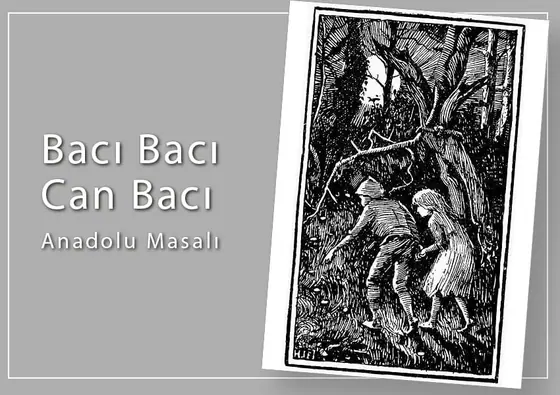
Photo: Sam Carter / Unsplash (Unsplash License)
ℹ️ This is an English translation of a Turkish oral folk tale. The regional dialect of the source text could not be fully preserved in translation. Read the Turkish original Bacı Bacı Can Bacı Masalı (Anadolu Masalı).
Sister, Sister, Dear Sister is an Anatolian folk tale; it tells the story of a girl and her brother who suffer at the hands of their stepmother after the death of their mother.
ℹ️ This is an English translation of a Turkish oral folk tale. The regional dialect of the source text could not be fully preserved in translation. Read the Turkish original here: Bacı Bacı Can Bacı Masalı (Anadolu Masalı).
#### SISTER, SISTER, DEAR SISTER
Once there was, once there wasn't1... A man had a daughter and a son. Their mother died. Their father married again. The stepmother was jealous of the children and tormented them in all kinds of ways. She kept nagging the man: "I am sick of these children. Throw them away, sell them, do whatever you like, but get them out of my house." But the poor man could not bring himself to harm his children. The children could tell no one what their stepmother did to them; every day they went to their mother's grave and wept. One day the stepmother thought of a way to be rid of the children: she had her men light an oven; when it was thoroughly hot, they would throw the children in... The boy learned of this and went at once to tell his sister. The two siblings went straight to their mother's grave, told her what was going to happen to them, and began to weep. Then a voice from the grave said to them: "Take a brush, a comb and a bar of soap, and run away... If anyone comes after you to catch you, first throw the comb; then the brush; and last of all the soap; they will not be able to do anything to you." The children did as their mother said; they took the comb, the brush and the soap, set out, and began to run. The stepmother learned that they had fled and sent men and soldiers after them. The children walked on, and kept turning to look behind them. When they saw the men gaining on them, they threw the comb. Behind them it turned into a thicket of thorns, like işitime2. By the time the soldiers got through the thorns, the children had gone a good way. They walked on a while longer, looked back, and saw that the men had drawn close; this time they threw the brush, and behind them everywhere became snakes. By the time the men got free of the snakes and passed through, the children again had gone quite far... At last, seeing the soldiers draw very near again, they threw the soap: behind them a huge ocean appeared. To catch up with the children, the pursuers threw themselves into the water; some drowned, some turned back. And so the children were saved. They went on their way again. They walked without knowing where they were going. They were now worn out with exhaustion. The boy began to cry: "Dear sister, I am so thirsty." The girl encouraged him: "Be patient a little longer, we will soon come to water." These were places where deer roamed. The boy saw water that had collected in a deer's footprint and bent down to drink. The girl begged him: "Don't, my brother, you will turn into a deer afterwards," but the other would not listen and drank. As soon as he drank, he became a deer. He ran off to graze in the meadows. Now the girl stayed in these places where her brother lingered. The deer brother roamed by day and came to his sister at night. One day they camped beside a spring. The deer went off to graze, and the girl climbed a poplar tree at the water's edge. Every morning a bey's son came to this spring to water his horse. That day too he came to water his horse. But the horse would not drink, it was frightened and restive. The bey's son looked around wondering what was the matter. When he raised his head, what should he see but a girl like the full moon3 in the poplar tree... It turned out the horse was frightened by the radiance that she cast on the water. The bey's son asked: "Are you human or jinn?" The girl said: "I am neither human nor jinn. I am a person like you." However much the bey's son pleaded and begged to bring the girl down from the tree, he could not persuade her. The prince's men came. The prince said to them: "Cut down that poplar." The poplar was thick. They cut until evening, and a little remained. "We will cut that too in the morning," they said and went away. In the morning they came and looked, and the poplar was straight and whole again. It turned out that during the night the deer brother had licked and licked the cut place of the poplar until it was as if no axe had touched it... They tried again to cut the poplar. By evening a small place remained, and they said, "We will cut that in the morning," and went away. In the morning they came and looked, and the poplar was whole again... There was no way to cut the poplar. And the girl would not come down from it... Now the prince was bewildered; he stopped eating and drinking and grew thinner day by day. He kept pacing at the foot of the poplar. One day, as he was wandering about there, he met an old woman. The old woman said: "My child, what trouble do you have that you have come to these mountains like this?" The young man told her the matter. The woman said: "Oh, my son, what is easier than that?" She went at once and took a sieve and a kneading trough to the foot of the poplar. She sifted flour, kneaded dough, to make bread. But she set the griddle tripod4 upside down and turned the griddle upside down... She kept at it like this. From above the girl called out: "Granny, what are you doing? It won't work like that." The old woman said: "Oh, my girl, I am old, what can I do... If only you would come down and help me." The girl came down. She baked a fine loaf of bread. While she was busy with it, the old woman tied the girl to herself. The girl finished the bread, and when she was about to go up the poplar, she could not go anywhere, being tied to the old woman. The prince took her from there and carried her off to his house. The deer brother went along with them... Then, forty days and forty nights of wedding, the bey's son took the girl, and they settled down. A time passed like this. The deer grazed and roamed in the garden, talked with his sister and amused himself... The girl was soon to have a child... One day she said to her Arab maidservant5: "Bring me my bath wrap and my clogs, I am going to bathe." In front of the palace there was a lake. The girl wrapped herself in a silver bath-cloth6 and put her golden clogs on her feet. She went into the water to bathe. While she was bathing, the Arab maidservant pushed her into the deep part of the water. (The bey's son was away at war at that time.) She put on the girl's clothes, set the crown on her head, and sat down as sultana. The bey's son came and looked, and in the place of his fair, clean wife was a dark, withered old maidservant... He was astounded. "Why have you gone dark like this?" he said. The maidservant answered: "How could I not go dark? ... Every day I waited for you on the road under the scorching sun." The prince believed her. As time went by the maidservant became pregnant and began to have cravings. One day she insisted: "I long for it very much. I will eat the flesh of this deer." The bey's son said: "How can that be, wife? Isn't he your brother? Does anyone ever eat a brother's flesh?" but he could not make her listen. At last they were going to slaughter the deer... The butchers were sharpening forty-one knives... Meanwhile the deer came to the edge of the lake and called out to his sister: (It turned out that a fish had swallowed the sister when the maidservant pushed her into the water... )
"Sister, sister, dear sister,
Sister with coral on your arm.
Forty-one knives have been sharpened,
They are at my throat.
The Arab girl has a craving for my flesh,
Come out, sister, come out."7
The girl answered from inside the fish's belly:
"Brother, brother, dear brother,
Gazelle brother with a blaze on your brow.
Golden clogs on my feet,
Silver bath-cloth before me,
My little sultan on my lap,
And I myself in the fish's belly,
I cannot come out, brother, I cannot."
Those who were nearby came and said to the bey's son: "This deer is talking to someone in the water. Listen in secret." The bey's son was curious. He got up and came to the edge of the lake. The deer, wandering around, had come back again to the water's edge. The bey's son listened, and the deer said:
"Sister, sister, dear sister,
Sister with coral on your arm.
Forty-one knives have been sharpened,
They are at my throat.
The Arab girl has a craving for my flesh,
Come out, sister, come out." A voice from inside the water answered:
"Brother, brother, dear brother,
Gazelle brother with a blaze on your brow.
Golden clogs on my feet,
Silver bath-cloth before me,
My little sultan on my lap,
And I myself in the fish's belly,
I cannot come out, brother, I cannot."
The bey's son then understood the matter. He ordered the fishermen to catch all the fish there were in the lake. They caught all the fish in the water, and at last a huge fish came out of the nets. They slit open its belly; the wife came out with her little prince on her lap. She told the bey's son one by one what had happened to her. Then the bey's son asked the Arab girl: "Do you want forty mules or forty cleavers?" She answered: "Forty cleavers to the enemy's neck; give me forty mules, I will ride and go to my mother's house." They tied the Arab girl to the tails of forty mules, and each piece of her was left on a mountaintop. And they attained their wish.
Translator’s Notes
1. "Bir varmış, bir yokmuş" ("once there was, once there wasn't") is the standard opening formula of Turkish folk tales, roughly equivalent to "once upon a time." ↩
2. The source reads "Arkaları işitime gibi diken olur." The word "işitime" is unclear (possibly a misprint or a dialect word for a thorny plant); it is left in the original, and the sentence means that the comb turns into a thicket of thorns behind them. [doğrulama gerekli] ↩
3. Literally "like the fourteenth of the month," the standard Turkish image for a full moon and for a radiantly beautiful person. ↩
4. The "sac" is a round metal griddle used for baking flat bread, set on a tripod ("sacayağı") over the fire. By setting them upside down, the old woman pretends not to know how to bake so that the girl will come down to help. ↩
5. The source calls the maidservant "arap halayık" and, later, "arap kızı" ("Arab girl"). It is rendered as it stands in the source; in Turkish folk tales this is a stock figure, here the villainous servant. The text sets her "dark, withered" look against the heroine's "fair, clean" one. The prince is called both "Bey oğlu" ("bey's son") and "şehzade" ("prince") in the source, and the two names refer to the same person. ↩
6. The source reads "gümüş tutasım" at this point and "gümüş futa" ("silver bath-cloth") in the verses. "Tutasım" is probably a misprint or dialect form of "futa," so it is rendered as a bath-cloth. [doğrulama gerekli] ↩
7. The two verses are kept in lines as in the source. "Kolunca mercan" (first verse) and "kolunda mercan" (second verse) are rendered the same way ("with coral on your arm"); the first form may be a misprint. "Alnı sakar" ("with a blaze on the brow") describes an animal with a white mark on its forehead. ↩
Source
From the master's thesis Türk Masallarında Aile Yapısı ("Bacı Bacı Can Bacı" Masalı Esasında) ("Family Structure in Turkish Tales, Based on the Tale 'Bacı Bacı Can Bacı'"), by Burcu Sarıkaya; thesis advisor: Prof. Dr. Alaeddin Mehmedoğlu; Sakarya University, Institute of Social Sciences, Turkish Language and Literature, Folklore (Halk Bilimi), April 2004.
Translated from the Turkish. The Turkish original is published in this archive as Bacı Bacı Can Bacı Masalı (Anadolu Masalı).


