The Adventures of Tokubei the Worker — A Japanese Folk Tale
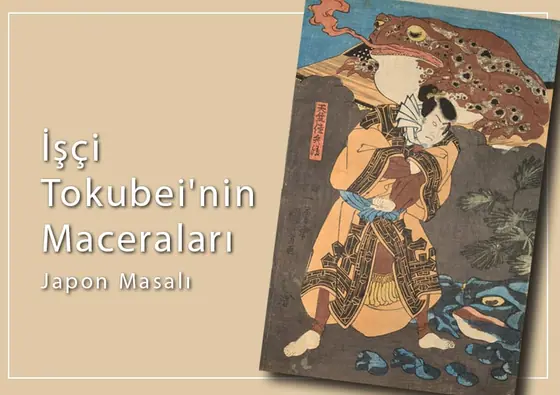
Photo: Richard Hedrick / Unsplash (Unsplash License)
ℹ️ This is an English translation of a Turkish oral folk tale. The regional dialect of the source text could not be fully preserved in translation. Read the Turkish original İşçi Tokubei'nin Maceraları (Japon Masalı).
The Adventures of Tokubei the Worker is a Japanese folk tale; it tells of extraordinary events in the house of one of the richest merchants of the kingdom.
ℹ️ This is an English translation of a Turkish oral folk tale. The regional dialect of the source text could not be fully preserved in translation. Read the Turkish original here: İşçi Tokubei'nin Maceraları (Japon Masalı).
#### THE ADVENTURES OF TOKUBEI THE WORKER (A Japanese Tale)
Once there was, once there wasn't, a very rich merchant. He was so rich that even the most powerful princes of the kingdom borrowed money from him. In his house, the largest in the whole city, he kept the rarest and most wonderful things: chests full of heavy silks, fine fabrics that could scarcely be felt between the fingers, more gold coins than could be counted... The merchant's house lacked nothing. The choicest dishes graced his table. To make tea, he had water brought every day from a clean, good spring half a day's journey away.
He was also a kind-hearted, cheerful and happy man. His affairs went better from day to day, so that there could be no happier man in the world. But every coin has its other side. This merchant had a secret sorrow. His only son, Kiheici1, was a well-bred, handsome boy who knew how to behave. Yet although his every wish was granted and he showed no sign of any illness gnawing at his heart, he was withdrawn and made friends with no one. He went with young men of his age to watch wrestling in the arena and to the theaters, and when his father asked, or when his friends insisted, he went with them to a tea house and spent a little time over fine food and delicious rice wine. But he never smiled, and a great weariness could be read on his pale face. Because he was the son of the most respected citizen of the city, and because he always paid the bill, the young men invited him often. But when he made an excuse and said he could not come, they were pleased, for his sour face spoiled their fun.
The father was seriously worried about his son's state. "What will happen when I die and he takes over the business! Kiheici is interested in nothing. His sour face will drive away all the customers. And then what will become of the business my father founded!" The rich merchant often thought like this, and he did not know what to do to awaken in his son a joy in life. When his father scolded him, Kiheici listened politely and carried out all his wishes, but he could not manage to be cheerful.
In the same quarter lived another merchant. His business did not go so well, but he was an honest and intelligent man. Everyone respected him. As long as he was in good health, his family lacked nothing. They lived simply but were content, and they gave their only son a good education. But one day the merchant fell ill and was soon laid in the earth. The widow understood nothing of the business world. With their only son Tokubei, they soon began to suffer hardship. When Tokubei grew up, he had to look for work to support himself and his mother. In his search he came to the rich merchant. Tokubei was hardworking and meticulous. He proved his abilities, so that the rich merchant entrusted his account books to him, and soon took him into his own family. The more he saw that his son was interested in him and had befriended him, the more attached he grew to the young man. So when his son asked that the new worker accompany him on a visit to the famous temples of Iz2, he gladly gave his permission.
"At last my son has begun to take an interest in something; perhaps he will change," said the happy father.
The two young men, Kiheici and Tokubei, set out. The road seemed short to them. Tokubei knew a great many entertaining stories, and Kiheici's face often lit up with a weary smile. Sometimes he even told a story himself. One evening, after a tiring day, they came to a fine-looking inn on the roadside, a little outside a village.
"Let us spend the night here," Kiheici suggested. "It looks like a good inn. I am sure they have good food and drink. What is the use of dragging ourselves all the way to the town! I can hardly walk for tiredness."
Tokubei agreed, and they approached the inn. The old, potbellied innkeeper met them at the door. Seeing Kiheici's rich clothes, he spared no show of respect. "Gentlemen, you must be traveling for pleasure. Or is it a business trip that has brought you to our region? What a great honor it is for us to host guests as distinguished as you in our poor inn!
I shall give you our best rooms. You will surely be satisfied."
Bowing constantly, he said all this in one breath, and then led his guests into the house. There the innkeeper's wife received them. She showed them even greater respect than her husband. Going ahead of them up the stairs, she showed them their rooms. Then, bowing to the floor, she asked leave to go: she wished to prepare the evening meal.
Tokubei looked around curiously and noticed an inscription above the door: "No poor man has ever slept here."
He nudged Kiheici with his elbow. "See what a distinguished inn we have stepped into! This place is only for the rich."
"This time they have been fooled," said Kiheici, laughing. "You are poor, and yet you will sleep in the best room."
After a merry supper they wished each other good night, and each went to his own room. Tokubei wrapped himself in the light covers, but despite all his tiredness he could not sleep.
He kept turning over in bed. His eyelids grew heavier and heavier, but sleep would not come.
"Such luxury is not for a poor man. The inscription above the door did not lie," Tokubei said at last.
As he tossed in bed, he thought he saw something stir by the hearth. He waited motionless, as though asleep. But he opened his eyes wide to watch carefully what was happening. A small woman was bending over the hearth, doing something. After a while he saw that the woman going back and forth at the hearth was the innkeeper's wife. She bent and straightened as though she were working in a field. When the young man strained a little harder, he saw that the woman was planting rice in the ashes. Before he could count to five, the rice sprouted and shot up. It grew quickly and filled with ears. For a while nothing else happened at the hearth. The ears simply ripened. When they had turned fully yellow, the woman cut them, beat them with a wooden flail, and then slowly kneaded them. Just as she finished her work, day was breaking. At the first crowing of the rooster everything vanished, and there was only ash in the hearth.
Tokubei rubbed his eyes. "So I did sleep! I must have been dreaming!" He looked around the room. "But I saw everything as clearly as if it were real."
He got up and examined the hearth. He saw nothing remarkable. It was an ordinary hearth! Then Tokubei looked in the mirror. His red eyes looked back at him from a face pale with sleeplessness.
"Whether I dreamed or not makes no difference. Something here is not right," he decided, and he ran to the next room to warn his friend.
"Do not eat anything they give you," he said. "Above all, not the rice cakes3." Then he told him what he had seen.
Kiheici made fun of him. "But this is very foolish! Planting rice in the hearth and reaping it the same night, as if such a thing could happen! You must have been dreaming. After all, you are not used to sleeping in inns like this!"
Tokubei was hurt. "I told you what I saw with my own eyes. Believe it or not, as you like. But I warn you: do not eat the rice cakes."
A little later Kiheici heard a polite knock at his door. The door opened, and the innkeeper's wife came in carrying her guest's breakfast on a tray. Remembering Tokubei's offended face, Kiheici smiled. He attacked the rice cakes with appetite. He ate the first, and nothing happened.
"Tokubei really does have strange dreams," he said to himself. He began the second cake. No sooner had he finished it than a black horse stood in Kiheici's place in the room. The woman who had brought the breakfast laughed wickedly and at once led the struggling horse off to the stable.
Meanwhile Tokubei sat in his room. He had not touched the food the innkeeper's wife had brought, and he waited for Kiheici to call him. They had to set out on the road.
He waited a long time, and when no sound came he got up and went to his friend's room. But Kiheici was nowhere to be seen. In the room there was only a small table with a half-eaten breakfast on it. Anxiously Tokubei went out of the house. Just then servants were leading a black horse to the stable, with large tears falling from its eyes. Tokubei suspected that what he feared had come true.
In great anger he ran and found the innkeeper. "What have you done to my friend! Where is he?" he shouted, shaking the innkeeper.
"I do not know, my lord, I do not know," the innkeeper mumbled.
Just then his wife came up and said with a forced smile, "Why are you so rough with my husband! Why are you angry, young man? I myself took the young gentleman his breakfast. I can testify that he ate it with great pleasure. Your friend left before you, and he may be waiting for you somewhere along the road. The bill has been paid, do not worry."
Tokubei did not know what to answer these mocking words. He went back to his room and packed his bundle. But before leaving the inn he went to the stable, and among a great many horses he found the sad black horse tied to a manger.
Tokubei stroked him gently and said, "See what trouble not listening to me has brought you! I shall go on my way alone. I will ask the wise how I can help you."
So Tokubei continued on his way alone. The journey was not easy, for all the money was in Kiheici's bag and had fallen into the hands of the innkeepers. He intended to go to the big cities, where he thought he could earn his living more easily. Perhaps in the big cities, where so many people lived, he might also have a chance of finding someone who could save his friend.
He wandered through marketplaces, spoke with all sorts of people in tea houses, visited famous monasteries, and questioned monks, known and unknown, but in vain! He turned to everyone from whom he thought he might seek counsel, asking whether there was any way to turn the black horse back into a human being. He traveled half the kingdom but learned nothing.
"I have had no success in the cities or the monasteries. I shall go to the mountains. Perhaps there I will meet a wise monk who can help me."
Leaving the cities, he continued his search in the villages, but it was wasted effort! A full year had passed since he and Kiheici had set out and slept at the inn, and Tokubei still did not know how to save his friend. The people of one village had told him that in a neighboring village there was a wise monk who might be able to help, and so he was wandering in the mountains. Tokubei now had no hope at all, but he could not let any chance go by. So he was going to the neighboring village. For two days he had been looking for his way in the mountains.
Leaving his bundle with his last food on a meadow, he climbed a hill, thinking he could find his way better from a high place. Indeed he discovered a path. But before following it he wanted to rest and eat something. Not knowing how much longer he would wander in the mountains, he had not touched his small store of provisions for days. Now that he had found his way, he could quiet his hunger in peace. But when he came to his bundle on the meadow he was very surprised to find it empty. He looked around and saw, where his bundle had been, a silver-haired old man wiping the last crumbs from his beard.
Noticing the young man, the old man was not afraid at all; he smiled at him pleasantly. "Your hardtack4 was good," he said. "It has been a long time since I ate such delicious hardtack. You are not angry with me for eating it without waiting for you, are you? You know, I am old, and I had eaten nothing for a long time. When I saw the hardtack in your bundle I could not resist."
At these words Tokubei's anger passed.
"What can be done! I am glad you liked it. The village is not far; I can find something to eat there."
"Since you are not angry with a greedy old man who ate your last food, you must be a good young man. I did not know you had no other food. What brings you to these mountains? I have never seen you before. Perhaps you are looking for something. Whatever you are looking for, tell me."
"Thank you very much, grandfather. In the biggest cities and the famous monasteries I could find no one to give me advice. How could you help me!" answered Tokubei.
"Just tell me your trouble. I sincerely wish to reward you. I am no ordinary old man; I am the genie of the mountains5. Because I did not know you, I wanted to test you."
Tokubei leaped for joy. Then he told how his friend had been living for almost a year as the innkeepers' horse.
"Hm, hm..." the genie of the mountains thought. "This will not be easy! I can give you advice. But you will need a great deal of patience. Listen to me well: keep walking always toward the east. Walk until you find a large eggplant field on a slope descending from west to east. When you find the field, you will have to examine every plant one by one. One of them has seven eggplants. You will find it, pick them carefully, and take them to your friend. When he has eaten all seven in a row, raw, the spell will be broken."
As soon as he finished his advice, he vanished as if the earth had swallowed him. Tokubei looked around in astonishment. Only the empty bundle proved that he had not been dreaming. He had truly spoken with the genie of the mountains. He picked up his bundle from the ground and was surprised to hear a faint jingle. There were a few gold coins in the bundle.
"What a rich reward for a few pieces of hardtack! At least I shall have no trouble making a living," said Tokubei joyfully. He began his long and difficult journey.
Now he knew how to help his friend, but it was truly not easy. First he had to find the plant that would cure him.
He walked always toward the east. On slopes descending from west to east, large and small, he came upon many eggplant fields. Kneeling, he examined the eggplants one by one to find the plant with seven. As soon as he had examined one field, he moved on to the next. He came across several plants with four, even five eggplants. Once he even thought he had reached his goal. He counted: one, two, three, four, five... Then he rose in disappointment; there were only six.
He was worn out with tiredness, and his back ached from bending and straightening. Whether his eyes were closed or open, he always saw eggplants before them. But he kept going, moving from one field to another. He examined the plants again. At last, at the eastern end of one field, he came upon a plant with a great many eggplants. He began to count... five, six, seven!
New life ran through him. He placed the seven eggplants in his bundle and set out for the inn. He walked cheerfully. Soon his friend's suffering would end. He felt indebted to the genie of the mountains, who had given him good advice in return for a simple meal, and had even left him money.
The gold coins gave him an idea. Before approaching the inn, with the money he had left he bought himself a rich kimono in a neighboring town and hired everything a young man from a wealthy family would need for a journey. Then he walked proudly and slowly toward the inn.
Seeing the splendidly dressed young man, the innkeepers came to welcome him respectfully.
"I come from a very long way, from the temples of Iz," said Tokubei. "I am tired and wish to spend the night at your inn. I hope you have a room suited to me."
"Oh, my young lord, only honorable gentlemen like you ever sleep at our inn. We shall give you our best room. You will be very pleased."
Bowing to the floor, they led Tokubei into the house. The proud young man must not have noticed the glance they exchanged. They meant to say, "What prey!"
They took Tokubei to the room in which poor Kiheici had stayed a year before. Then, bowing to the floor, they withdrew to prepare a bath for their noble guest.
As soon as the innkeepers had left the room, Tokubei slipped secretly into the stable to look for his friend. He found him in a corner, thin and covered all over with bloody scratches. He was so crushed by hunger and heavy labor that he stood before the manger indifferent and unfeeling toward everything. He did not even turn his head to see who had come in. Tokubei went up to him, stroked his mane and said, "Do not grieve any more. I have brought the remedy that will turn you back into human form." From the bundle hidden in the sleeve of his kimono he took the first eggplant and held it out to the black horse.
"To return to your old self, you must eat this."
The horse ate the first eggplant, then the second, then the third. The fourth he ate with difficulty, and then he did not want to eat the fifth.
Tokubei grew angry: "We have business with you! It seems you like being a horse! Very well, as you wish! If you will not eat any more, you will stay a horse."
Threatening to leave Kiheici to his fate, he finally managed to make him eat all seven eggplants. As soon as the last bite was swallowed, Kiheici stood before the manger where the black horse had been. But he was very thin and pale.
Tokubei untied him and said, "Hide in the nearby forest for now. I have an account to settle with the innkeepers."
Tokubei returned to his room and had a perfect supper prepared for himself. He even invited the innkeepers to share the meal and taste the wonderful rice cakes which, he claimed, he had bought on his journey. Both accepted the invitation and thanked him, bowing to the floor. It was a great honor for them. Without being seen, to thank the young man for his invitation, he exchanged the rice cakes they had brought him for ordinary rice cakes he had bought in the town.
They ate the rice cakes Tokubei offered them with appetite, but as soon as they finished the second cake they turned into horses. They neighed and reared, but in vain! Tokubei called the servants and told them to lead the horses to the stable. Then he went to the forest and found Kiheici. The two friends spent a good night. The next day they sold the innkeepers' goods and the two horses. Tokubei returned the things he had hired, and bought what he and Kiheici needed for the journey home. Now nothing could stop them.
The rich merchant embraced his son, overjoyed. What worries he had suffered! And not only he: Tokubei's mother, the poor widow, how she had grieved when the young men's return was delayed! The merchant had sent messengers in every direction. But they had learned nothing. They could not have reached Iz, because in the city of temples nobody had seen them. He had given up hope for his son and begun to mourn. The poor widow had not closed her eyes for days and nights. Now they stood before them safe and sound, and their joy knew no bounds. Tokubei and Kiheici told what had happened to them. When the merchant learned of the devotion Tokubei had shown, he divided his property into two equal parts and gave one to Tokubei.
"Had it not been for you, I would have no son today. My wealth is enough for both of you."
From that day on, both lived happily. But a great change came over Kiheici too. He changed beyond recognition. He began to take pleasure in living. He enjoyed his wealth and his friends. But he had also learned what it is to work under hard conditions.
Translator’s Notes
1. The name appears in the source in several spellings (Kiheici, Kiheci); this translation uses Kiheici throughout. The name Tokubei is likewise once spelled "Tokubie" in the source. ↩
2. "İz tapınakları" ("the temples of Iz"). The place name is rendered as it appears in the source; it may refer to the Ise shrines in Japan, but this is uncertain. [verification needed] ↩
3. The source says "pirinç pastası" (literally "rice cake" or "rice pastry"). The exact kind of cake is not stated; "rice cakes" is the most probable meaning. ↩
4. "Peksimet" is hardtack, a dry twice-baked biscuit carried as travel food. ↩
5. The source says "dağların cini" (literally "the jinni of the mountains"); it is rendered here as "genie of the mountains," a mountain spirit. In the source the word is once misspelled "çini." ↩
Source
From the collection Japon Masalları (Contes de Japonais), translated into Turkish by Temel Keşoğlu. Doruk Yayımcılık, Ankara, 2000.
Translated from the Turkish. The Turkish original is published in this archive as İşçi Tokubei'nin Maceraları (Japon Masalı).


