The Beardless Miller and Keloğlan — An Anatolian Folk Tale
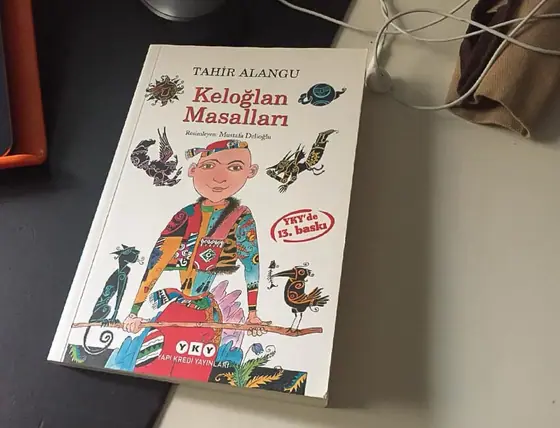
Photo: insung yoon / Unsplash (Unsplash License)
ℹ️ This is an English translation of a Turkish oral folk tale. The regional dialect of the source text could not be fully preserved in translation. Read the Turkish original Köse Değirmenci ve Keloğlan (Anadolu Masalı).
The Beardless Miller and Keloğlan is an Anatolian Keloğlan tale. It tells how Keloğlan, whose father made him promise on his deathbed never to have dealings with beardless men, kept that promise.
ℹ️ This is an English translation of a Turkish oral folk tale. The regional dialect of the source text could not be fully preserved in translation. Read the Turkish original here: Köse Değirmenci ve Keloğlan (Anadolu Masalı).
#### The Beardless Miller and Keloğlan (An Anatolian Tale)
Once there was, once there wasn't, God's servants were many; to say "many" is no sin, to say "none" is a sin1. Long ago, in a certain land, there lived a Keloğlan. On his deathbed his father had made him promise that he would not do business with short men or with beardless men2, nor be yoked together with them on the road or at work. One day this Keloğlan loaded two tay of wheat, one kile, on his donkey3 and set out for the mill. Down the slope he came to the lowest of the mills built along the stream. He dumped his load in front of the door and went inside, and what should he see but a beardless miller, short in stature, with pale grey eyes, grinning without a pause, rolling his eyes and looking at Keloğlan.
"Welcome, you have brought joy, Keloğlan. Come in, come in, say what you wish..." he called. Keloğlan scratched his bald head and hesitated.
"I had brought two tay of wheat to be ground into flour, one kile, but I have changed my mind. When my father was dying, he made me promise not to do business with short men, especially beardless ones, and not to be yoked together with them on the road or at work. Wait, let me wrap my load back onto the donkey and go to the upper mill," he said. The miller, beardless and short in stature, said:
"Come now, Keloğlan, do not do this, do not behave so. Let me grind your wheat. How could I cheat right before your eyes? From each kile I will take two spoonfuls as my due, and you can fill the rest into your sack and take it away..." He threw himself before him, swore oaths, and sold him fine and well-arranged words, but it was no use. Keloğlan wrapped up his load, said "Giddy-up" to his donkey, and went up along the stream to the mill above.
This turn of events vexed the beardless man greatly and wounded his pride. He took a shortcut and ran to the upper mill, arriving before Keloğlan. He came to an understanding with the owner of this mill, lit his pipe, and sat down. Keloğlan came, prodding his donkey, drenched in sweat. He dumped his load in front of the door and went inside, and what should he see but that beardless man from the lower mill, short in stature, grinning without a pause, his pale grey eyes rolling.
"Well, beardless one, short in stature, where did you spring from? Were you not the owner of the lower mill?" he asked.
The miller said:
"What are you saying, Keloğlan, what are you talking about? I am the owner of this mill. The one below is my brother's..." Keloğlan scratched his bald head and hesitated.
"I had brought two tay of wheat to be ground into bread flour, one kile, but I have changed my mind. My father made me promise on his deathbed not to do business with short men or beardless men, and not to be yoked together with them on the road or at work. Let me wrap my load onto the gray donkey and go to the upper mill," he said. The miller, short in stature and beardless, said:
"Come now, Keloğlan, do not do this, wait. Let me grind your wheat. How could I cheat right before your eyes? From your kile I will take two spoonfuls as the miller's due, and you can fill the rest into your sack and take it away..." He threw himself before him, swore oaths, and made pretty and well-arranged speeches, but it was no use. Keloğlan wrapped up his load, said "Giddy-up" to his donkey, and went up along the stream to the mill above.
This turn of events vexed the beardless man greatly and wounded his pride. He took a shortcut and ran to the upper mill, arriving before Keloğlan. He came to an understanding with the owner of this mill, lit his pipe, and sat down. Keloğlan came, prodding his donkey, drenched in sweat. He dumped his load in front of the door and went inside, and what should he see but that beardless man from the lower mill, short in stature, his pale grey eyes rolling, grinning without a pause.
"Well, beardless one, completely short in stature, where did you spring from? Were you not the owner of the lower mill?" said Keloğlan.
The miller said:
"What are you saying, Keloğlan, what are you talking about? I am the owner of this mill. Those others belong to my younger brothers." Keloğlan looked, and there was no other mill, and he could not go back without having his flour ground. "Well, man," he said, "my father had told me, but as long as I do not stand over him while it is being ground and let him cheat, I will not be harmed," and he shouldered the sacks and carried them into the mill. While the wheat was being ground, "van, van, hışır, hışır," night fell. They lit the hearth and sat down facing the beardless man. After a while both of them were very hungry. The beardless man said to Keloğlan:
"Come now, Keloğlan, we shall not reach morning dozing hungry beside the hearth. Come, let us go into partnership: the flour from me, the uğra from you4, let us make a flatbread and bake it in this fire." Keloğlan scratched his bald head and hesitated, and thought it over: "In this matter the beardless man stands to lose. How much uğra will be needed? If the flour is his, I am the one who profits," and he agreed. The beardless man got up and poured flour into a trough...
"The flour is from me, you see, Keloğlan?" he said, and poured water into it. The dough became a thin, runny soup.
"The uğra is from you, bring it, Keloğlan!" he said. Keloğlan carried uğra from the mouth of the chute with the miller's toll spoon. The dough turned stiff5. The beardless man poured water into the trough. The dough was a thin, runny soup again.
"The uğra is from you, bring it, Keloğlan!" the beardless man shouted every time, and every time Keloğlan lifted a measure of flour and carried uğra with the toll spoon, without a pause. In this way, going back and forth, Keloğlan carried one tay of the ground wheat to the trough as uğra. At last the mill flatbread was kneaded. Keloğlan thought to himself: "There is a notch in this bargain, but wait and see! You have set one measure of your flour against a whole load of our uğra, beardless man. Let us see it through." The two of them lifted the great flatbread, as big as a round serving tray, and laid it in the glowing ashes of the hearth. While the flatbread baked, they sat down again opposite each other in their old places beside the hearth and waited. After a while the beardless man said:
"Come, Keloğlan, let us have a lying contest. Whichever of us makes up two bigger lies, the flatbread will be his."
Though Keloğlan said:
"I do not know any lies. My mind is thoroughly confused by the bargain over this flatbread..." it was no use. It was the dead of night. The beardless man's eyes were rolling. He began to tell his lies:
"At my father's wedding we had a huge cauldron in which we boiled keşkek. As we kept stirring it with a ladle, the bottom of the cauldron wore thin and got a hole. To repair it we sent for nine coppersmiths. All nine of them got inside the cauldron and began to beat it with hammers. The masters ended up so far apart that they could not even hear each other's hammers..."
Then he began to tell his second lie:
"Last year I planted a gourd in front of the mill. It sprouted, grew long, and began to put out arms in all directions. Many branches grew from its shoots. I took one of the shoots across the stream. I had it wound around the pine tree on the mountain opposite. As time went by, this stream overflowed. The bridge was swept away. Travelers began to cross from that mountain to this hill over the gourd shoot. The shoot grew thicker and thicker. Caravans and carts began to cross over it. One day I took an axe. I set out on the road to go to my village. I was crossing the gourd bridge. I saw that hundreds of enormous gourds had dropped from the vine. I swung my axe at one of these gourds. The axe slipped into the gourd. To get the axe I went inside too. I searched for days and could not find it. As I was coming out of the gourd, I met a white-bearded old man. The old man asked me:
"'What are you looking for here, my son?'
"I said: 'Oh, white-bearded grandfather, I lost my axe inside the gourd. I am looking for it.'
"The old man laughed:
"'My son, I lost a whole herd of my camels inside the gourd. I have been looking for them since my youth. In this search my hair and beard have turned white. I still have not found them. How will you find an axe? Give up on this.'"
When the beardless man had finished his second tale, it was Keloğlan's turn. He began to tell his:
"Once we had a beehive. Every evening I used to count the bees and shut them into the hive. One day the lame bee among them did not come back. I planted a sack needle in the ground and climbed to the top of it. I looked all around. And what should I see? Our lame bee, across the plain, had been paired with a water buffalo and was pulling a plow! I went to the farmer. I pointed out the red thread on the bee's leg. I demanded my share of the plowing fee from the field. To make it short: the wheat sprouted and grew. I went to harvest the crop. I took the uğra of the flatbread from this field's plowing share. A pig ran out from beneath the walnut tree at the edge of the field. I swung a scythe after it. The scythe sank in behind the pig. The pig ran, the scythe reaped. The pig ran, the scythe reaped. Do not drag it out, beardless man, the flatbread falls to Keloğlan," he said, and without pausing, he began his second lie:
"One day the lame bee again did not come back. My father said: 'Saddle the speckled rooster with the axe-comb and go and get it back6.' I saddled the speckled rooster. I rode out and looked for the bee. I found it on the slope and brought it back. But the saddle had cut the rooster's neck, and a sore with pus had opened up. My grandmother wrapped a walnut leaf around it so that it would heal. After a while a walnut tree grew from the rooster's neck, and it grew long. It became a huge walnut tree. The village children began to throw stones at the walnut tree. So much stone and earth piled up on it that it became a field of two evleks7. We sowed wheat in this field. Half of the wheat for the flatbread in the hearth I harvested from that field. This lie has outgrown you. Do not drag it out, beardless man, the flatbread falls to Keloğlan," and with these words he pulled out the flatbread, which had baked and risen in the hearth. The beardless man had no choice but to submit. Keloğlan took out his knife, cut a slice from the end, and began to eat, smacking his lips. The beardless man's eyes turned quite red with hunger.
"Oh, Keloğlan, sell me five akçe worth of flatbread on credit. I have no money on me now; I will pay you tomorrow in the village," he said. Keloğlan scratched his bald head and finally agreed and cut one piece. But the beardless man was not satisfied. He asked again for five akçe worth of flatbread on credit. Keloğlan cut one thin piece. The beardless man was still not satisfied. He cut another. How could he be satisfied? Day broke. Half a tay of wheat had been ground. Keloğlan balanced the flour sack on one side of the donkey and the great flatbread on the other, and tied them on. He set out and reached his village. He dumped his load at home and went straight to the beardless man's village to collect what was owed to him. The beardless man had given his wife strict instructions:
"Tomorrow Keloğlan will come to collect what he is owed. Go out to the door. Weep, wail, sing a lament that your husband has died, and keen."
When Keloğlan came, the woman did what her husband had told her. Keloğlan said:
"Alas, alas, only last night we baked a flatbread in the mill, and he owed me ten akçe," and he ran here and there through the village. He roused the whole village. He gathered the congregation, found the imam and the headman, and brought them to the beardless man's door. With no way out, the beardless man stretched out on his back, and they lifted him and laid him on the washing board, washed him and shrouded him. At night they carried him on their shoulders to the village cemetery and buried him. After everyone had left, Keloğlan went back to the cemetery and climbed a cypress tree beside the grave, and waited, thinking, "Let us see what this beardless man will do."
Just then the forty robbers arrived with their loaded animals, poured out the goods they had stolen in the middle, and began to divide them. After they had divided the shining gold coins, the sacks of akçe, the mecidiye coins, the jewels, the bolts of cloth, and the antique weapons among themselves, there remained one sword with a golden hilt and inlaid jewels that they could not divide. After long quarrels and angry words one of them said:
"If there is a freshly buried corpse in the cemetery, let us dig it up. Whoever can cut off its head with one stroke will have the sword; it falls to him." Everyone agreed to this. They searched at once, opened the grave of the beardless man who had been buried that day, and dragged him out by the leg. They saw that the beardless man's pale grey eyes were staring wildly, rolling. They were frightened and pressed against one another.
"Hey, do all of you lie on your backs like this and stare wildly?" they asked.
The beardless man said in a hollow voice, from deep down:
"We do, we do." They asked:
"If you called your friends, would they come right away?" The beardless man said:
"They would, they would..." in a hollow voice, from deep down.
"Well, call them then," they said. The beardless man pulled his hands out from the shroud and, clapping them, "sak şak," called out:
"Gather, gather!" At this, from the top of the poplar, Keloğlan clapped his hands, "şak şak," and answered8:
"We are coming, we are coming!"
When the robbers heard this, they said:
"Mercy! Jinn and ghouls have attacked us, scatter, friends!" and abandoning all their goods, they fled, trampling one another. All the booty of the gang was left piled up in the middle like heaps of grain. Keloğlan climbed down from the poplar. The beardless man said to him:
"Hey, Keloğlan, over fifteen akçe you have brought all this upon my head. To escape from your hands I even went into a grave alive." Then they sat down and began to divide the heap of goods in the middle, "one for you, one for me." Meanwhile the forty robbers had sent one of their number to find out what the jinn were doing. They were curious about what had happened to their goods and money. The robber crept, sneaking behind gravestones and trees. He came close enough to hear their voices. Just then the dividing was finished, and Keloğlan, pressing the beardless man by the collar, began:
"Come on, stingy one, give me my fifteen akçe for the flatbread from this evening." The beardless man saw the robber scout coming among the graves, and as he lay there he snatched the man's fez and threw it to Keloğlan:
"Here, count this in place of the fifteen akçe." The robber, out of fear, fell over on his back and, rolling, tumbling, falling and rising, barely escaped the cemetery with his life and rejoined his comrades. Their leader asked:
"Come on, tell us, what do the ghosts and ghouls do?" and the man, gasping and choking, answered:
"What would they do? They are dividing mountains of goods fifteen akçe at a time, and one of them was left without a share. They snatched my greasy fez and gave it to him for fifteen akçe. Imagine the crowd!" At this they all said, "Mercy, there is no staying around here any longer. Let us go somewhere else..." and fled and scattered. The beardless man and Keloğlan lived as neighbors until they died. But the end of the tricks they played on each other never came. God wrote their fate this way.
They attained their wish; may the same come to us...9
Translator’s Notes
1. "Bir varmış, bir yokmuş, Allah'ın kulu çokmuş. Çok yemesi yok demesi günahmış" is the standard opening formula of Turkish folk tales, roughly equivalent to "once upon a time." The source reads "Çok yemesi" ("its eating much"), which is probably a misprint for "Çok demesi" ("saying 'many'"), as in the usual formula; it is rendered accordingly. [verification needed] ↩
2. "Köse" means a man with little or no beard on his face. It is the tale's epithet for the miller and is rendered here as "beardless." The father's instruction in the source is awkwardly phrased ("boyu kısa, kendi köselerle"), and the translation follows its probable sense. ↩
3. "Tay" is not a standard measure of capacity; it appears to be a regional unit for a load or amount of grain. The "kile" is a traditional Ottoman and Anatolian dry measure of grain. The relation of the "tay" to the "kile," and the exact size of either, could not be determined. [verification needed] ↩
4. "Uğra" is not clear. From the context (the miller supplies the flour and Keloğlan the "uğra" for a dough that is made by turns thin and stiff), it seems to refer to additional flour for kneading, but this is a guess. It is left in the original. [verification needed] ↩
5. The source says "Hamur olmuş tak gibi." The word "tak" is unclear; "stiff" is a guess from the context, where the dough has just been thickened with flour. [verification needed] ↩
6. The source reads "Şu balta ibik, çil horozu eyerle de, bu gel." The words "balta ibik" and the last clause are unclear; "the speckled rooster with the axe-comb" and "go and get it back" are guesses from the context. [verification needed] ↩
7. An "evlek" is a traditional unit of land measure (the area one can plow in a certain time); its exact size varies by region and could not be verified. [verification needed] ↩
8. The source first mentions a cypress ("selvi") beside the grave, and then says that Keloğlan answered "from the top of the poplar" ("kavağın doruğundan") and climbed down "from the poplar." The inconsistency is in the source and is preserved. ↩
9. "Onlar ermiş muratlarına, darısı başımıza..." is a standard closing formula of Turkish folk tales: "They have attained their wish; may the same come to our heads (to us as well)." In the Turkish page it appears just above the source note. ↩
Source
Keloğlan Masalları ("Keloğlan Tales"), Tahir Alangu. Yapı Kredi Yayınları, Istanbul, 2009.


