The Child Born of a Man — An Istanbul Folk Tale
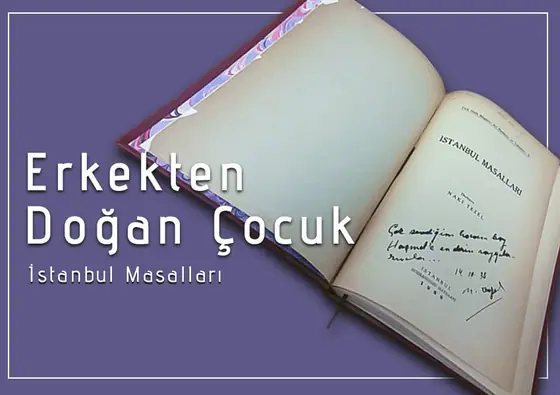
Photo: Harsh Gupta / Unsplash (Unsplash License)
ℹ️ This is an English translation of a Turkish oral folk tale. The regional dialect of the source text could not be fully preserved in translation. Read the Turkish original Erkekten Doğan Çocuk (İstanbul Masalı).
The Child Born of a Man is an Istanbul folk tale; it tells of the extraordinary events that follow when a couple who have long been childless are given a strange remedy by a midwife.
ℹ️ This is an English translation of a Turkish oral folk tale. The regional dialect of the source text could not be fully preserved in translation. Read the Turkish original here: Erkekten Doğan Çocuk (İstanbul Masalı).
#### THE CHILD BORN OF A MAN (AN ISTANBUL FOLK TALE)
Once upon a time, when the sieve was in the straw1, there was a husband and wife. Although they had lived together for a long time, no child had been born to them. One day the woman, without her husband knowing, went to the midwife and asked her to make a medicine so that she could bear a child. The midwife mixed a pumpkin2 with certain medicines, gave it to the woman, and told her to eat some of it at the noon and evening meals.
The woman took the medicine, brought it home, and put it in the cupboard.
The next day her husband, coming back from work, did not find his wife at home. The neighbors told him she had gone to the market on an errand. The man went up to the cupboard looking for something to eat. As bad luck would have it, there was nothing in the cupboard that day. His eye fell on a plate with the pumpkin the midwife had medicated. He sat down at once and ate it with the greatest relish, and then went off to work.
When he came home late that evening, the woman said to him:
"Husband, what have you done? You have eaten all my pumpkin!"
The man, annoyed, answered:
"What of it, woman? I found a pumpkin and ate it. Whether you ate it or I ate it, what harm is there?"
The woman said at once:
"The midwife gave it to me so that I could bear a child; it was medicine, you fool!"
Well, after they had talked it over like this, they fell silent. This matter too was forgotten.
Months passed. From the day he ate the pumpkin, a swelling began to appear in the man's belly. In the eighth month the swelling took on an extraordinary form. Whenever he went to work, his colleagues said "get well soon" to him. The man paid no attention to these words; some he laughed off without taking offense or replying, and to others he would say:
"Thank you," and walk on.
At last it came to the point that he could no longer go to his duties. He took to his childbed. In nine months and ten days he gave birth to a girl, round-faced and round as a pumpkin. Guests began to come in crowds to see this girl who was like a pumpkin.
Years passed, and this Kabak3 grew up. She reached the age of sixteen. One day a town crier began to shout in the city:
"Whoever has a daughter, let her send her to the square today; the prince will choose a girl to marry!" he announced.
Hearing what the crier said, Kabak said to her mother:
"I will go to see the prince too."
Her mother grew angry:
"Come now, wretched Kabak," she said, "you have neither hands nor feet; what will the prince find to like in you?"
Kabak did not take offense at this:
"Never mind, mother," she said, "I will go only to see him..."
With her mother's permission she rolled and rolled into the square, where the girls had formed a circle, tumbled to the very middle, and stopped there.
The prince looked from the window and liked none of the girls. In the middle he saw Kabak, ran downstairs, took her, and went back upstairs. He announced that the girls should disperse, that he liked only Kabak. The prince's mother took offense at this Kabak and said to the prince:
"My goodness, my son, you looked and looked and you found this Kabak?"
The prince answered his mother:
"What can I do, dear mother, whomever the heart loves is the beautiful one."
Every day this Kabak sat in a corner, and her food and drink were brought to her feet. So the days went by. One day they were marrying the vizier's son to a very beautiful girl.
The prince's mother was cutting her nails in preparation for the wedding. Kabak came rolling:
"Mother, mother, give me the scissors too, so that I can cut my nails," she said.
Her mother said:
"Be off with you, Kabak! You have neither hands nor feet; which nails will you cut?"
Her mother-in-law4 did not give her the scissors. A little while later the lady, having adorned herself, got into her carriage and went to the wedding house. After her Kabak rolled, shook herself, and a young girl, beautiful as the most beautiful in the world, stepped out. She took her shell and hid it in a corner. She clapped her hands. In front of her stood an Arab5, one lip on the ground and one in the sky:
"Ask of me what you wish," he said.
The girl said:
"You will make this room blue. You will bring me a carriage that is blue from end to end, a blue dress, and then girls dressed in blue from end to end, and a bag of gold!"
The Arab left, and after a while appeared again. He reported that the things she had commanded were ready.
After the girl had adorned herself, she leapt into the carriage. Scattering handfuls of gold around her, she set out for the wedding house...
When she arrived at the wedding house, they received her with respect. She sat down at once beside her mother-in-law. She did not leave her side until the end of the wedding. Her mother-in-law grew very fond of this young girl. She was sorry that God had not given her such a lovely daughter-in-law. An hour before the end of the wedding the beautiful girl rose from her seat and said to her mother-in-law:
"Please give me leave, madam."
Her mother-in-law said:
"Oh please, madam, we will go together in an hour..."
The girl replied anxiously:
"My husband is waiting for me, madam; I must not be late."
Seeing that she was about to lose this beautiful girl, the woman asked for her address. The girl said:
"We live in the Scissor-makers' quarter6; we are of the Scissor-makers."
Her mother-in-law thought and pondered, but could not recall such a quarter.
The girl said:
"It may be so, madam; it is one of those outlying quarters you do not remember..."
The girl set out again with the same splendor. Scattering gold around her, she came to the mansion. Again she clapped her hands and called the Arab. She told him to return the room to its former color and to take away the horses and carriages. Then she curled back into her shell and huddled in the corner.
A little later the lady came, and after her the prince. When the lady saw her son, she said:
"Ah, my child, you have brought troubles upon your own head. Today at the wedding I saw such a beautiful girl that I cannot describe her."
The prince asked with curiosity in which quarter they lived. He learned from his mother that they lived in the Scissor-makers' quarter and that their family name was Scissor-maker. The prince too could not recall such a quarter. Concluding that there must surely be a secret in this, he kept silent.
Days passed after this event. This time someone else's daughter was to be married. They invited the lady to the wedding again. As the lady was getting ready for the wedding, she was curling her hair with the tongs. Seeing this, Kabak said:
"Mother, mother, give me the tongs so that I too can curl my hair."
The lady said:
"Be off with you, bald Kabak! You have neither hair nor head; which hair will you curl?" and she scolded Kabak.
After the lady was ready, she got into her carriage. She went to the wedding house. After her the girl slipped out of the pumpkin again. Hiding the pumpkin, she clapped her hands. To the Arab who came she said that this time he should paint the room red and bring a red carriage, red dresses, servants in red dresses, and bags of gold.
Then, riding in a carriage again, she set out for the wedding house. The lady found this newly arrived girl more beautiful than the first. She seated her beside herself again, and they talked at length. She asked in which quarter she lived and what their family name was.
This time too the girl said:
"I live in the Tongs-makers' quarter; I am of the Tongs-makers."
Again the lady could not recall such a quarter. The girl said:
"It may be so; it is one of those outlying and friendless quarters you do not remember..."
Again, an hour before the end of the wedding, she asked leave to go; although the lady insisted that they go together, the girl would not agree:
"My husband waits at home; my leave is only this long, madam," she answered.
Setting out in state, scattering gold as she went, she reached the mansion. Entering the mansion, she clapped her hands and called the Arab. She ordered him to change the color of the room and take back the things.
In the evening the lady said to the prince:
"Ah, my son, you took this Kabak and brought troubles upon your head. Today at the wedding I saw a girl so beautiful, many times more beautiful than the first."
Curiosity gripped the prince. He asked his mother:
"In which quarter do they live, and who are they, I wonder, mother?"
The woman answered:
"They live in the Tongs-makers' quarter. They are of the Tongs-makers."
The prince became properly suspicious. He said that he knew of no such quarter and no such family. So as not to hurt his mother's feelings, he said:
"What can we do, mother, it was fate. Whomever the heart loves is the beautiful one."
Days passed. This time the lady was to go to another wedding. As she adorned herself she was combing her hair. Kabak came rolling:
"Mother, mother," she said, "give me your comb so that I too can comb my hair a little."
Her mother-in-law grew angry:
"Be off with you, bald Kabak," she said, "you have neither hair nor head; with which hand will you comb which hair?"
This time too she did not give her the comb, got into her carriage and went to the wedding house. After her the girl slipped out of the pumpkin and clapped her hands. She ordered the Arab to paint the room green, to bring green dresses and servants, girls in green dresses, and not to forget the gold. Again she got into her carriage and, scattering gold around her, arrived at the wedding house. This time every eye turned to the girl. The lady asked her to sit beside her. They sat together. While they talked, let us return to the house:
The prince had become suspicious of his mother's behavior and of Kabak. This time he decided to wait. He had asked his mother for a comb; when his mother left, he saw the girl shake herself out of the pumpkin, clap her hands and bring the Arab, and have the room made green, and he watched it all. When the girl put on her dress and adorned herself, she shone brilliantly. At this sight the prince nearly pushed open the door and ran to fall at her feet. But since the curiosity of finding out how it would end was eating him up inside, he gave up the idea. When he saw the girl get into the carriage and ride off in splendor, he ran at once to the room and gazed long after the girl, and when he saw the carriage disappear, he left the window. He took the pumpkin and smashed it. Meanwhile, at the wedding house, the lady was asking the girl for her family name and her quarter. This time the girl said she lived in the Comb-makers' quarter and was of the Comb-makers. Again the lady could not recall that such a quarter existed. The girl said:
"It may be so, madam; it is one of those humble, poor quarters you do not remember."
An hour earlier she took her leave and leapt into the carriage. She came to the mansion. She called the Arab and had all the decoration undone. She went to the place where she had hidden the pumpkin, but could not find it. So she began to turn around, saying:
"Oh my pumpkin, oh my pumpkin!"
The prince, who was in the bedding cupboard7, came out and said:
"Your pumpkin is here, madam."
The girl was astonished. They fell into each other's arms. The girl said:
"But you would have done well not to break my pumpkin. I was going to come out of this pumpkin long ago, but your mother despised me, saying 'be off with you, bald Kabak, bald Kabak.' That is why I did not come out."
A little later, when the lady came, the girl hid.
"Ah, my son, you took this Kabak and set your head on fire; today I saw such a beauty of the world..." she said.
When the prince asked from which quarter she was, his mother said she was from the Comb-makers' quarter, of the Comb-makers.
The prince opened the cupboard and brought the girl out:
"Mother, is this the girl you saw?" he asked.
The lady recognized the girl. They too embraced one another. From that day on, preparations for the wedding began. At last they held a wedding of forty days and forty nights that made everyone bite their fingers in amazement. They attained their wish... let us climb onto our bench.
Translator’s Notes
1. "Evvel zaman içinde, kalbur saman içinde" ("once upon a time, when the sieve was in the straw") is a standard opening formula of Turkish folk tales, roughly equivalent to "once upon a time." The closing "Onlar ermiş muradına, biz çıkalım kerevente" ("they attained their wish; let us climb onto our bench," kerevet being a wooden bench or sleeping platform) is also a standard formula. ↩
2. The source word is "bal kabağı," which is a kind of pumpkin or winter squash. ↩
3. "Kabak" means "pumpkin" or "gourd," and it becomes the girl's name. It is kept in its Turkish form. ↩
4. "Kaynana" means mother-in-law; the prince's mother is called "hanım" ("lady, madam") in the source and is rendered "the lady." ↩
5. The "Arap" ("Arab") is a stock figure in Turkish folk tales: a wish-granting servant who appears when summoned by a clap of the hands. His description here, with "one lip on the ground and one in the sky," is a standard formula. The word is rendered as "Arab" as in the source. ↩
6. The quarters named by the girl are puns on tools: Makasçılar (scissor-makers), Maşacılar (tongs-makers, "maşa" being curling tongs or fire tongs) and Tarakçılar (comb-makers). In each case the girl names the tool she was refused. ↩
7. The source word is "yüklük," a built-in cupboard or recess in which bedding is stored. ↩
Source
Naki Tezel, İstanbul Masalları (Istanbul Tales), Burhaneddin Matbaası, Istanbul, 1938.
Translated from the Turkish. The Turkish original is published in this archive as Erkekten Doğan Çocuk (İstanbul Masalı).