The Dev and the Three Brothers — A Bingöl Folk Tale
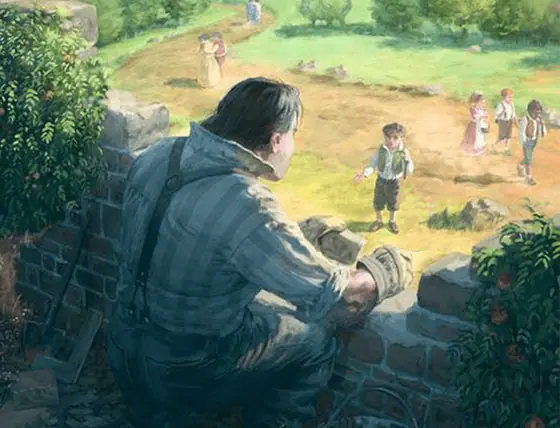
Photo: Florian Schönbrunner / Unsplash (Unsplash License)
ℹ️ This is an English translation of a Turkish oral folk tale. The regional dialect of the source text could not be fully preserved in translation. Read the Turkish original Dev İle Üç Kardeş (Bingöl Masalı).
The Dev and the Three Brothers is a folk tale from the Bingöl region; it tells of three brothers who, weary of their mothers-in-law, leave their land and try to take refuge with another tribe.
ℹ️ This is an English translation of a Turkish oral folk tale. The regional dialect of the source text could not be fully preserved in translation. Read the Turkish original here: Dev İle Üç Kardeş (Bingöl Masalı).
#### THE DEV AND THE THREE BROTHERS
Once there was, once there wasn't1. In a certain land there lived three brothers named Hasan, Kasım and Şaban. All three of these brothers had mothers-in-law. All three brothers had grown weary of their mothers-in-law. One day Hasan said: "Brothers, get up, let us leave this land. Let us take refuge with another tribe, find work and earn our living."
Upon this the three brothers got up and left. They went a little, they went a long way, and they reached the top of a high mountain. Looking down from the top of this mountain, they saw a wide plain, and the whole plain was sown with wheat.
Hasan said: "Brothers, get up, let us go and begin to reap this wheat; surely it has an owner. If we reap the wheat, perhaps the owner will do us a kindness."
The three brothers began reaping the wheat of their own accord, and they reaped the wheat for three days. After three days a dev2 came. As he came from afar, the dev shouted and grumbled: "Who are you? Why have you reaped my wheat? If I come over there, I will eat all three of you." Hasan said: "Brothers, do not be afraid. The one coming over there is a dev. When he gets here he will be angry, saying 'Why did you reap my wheat?' Keep quiet; I will answer him." A little later the dev came up to them.
The dev said: "Who are you? Where are you from? Have you not heard my name? I am a dev. Now I will cut off the heads of all three of you and eat you. Come on, you tell me, my child." Hasan said: "We are three brothers. We came here and saw this wheat like this and began to reap it. We thought that surely this wheat had an owner and that he would not leave this kindness of ours unrewarded."
The dev said: "Well done, my son; keep reaping." The dev went over to Hasan. He said to Hasan: "My son, give me your sickle and let me reap some wheat. You sit here and rest a little." The dev reaped on one side, Kasım and Şaban on the other. In this way the work of reaping the wheat lasted until the afternoon.
The dev wrote a note on a piece of paper and gave it to Hasan, saying: "Take this road and go straight on like this. My mansion is on top of the mountain you can see ahead. My wife lives there with my three daughters. Take this note and give it to my wife; she will know." Hasan took the note and went. After walking for two hours, Hasan opened the note and read it. The dev had written in the note: "If this man comes to the house, cut off his head, mix his flesh into the pilaf, and send it to me to eat." Hasan tore up the note and threw it away, and on another piece of paper he wrote: "When this man comes to the house, let him sleep tonight with our eldest daughter. Tomorrow morning slaughter our yellow ox, cook a good pilaf with the meat of the ox, and give the pilaf to him to bring to me."
Hasan took this note he had written himself and gave it to the dev's wife. The woman opened the note and read it. The dev had written: "Tonight let Hasan sleep with our eldest daughter. Tomorrow morning slaughter the yellow ox and mix its meat into a pilaf. Give this pilaf with meat to Hasan to bring to me."
The dev's wife at once brought the yellow ox and slaughtered it. She cooked a good pilaf with the meat of the yellow ox and gave the pilaf to Hasan. Hasan took the pilaf and went. Hasan went to the dev and gave him the pilaf. The dev took the pilaf from Hasan and said to him: "I did not write that in the note. How did that dog's daughter prepare such a meal and give it to you, and you bring me such a meal? I did not write that in the note. I wrote: kill Hasan, mix Hasan's flesh into the pilaf, and send it to me."
Hasan said: "If you want to go this time, then you go; otherwise I will go. Let your wife cut off my head and mix my flesh into the pilaf, and I will bring it to you."
The dev said to Hasan: "My son, keep quiet. I will give you a note now. This time you go again and give this note to my wife. If you are the one who comes this time too, then the next time I will go myself."
Hasan said: "Very well, sir." In the note he gave to Hasan, the dev wrote: "This time take out Hasan's eyes, cut off his lips, make him into kebab, cook it and send it to me. If this man returns to me safe and sound this time as well, I will come, and I will cut off the feet, hands and head of you, dog's daughter, and take you and leave you at the crossing of seven roads3."
After the dev had written the note, he gave it to Hasan. After Hasan had gone two hours with the note, he opened it and read it. He saw that the dev had written in the note: "If Hasan comes this time, cut off his lips for me, take out his eyes, make kebab, cook it and send it to me; if this man returns alive this time, I will come to the house and cut off your head, feet and hands; I will take you and leave you at the crossing of seven roads. No one will claim you." This time too Hasan tore up the note the dev had written and threw it away.
On another piece of paper he wrote: "This time, for Hasan, slaughter the red ox, make kebab of its meat, cook it, mix it into a pilaf, and send this pilaf to me. Tonight let Hasan sleep with my youngest daughter, and tomorrow you will send me this pilaf."
Hasan took the note he had written himself and gave it to the dev's wife. The woman opened the note and read what the dev had written: "Slaughter the red ox for me, make kebab of its meat, cook it and send it to me. Tonight let Hasan sleep with my youngest daughter, and tomorrow let him bring me the kebab and the pilaf."
The dev's wife slaughtered the red ox and made kebab of the ox's meat. Hasan slept that night with the youngest girl, and in the morning he got up and went to the dev's women's quarters. He said to the dev's wife: "Give me the food you have made, so that I may take it to the dev." The dev's wife got up and gave Hasan the food she had made and said: "Give the dev my greetings and tell him: 'Oh you cuckold4, you have spoiled the leaven of my house5.'" Hasan said to the dev's wife: "For now, farewell; I am going." The dev's wife said: "You were welcome here; may your journey be fortunate." Hasan said: "May you prosper6; may God be pleased with you."
Hasan took the food and went and gave it to the dev. The dev took the food but was very angry; he put the food down, got up and went toward the house. Hasan said to his brothers: "Brothers, I have spoiled the leaven of the dev's house; get up, let us leave here."
Hasan's brothers got up. Hasan went ahead of his brothers, and together they went on their way. The dev came back but could not find Hasan and his brothers. Hasan and his brothers walked for four days and at last reached a city. Hasan took his brothers to the city's bazaar and said to them: "Go wherever you please." Hasan's brother Kasım said: "Brother, why are you leaving us here?" Hasan's brother Kasım wept.
Hasan said: "Brother, why are you weeping? God is great." His brother Kasım said to Hasan: "You are leaving the two of us here; what shall we do now? This is a strange place, we have no home, and no one here will take us into his house."
Hasan said: "Go and work as servants for some lord." Hasan took his brother Kasım and left him with a coffeehouse keeper. Hasan said to the coffeehouse keeper: "Sir, this is my brother, his name is Kasım; let him serve you."
The coffeehouse keeper said to Hasan: "My child, what work can your brother do?" Hasan said to the coffeehouse keeper: "Sir, whatever work you say, my brother can do."
The coffeehouse keeper said: "Very well, my son."
Hasan left his brother Kasım there. He came back to the bazaar, searched and searched, but could not see his brother Şaban. At last, after a month, Hasan found Şaban in a dungeon.
Hasan said to his brother Şaban: "Brother, who brought you and threw you into this dungeon?"
Şaban said to Hasan: "As I was going to perform my ablutions, the dev saw me, and he brought me and threw me into this dungeon."
Hasan took his brother Şaban out of the dungeon and brought him to his own place. After staying four days with his brother, Hasan took Şaban to the bathhouse, soaped him, washed him, and made him perfectly clean.
He brought his brother Şaban out of the bathhouse, took him and entrusted him to the chief butcher.
Hasan said to the chief butcher: "I leave this brother of mine in your trust."
The chief butcher said to Hasan: "Brave one, where are you going?"
Hasan said to the chief butcher: "I will take my revenge on the dev."
The chief butcher said to Hasan: "Go, brave one; I am a dev hunter. This dev has a sword; this sword is inside a golden sheath, wrapped in felt, and it is under the pillow in the room where the dev sleeps. Take the dev's sword and come to the front of the door; on the right side there is a small window, go and hide in this window. When the dev comes in, strike one blow with the sword in your hand. The dev's head will come off at that moment and fall to the ground. But the dev can still speak, and he will say to you: 'Strike one more,' and you will say: 'No, I will not strike again; the custom of bravery is one blow.'"
Hasan went to the dev's mansion. He searched the dev's mansion and found the sword under the pillow in his room. He took the sword and went out in front of the door; on the right side of the door he saw a small window, and he got into this window and began to wait. When the dev put his head in through the door, Hasan swung the sword in his hand at the dev's head, and the dev's head came off and fell to the ground.
The dev said to Hasan: "Strike one more."
Hasan said to the dev: "No, the custom of bravery is one."
The dev died there. Hasan took the dev's body and threw it into the dungeon, and began to walk about the dev's house. He found the dev's three daughters and his wife.
Hasan married the dev's eldest daughter, and then he went and searched, found his two brothers and brought them to the dev's mansion. The dev's youngest daughter and Hasan's brother Şaban, and the middle daughter and Hasan's brother Kasım, were married. The three brothers lived on in the dev's mansion with the dev's three daughters in pleasure and joy; they attained their wishes.
Translator’s Notes
1. "Bir varmış bir yokmuş" ("once there was, once there wasn't") is the standard opening formula of Turkish folk tales, roughly equivalent to "once upon a time." ↩
2. A dev is an ogre-like or demonic giant of the Persian-influenced storytelling tradition, distinct from the giants of European folklore. The word is kept in its Turkish form. ↩
3. "Yedi yolun üzeri" (literally "on top of seven roads") is a place where seven roads meet. Being left there is presented as abandonment where no one will claim the person. ↩
4. The source word "teres" is a dialect or colloquial insult whose exact sense is uncertain; it most probably means "cuckold" (or a similar term of abuse). [doğrulama gerekli] ↩
5. "Evin mayasını bozmak" literally means "to spoil the leaven (yeast) of the house," and probably means to disrupt the harmony or fortune of the household. The exact sense in this context is uncertain. [doğrulama gerekli] ↩
6. The source word "berhudar" (from Persian "berhordar") means prosperous or fortunate; "berhudar ol" is a blessing, roughly "may you prosper" or "may you enjoy long life." ↩
Source
Source person: Erdal Aybek.
Bingöl Masalları (İnceleme-Metin) (Bingöl Tales: Study and Text), master's thesis prepared by Okan Alay, advisor Prof. Dr. Esma Şimşek, Elazığ, 2005. Fırat University, Institute of Social Sciences, Department of Turkish Language and Literature.
Translated from the Turkish. The Turkish original is published in this archive as Dev İle Üç Kardeş (Bingöl Masalı).


