The Eagle of the Underworld — An Anatolian Folk Tale
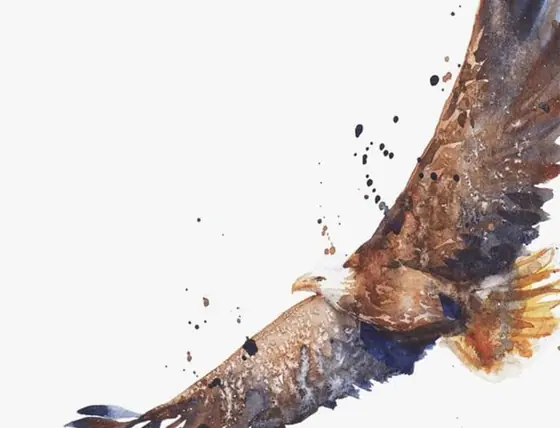
Photo: Kea Mowat / Unsplash (Unsplash License)
ℹ️ This is an English translation of a Turkish oral folk tale. The regional dialect of the source text could not be fully preserved in translation. Read the Turkish original Yeraltı Diyarının Kartalı (Anadolu Masalı).
The Eagle of the Underworld is an Anatolian folk tale. It tells of the journey of three brothers who set out to find a cure for their sick father, a journey that leads one of them down into the underworld.
ℹ️ This is an English translation of a Turkish oral folk tale. The regional dialect of the source text could not be fully preserved in translation. Read the Turkish original here: Yeraltı Diyarının Kartalı (Anadolu Masalı).
THE EAGLE OF THE UNDERWORLD
Once there was, once there wasn't1. There were three brothers, and they had a father. The father of these three boys fell ill and would not get well. The eldest son came and said:
"Father, why are you growing weaker day by day?"
"My son, I am ill," he said, but he did not tell him the reason for his illness.
There was the middle son, and to him too he did not say much. "Well, I am ill," he said, and that was all.
At last the youngest son went to his father:
"Father," he said, "why are you wasting away like this day by day?"
"Oh, my son," said the man, "if I tell you, will you be a cure for my trouble?"
"Father, perhaps I will be a cure."
"Well, I will tell you. Somewhere there was an Uyuz-Padishah2. I had three Hezaran Nightingales3. The Uyuz-Padishah took these nightingales of mine and went away. I have been ill since that day. If I could get my Hezaran Nightingales back, I would recover."
The youngest son told his two brothers about their father's trouble. The three brothers said: "We have learned our father's trouble, and we will find its cure too." They mounted their horses and set out.
They went and went and came to a place where three roads met.
On one of the roads a stone was set up with the words 'Whoever goes by this road will return' written on it; on the second road, a stone with 'Whoever goes by this road may or may not return'; and on the stone by the third road, 'Whoever goes by this road will not return.'
The youngest son said to his eldest brother: "You go on the 'road from which one returns.'" To the middle brother he said: "And you go on the 'road from which one may or may not return.'" And he himself said, "I will go on the 'road from which no one returns,'" and he set off on his way.
Going and going, the youngest son came to a fairly distant place... He came to a meadow and got off his horse. He drove in a stake and tied his horse. He lay down and fell asleep... In his sleep a noise, a rustling, reached his ear. He woke up and saw a dragon coming, a huge dragon. The boy got up, struck it with a mace, and killed it. He mounted his horse and took to the road again.
Going and going he reached a mansion. The boy went up into the mansion and saw a beautiful girl in a room. The girl said to him:
"Oh, brother, how did you come here? Any moment now Şahmaran, the padishah of the snakes, will come; this is the Şahmaran's palace... The Şahmaran will come and kill you here."
"Don't be afraid," the boy answered, "don't be afraid, nothing will happen. What is your name?"
"My name is Gülperi."
"Will you come to me?"
"I will, but the dragon will kill me." "I have killed him. Now I am going. When I have finished my business and come back, I will take you." The girl said, "All right." The boy got up, mounted his horse, and set out on the road again. He went and went and came to another mansion. That too was the mansion of the girl's middle sister, Gülizar. The prince spoke with that girl too. "I will take you when I return," he said. He continued on his way.
The boy reached one more mansion. This too was the mansion of the youngest sister, Gülbahar. To her too he says: "I will take you when I return," and he takes to the road again...
Going and going he reaches a place and sees a huge old man sitting on the road. This huge old man was unraveling a ball of thread for a time, unraveling and unraveling. Then he wound it for a time. The boy is astonished at this and asks:
"Uncle, what are you unraveling and what are you winding, this ball?"
"My son, I bring the far near by winding, and I make the near far by unraveling."
"Uncle, there is said to be an Uyuz-Padishah somewhere around here. Where is his place?"
"My son, his palace is in a very distant place, but I will wind the ball and bring the far near. This Uyuz-Padishah has an uyuz-sleep that lasts forty days. Today he and his whole country have gone to sleep in this uyuz-sleep. If you go now, the lions, the tigers, the gendarmes, the soldiers, all of them are asleep; the dogs have their mouths open, the gendarmes have leaned their weapons against the wall, and they are all sleeping. Do not be afraid at all. They will not wake for forty days. Go straight into the palace, do not hold back."
After hearing the huge old man's words, the boy went on without stopping, and thanks to the huge old man he reached the land of the Uyuz-Padishah in a short time. He arrives there and ties his horse. He enters the palace garden, and the lions, tigers, dogs and soldiers are all lying there, as if stiff and dried up, sleeping but with their eyes open, staring at one another. The boy passes before them and goes straight into the palace. There too everyone is in deep sleep, eyes open. He goes into a room, and the Uyuz-Padishah is lying there, and the Nightingales are singing at his head, all three. The boy takes the Nightingales and is about to leave... After going a little way he says to himself:
"What kind of man is this they call the Uyuz-Padishah? I have not uncovered his face and looked at it..."
He turns back, goes to the side of the throne, uncovers the Padishah's face, and sees a girl, beautiful, a girl like light. The prince begins to undo the buttons at her collar. The girl still does not wake.
The prince covers the girl's face again, leaves it, and goes off with the nightingales...
The boy returns. On his way back from the land of the Uyuz-Padishah, he collects the three sisters he had met on the road, first the youngest, then the middle one, then the eldest, in turn, from their palaces. The three girls mount their horses and join the boy, and they come to the fork where his two brothers had parted from him. The brothers had come back too and were waiting there for their youngest, as they had agreed... The youngest brother gives the eldest girl to his eldest brother and the middle one to his middle brother, and takes the youngest girl himself. They set out on the road again...
As they go and go, they come to a well.
They are thirsty. The eldest brother says: "Let me go down and draw water." They tie a rope and lower the eldest brother; when he has gone down a little, he begins to shout from below: "I'm burning!" They pull him up. This time the middle brother says, "Let me go down"; when he has gone down a little, he too cries out, "I'm burning!" and they pull him up as well. The youngest brother says: "Even if I say I'm burning, or whatever I say, pay no attention, let the rope down to the very end."
When the boy was about to go down into the well, the youngest girl begged him, "Don't go, you will not be able to come back up to the surface of the earth," but the boy insisted, "I will go down." Then the youngest girl says: "When you reach the bottom of the well, two rams will come, one white and one black. They will spin around you like this. Whatever you do, try to catch the white ram and get on its back. If you ride the white ram you will go to the Ak-Dünya4, if you ride the black ram you will go to the Kara-Dünya."
Anyway, enduring the heat, the boy goes down to the bottom of the well. A black ram and a white ram appear before him and spin around him. As he tries to mount the white ram, somehow the boy finds himself on the back of the black ram. The ram takes him down to the Kara-Dünya.
Meanwhile his brothers had taken the three girls and returned to their country, while the youngest brother descended to the Kara-Dünya.
As he goes and goes, the youngest brother comes to the house of an old woman.
"Mother," he says, "give me some water." The old woman gives him water; it is bright red blood...
"Why is this water blood?"
"Oh, my son, there is a dev5 at the eye of the spring. We send that dev a girl once a day. While the dev eats the girl, we take a drop of water. That is why the water is bloody." Today he is going to take the Padishah's daughter and eat her. There are no other girls left.
"Where is this dev? Show me, mother."
"Oh, my son, that dev has eaten many people, he will eat you too."
"Show me, show me."
The old woman sees that the boy will not turn back from this and points out from a distance the place where the dev is. The boy sees those who are taking the girl to the dev. He arrives before the girl, strikes the dev, and kills him. But the girl, when she arrived and saw the boy's courage, dipped her fingers in the dev's blood and pressed them onto the boy's back before he left. From the other direction the people came streaming, and while the water was still bright with blood, they filled their vessels...
The boy comes to the old woman and asks for water again. The old woman brings the water, bloody, and gives it to the boy. "Mother," says the boy, "this water cannot be drunk. Go and bring clear, pure, white water."
Elsewhere the Padishah's daughter reaches her father's palace, and they tell the Padishah what has happened. He has a town crier called out: "Whoever killed this dev, let him make himself known. I will give my daughter to whoever killed the dev."
This one comes and says "I killed him," that one says "I killed him." They cannot get to the bottom of this matter, they cannot find the one who killed the dev. The girl says:
"I know the man who killed him. Let them all undress and pass before the palace, all the young men there are in the country..."
All the men undress and pass before the girl. The girl sees the mark on the back of the boy who killed the dev and recognizes him:
"This one struck the dev," she says. The Padishah calls the boy:
"I will give you my daughter," he says. The boy answers:
"My Padishah, take me from the Kara-Dünya up to the Ak-Dünya. I want nothing else."
"My son, in such and such a place there is an Eagle. Go and see; if that Eagle is there, ask this wish of him. If anyone can take you up to the Ak-Dünya, he will."
The boy goes to the place where the Eagle is. He sees that something is wound around a huge tree; coming closer he sees that it is a huge snake. The boy strikes the snake with his mace and kills it. He himself lies down in the shade at the foot of the tree. The Eagle's chicks were at the top of that tree. After a while the Eagle comes. She is about to tear the boy to pieces at once. The chicks cry out:
"Don't touch him, mother. Look at that snake. The snake was going to eat us, and this man saved us."
On hearing this, the Eagle spreads her wings over the boy and gives him shade until he wakes.
When he wakes and sees the huge Eagle, the boy is frightened. The Eagle says:
"Don't be afraid, boy. You saved my young. Ask of me what you wish."
"Take me up from the Kara-Dünya to the Ak-Dünya; I wish for nothing else"
"My son, I am not in much shape, I have grown old, but it is now my duty to grant your wish. Let me take you up to the Ak-Dünya. Now you will bring me the meat of forty water buffaloes, and water in skin bags made from the hides of forty water buffaloes6.
The boy goes and brings these. He puts them on the Eagle's wings, one on each side. The Eagle seats the boy in the middle:
"Whenever I say 'lak,' give me meat, and whenever I say 'luk,' give me water," she says.
They begin to rise to the Ak-Dünya, and each time the Eagle says "lak" they give meat, each time "luk" water, and go and go... There is only a little way left to reach the Ak-Dünya. The Eagle says "lak," and there is no meat, it has run out... At once the boy cuts a huge piece from his leg, from there, like so, and gives it into the Eagle's mouth. A little later the Eagle brings the boy out of a hole onto the face of the Ak-Dünya. She says to the boy:
"Come, get down from my back, and walk on your way."
The boy gets down, but stays where he is and does not want to walk. He says to the Eagle:
"You go, I will go later..." The Eagle insists, "Boy, walk," and the boy, having no choice, walks a little, limping. Then the Eagle takes the boy's flesh from under her tongue and gives it to the boy and sticks it onto the cut place on his leg, and when the boy walks well as before, the Eagle says: "Come, my son, may it go well with you," and she departs.
The one in question is saved from the Kara-Dünya too7... You are saved and I am saved...
#### The Source of the Tale
Yeraltı-Diyarının-Kartalı (The Eagle of the Underworld). TTV 72; AaTh 301. In the TIV [sic] 38 tellings of this tale are analyzed. The beginning of the telling published here is linked to another type, 12 tellings of which are analyzed in TTV 206. Five tellings of TTV 72 that were collected or published later: İmren Yötükleri / Cehyan (the text in the book) [sic]; TFA no. 149 and ISO (Istanbul); HB 64, No. 79 (Naldöken/Botnova/İzmir); TAT, I no., p. 10 (Sungurlu/Çorum); HPB 67, no. 22 (Edremit/Balıkesir). Besides these, a text published in TFA no. 180 (Kırşehir) also approaches this type in one motif. In the Turkish oral tradition this tale is mostly told mixed with elements from other tales. In the Kyrgyz oral tradition this tale has been extended by being joined to other tales and to elements of tale and epic (épopée) and arranged in the form of an epic (épopée); this is examined in the following article: P. N. Boratav, L'épopée d'Er-Tötük et le conte populaire. "Volksepen der uralischen und altaischen Völker", Vorträge des Hamburger Symposions von 16.-17. Dezember 1965. Wiesbaden, O. Harrassowitz yayınevi, 1968, p. 75-868.
I collected the text in the book in February 1947 in the village of İmren, in the Ceyhan district of Adana, from Fidan Karadaş, a 35-year-old woman of the Saçı-Karalı Yörüks.
The words Uyuz-Padishah and Uyuz-Sleep in the tale are survivals, carried down to the present day, of the Oghuz epic tradition, perhaps through the story of Bey-Böyrek (= Bamsı-Beyrek of the Book of Dede Korkut). Uyuz is the form the Oghuz word took in the tellers' accounts, by a process of fitting, because they did not know its meaning; as is well known, in the Book of Dede Korkut too the Oghuz heroes are famed for their deep sleeps, called the "little death" because they last for days and end with the hero being caught by an enemy raid. In the Irish epic called the Red Branch (Roger Chauviré's French translation, La Geste de la Branche Rouge, Paris, Librairie de France, 1926, pp. 143, 216, 240 [as printed in the source: "s.1 43. 216, 240"]), a kind of illness lasting "nine days" that afflicted the men of the land of Ulster once a year and gave the enemy an opportunity to raid resembles the "Oghuz sleep," called the "little death" in the Oghuz tradition.
Translator’s Notes
1. "Bir varmış, bir yokmuş" ("once there was, once there wasn't") is the standard opening formula of Turkish folk tales, roughly equivalent to "once upon a time." ↩
2. "Uyuz" ordinarily means "mangy" or "scabies." The collector's note at the end of the tale explains "Uyuz-Padişah" and "Uyuz-Sleep" as a popular corruption of the Oghuz (Oğuz) tradition, so "Uyuz" is left untranslated. ↩
3. "Hezaran-Bülbül" is not a standard term; "hezar" is Persian for "thousand," so the name may mean something like a "thousand nightingales," but this is a guess. It is left in the original form. [verification needed] ↩
4. "Ak-Dünya" (literally "White World") and "Kara-Dünya" (literally "Black World") are the tale's names for the upper world of the living and the underworld, respectively. They are kept in their Turkish forms. ↩
5. A dev is a demon or ogre figure from the Persian-influenced storytelling tradition, distinct from the giants of European folklore. ↩
6. The source reads "kırk camızın eti ile kırk camızın gönünden tuluma su." The phrase is rendered here as the meat of forty water buffaloes and water in skin bags made from the hides of forty water buffaloes ("camız" is a water buffalo, "gön" is hide, "tulum" is a skin bag); the exact arrangement of the load is slightly unclear. [verification needed] ↩
7. The source reads "Olan da kurtuluyor Kara-Dünyadan… Sen de kurtuldun, ben de kurtuldum…" The closing is brief and unclear in sense (it appears to be a closing formula of the teller), and the rendering is a guess. [verification needed] ↩
8. The archival abbreviations (TTV, AaTh, TIV, TFA, ISO, HB, TAT, HPB) are as printed in the source and are not expanded here. The source prints "TIV" (probably a misprint for "TTV"), "İmren Yötükleri /Cehyan" (probably "İmren Yörükleri / Ceyhan," matching the collection note below it), and "s.1 43." in the citation (probably "pp. 143"); these are noted as they stand. [verification needed] ↩
Source
Distribution of the tale: Istanbul, İzmir, Çorum, Edremit/Balıkesir, Kırşehir, Eskişehir, Sivas, Çankırı, Kastamonu, Ankara, Gümüşhane, Bayburt/Gümüşhane, Erzurum, Tunceli, Kars, Gaziantep, Yozgat, Kayseri, Adana.
Narrator: Fidan Karadaş (35 years old, of the Saçı-Karalı Yörüks), in the village of İmren, Ceyhan district, Adana, February 1947. According to the collector's note, the text was collected by Pertev Nail Boratav.
Az Gittik Uz Gittik ("We Went a Little, We Went Far"), Pertev Nail Boratav. Bilgi Yayınevi, Ankara, first printing 1969.


