The Foolish Girl's Fortune — A Greek Folk Tale
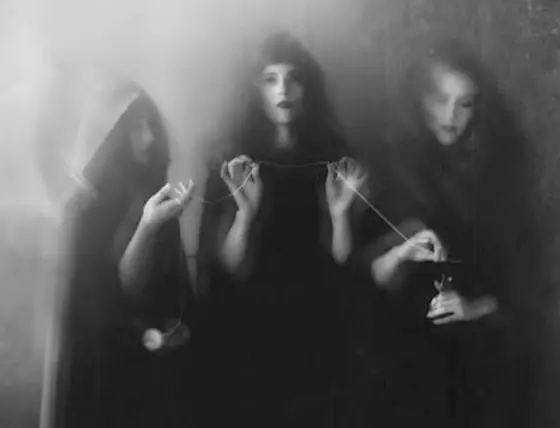
Photo: Despina Galani / Unsplash (Unsplash License)
ℹ️ This is an English translation of a Turkish oral folk tale. The regional dialect of the source text could not be fully preserved in translation. Read the Turkish original Deli Kızın Talihi- Bir Yunan Masalı.
The Foolish Girl's Fortune is a Greek folk tale. It tells of the strange things that happen to the simple-minded one of two sisters who live together in a lonely cottage.
ℹ️ This is an English translation of a Turkish oral folk tale. The regional dialect of the source text could not be fully preserved in translation. Read the Turkish original here: Deli Kızın Talihi- Bir Yunan Masalı.
Once there was, once there wasn't1.
There were two old spinsters. They lived in a little cottage in a lonely place. The younger one (she was 105 years old) was named Maria. The elder was named Eleniou. One day Eleniou left the house to gather herbs. Maria, who was a little simple-minded, burned all the clothes and broke the plates and dishes. When Eleniou came home and saw the scene, she asked her sister:
"What happened to our clothes, Maria?" "I burned them, Eleniou." "And our plates?" "I broke them too." Seeing her sister in this state, Eleniou mocked her: "Shall I marry you off, then? You want a husband, don't you?" But her sister answered in complete seriousness: "How could I not want one? Of course I do. Get up and find me a husband, I am still young anyway." "Very well. I will marry you to the king. But first you must become beautiful," said Eleniou. Maria began to think about how to become beautiful. Out of distress she sucked her little finger for forty days and forty nights. From all the sucking her little finger became so beautiful, so pink, just like that of an eighteen-year-old girl.
Trying not to feel jealous of her sister, Eleniou went to the king. "My king," she said, "I have a very beautiful sister, and she is in love with you. How can I describe her beauty? Think of it this way: she is a girl who has not seen the face of the sun since she was born, with skin of pink and white." The king grew curious. He mounted his horse and went to see this girl with the lovely skin.
Eleniou went ahead and advised Maria to hide and show only her finger through a hole. The king came to the house. He asked to see the girl. Eleniou said that her sister could not come out because she had never seen the sun, and that he could see only her little finger. When the king saw the finger, he supposed that anyone with such a beautiful finger must surely be a very beautiful girl, and he decided to marry her. Eleniou told the king that her sister must not go out into the sun and that he should therefore come and take her at night. When the king had gone, she undressed her sister. She tied her flesh with rope so that it would stay taut. Her skin was pulled tight and Maria's body was full of knots. Night came. The king's carriage arrived. There was a knock at the door. The old maids at once put out the kerosene lamp. Maria put on her dress. She got into the carriage and was taken to the palace. They held the wedding in the dark. When they got into bed, the king moved to embrace his wife. But the knots of the ropes that kept Maria's skin taut hurt him. Every moment he embraced his wife to kiss her, the knots stabbed him, but the king did not give up. When he hugged her so tightly that he almost smothered her, the old maid began to scream at the top of her voice. The king seized his wife and threw her out of the window. Maria fell unconscious among the roses in the garden. The fairies took pity on her and decided to make her an eighteen-year-old girl. One of the fairies promised to make her skin pink and white like a rose. Another promised to make her hair, eyebrows and eyes black as night. Morning came, and the fairies left. The king went down to the garden. And what should he see! In the place of the woman he had thrown out of the window at night, a girl as beautiful as any in the world lay among the roses. He ran and carefully took the girl in his arms. He laid her on the bed and began to gaze at her beauty. The girl woke2 and asked, "Where am I?" The king answered proudly: "You are my queen. You are here beside me."
Years passed. One day Eleniou went to the palace. Seeing her sister as a young and beautiful girl, she asked in astonishment: "How did you become so beautiful?" To take revenge on her sister for the knots she had tied on her body, the queen said: "I went to the barber and had my skin flayed." Eleniou ran to the barber. The barber took his razor. "Does it hurt, old woman?" he asked. The old maid answered: "Flay, my boy, flay. Pain means nothing to me for the sake of beauty." When the barber had flayed all the skin and came to her neck, he asked: "Shall I flay you, old woman?" "Flay or do not flay, my boy3." The barber set his razor to her. The old maid died on the spot.
So our foolish girl lived in happiness.
They attained their wish, and now let us climb onto our bench4.
Translator’s Notes
1. "Bir varmış bir yokmuş" ("once there was, once there wasn't") is the standard opening formula of Turkish folk tales, roughly equivalent to "once upon a time." ↩
2. The Turkish text reads "ulanıp," which is not a standard word. It most likely stands for "uyanıp" (waking up), but this could not be verified. [verification needed] ↩
3. The Turkish verb "yüzmek" means both "to flay, to skin" and "to swim." Here it means to flay: the barber's question "Yüzeyim mi?" and the old woman's replies "Yüz" ("Flay") and "İster yüz ister yüzme" ("Flay or do not flay"). ↩
4. "Onlar ermiş muradına, biz çıkalım kerevetine" is a standard closing formula in Turkish folk tales: "They reached their heart's desire; let us climb onto our bench." The "kerevet" is a raised wooden platform used for sitting or sleeping, and the line traditionally marks the end of the telling. ↩
Source
From the book Yunan Masalları (Greek Tales), compiled and translated from the Greek by Hülya Ağdan Helvacı. Okyanus Yayınları, 2000, p. 17.
Translated from the Turkish. The Turkish original is published in this archive as Deli Kızın Talihi- Bir Yunan Masalı.


