The Fortieth Room — A Turkish Folk Tale
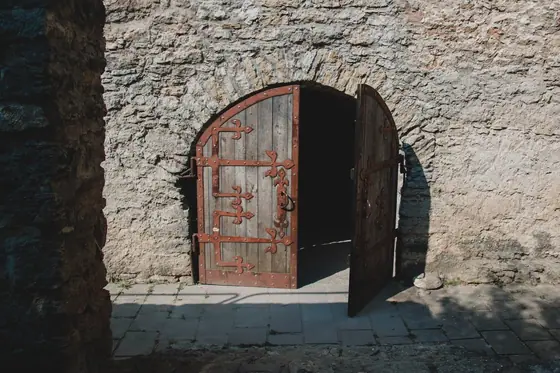
Photo: Beto Galetto / Unsplash (Unsplash License)
ℹ️ This is an English translation of a Turkish oral folk tale. The regional dialect of the source text could not be fully preserved in translation. Read the Turkish original Kırkıncı Oda-Naki Tezel (Türk Masalları).
The Fortieth Room is a tale from the Turkish Folk Tales compiled by Naki Tezel; it begins with the story of a family who live by cutting wood, in a hut at the edge of a forest.
ℹ️ This is an English translation of a Turkish oral folk tale. The regional dialect of the source text could not be fully preserved in translation. Read the Turkish original here: Kırkıncı Oda-Naki Tezel (Türk Masalları).
#### THE FORTIETH ROOM
Once there was, once there wasn't1. In the days of old, when the sieve was in the straw, a family lived in a small hut at the edge of a great forest. The man cut wood in the forest, where no axe had ever been, carried it to far-off cities and sold it, and so he provided for his family. The woman carried water to the house from the waterfall in the forest, gathered fruit from the trees, and cooked with the vegetables they grew in their little field.
And so, amid birdsong, the murmur of water, the scent of a thousand kinds of flowers and greenery stretching as far as the eye could see, this happy family one day had a plump, healthy baby boy.
When the child was born, the man was again away in the far-off cities, so all the work fell to the woman. What could the poor woman do? In that condition she got up from her bed, tucked her child under one arm, took her wooden vessels in the other hand, and went to the water's edge.
She laid the child down on the grass. She held out her vessel under the waterfall to fill it. Because she had risen from a sickbed, her hands and feet trembled and her eyes kept going dark. At one moment she felt her arm give way. Her eyes went completely dark, and, losing consciousness, she tumbled into the waterfall. Before she understood what had happened she was caught by the current and swept away.
The tiny baby, who knew nothing of all this, cried, shouted and struggled without pause, as though he understood what had happened to him. But no one understood his grief and his trouble. A child who had suckled only a few sips of his mother's milk right after birth — how could he know that he was now cut off entirely from his only food!
While the sweet little one had been crying like this for hours, a tigress hunting for prey in the forest heard his voice and came running. She saw a tiny living creature. He looked like the cubs she herself had borne. She bent over him at once and sniffed him here and there. She took pity on the baby's plight. She offered her teats to the little creature's mouth and began to nurse him with her milk.
The baby, unaware that he had been left motherless, latched onto the tigress's teats so hard that he sucked and sucked until his belly was full.
Seeing that no one was coming to fetch the baby, the tigress had no trouble understanding that he was alone in the world. Seizing him in her mouth by his swaddling, she carried him to her den, to her cubs.
From then on the little one began to grow, tumbling about with the tiger cubs and drinking tiger milk. He grew so fast, and the more he grew the stronger he became, that this did not escape even the mother tiger's eye. This human cub easily threw the tiger cubs he had grown up with onto their backs, and when they went hunting he hunted more successfully than his siblings.
The way this child she had found in the forest grew stronger day by day, grew taller, and hunted more easily than they did began to make the tigress think. Besides, this creature did not resemble her own cubs at all.
"What if he puts out our hearth?" she feared. Little by little she also noticed that he resembled the humans who fired on them in the forest. She began to look for a way to send him away from among them before he could do them any harm.
One day they all went hunting together again. The mother tiger showed him the foot of a tree and signaled that he should wait there. She took her cubs and went far, very far away. Gone for good. When hours had passed and the tiger boy saw that the mother tiger and his tiger siblings had not come back, he began to look for them in the forest. He ran right, he ran left, he went here, he went there — nothing... nothing. Worn out, he went to his den, lay down and fell asleep.
At about this time the prince of that country was roaming the forest with his men to hunt deer. One of his men came running, excited, and said:
"Oh, my prince," he said, "over there we saw a tiger's den. A huge human is lying inside it. His bearing frightened all of us. Truly, we had never seen a man like this!"
The prince was curious about this enormous man. They all went there together. He saw a giant of a man lying in the tiger's den. They began to examine him carefully. The strength of his arms could be told from the swelling of his biceps, and at first glance one could sense that his hands were as strong and as fierce as a tiger's claws. His body, legs and arms were covered with hair, and on this big man his thick hair and long beard were tangled together.
The prince's men were terribly afraid of this man, who looked so little like themselves, but for some reason the prince liked him very much. He at once ordered his men to bind tightly this creature, whom he had named Kaplan Adam2. Kaplan Adam, sleeping deeply, was aware of nothing. He simply slept, snoring like thunder.
They at once had the prince's six-horse hunting wagon brought. Twenty people took hold of him, each from one side, lifted Kaplan Adam gently, laid him in the wagon, and took him straight to the palace.
That night the padishah did not like this fearsome, beast-like creature at all. He was even cross with his son for it.
When Kaplan Adam woke and found himself in a strange place, tied up with thick ropes, he was furious. He began to roar like a tiger and to snap the ropes. After he had broken the ropes entirely, as he got ready to run to escape from where he was, he saw that he was inside a huge iron cage, and he grew even angrier. He kept shouting, shaking the iron bars with all his strength. Then he understood that he would not get free this way, and fell silent, helpless. He drank in a single gulp the water in the big bowl that had been left in the cage. Then he ate, one after another, the various foods standing in other dishes. What he ate tasted very sweet. Since his belly was full, his rage eased a little, and he began to sit quietly like a good boy.
Just then the prince came to the front of the cage, laughing. He began to say something by signs to the calmly sitting Kaplan Adam.
Kaplan Adam, who in his looks was just like the prince, liked very much both the prince's smiling face and the words that sounded soft in his ears. The more the prince spoke, the more he laughed, almost shouting with laughter.
This went on for days, weeks, months. Kaplan Adam grew a little more used every day to the place where he was, to those around him, to the meals set before him. He even began, little by little, to understand the words that were spoken.
In time they let him out of the cage as well. Now that he had grown quite used to everyone, he walked about freely, and especially never left the prince's side. As the days passed he began to repeat some words more and more clearly, and later to speak in short sentences.
After a few years Kaplan Adam had learned to speak properly like everyone else. He could put on clothes, eat at the table, ride a horse, go about, shoot arrows — in short, he could do everything. His only difference from other people was that he was very big and very strong.
The padishah, who had not liked Kaplan Adam much when he first came, now loved him and made no distinction between him and his own son.
One day the padishah of one of the neighboring states declared war on them.
The padishah at once got his soldiers ready. Kaplan Adam joined the soldiers and went to fight the enemy.
The war between the two sides was so fierce that it lasted for days, for weeks. Neither side knew how many dead and wounded it had suffered.
Kaplan Adam was at the very front of the soldiers, shooting arrows without pause and letting no one come near him. When the arrows ran out he got down from his horse and attacked the enemy with stones and clubs. The enemy soldiers were so afraid of his size, his strength, his courage, the way he laid out whoever came before him with a single touch, that they had no choice but to leave the battlefield and flee. But would Kaplan Adam let them go? Together with the soldiers, on level roads on horseback and on rough ground on foot, running and climbing, he flung himself after them.
At one point the commander of the soldiers fell lifeless to the ground, struck by an enemy arrow, and Kaplan Adam took over the command. The enemy, already in defeat, fled as far as they could go. Those who could not flee were taken captive by the soldiers under Kaplan Adam's command.
When the soldiers under Kaplan Adam's command returned to the city in victory, singing songs of triumph, all the people, with the padishah at their head, greeted them with demonstrations of affection.
Kaplan Adam came straight to the padishah and knelt before him. For the great victory he had won for his country, the padishah kissed Kaplan Adam on the forehead. Holding out to him the sword of the commander-in-chief, he said:
"From now on," he said, "you are the commander-in-chief of our army!" The people, overjoyed, carried Kaplan Adam on their shoulders.
They carried him like that all the way to the palace.
After the victory the padishah decided to go to one of the friendly countries to rest a little.
Calling Kaplan Adam to him, he said:
"Now," he said, "there is no longer any danger from enemies for us. And I have grown very tired in these last days. I want to travel as far as the land of Egypt and spend a few months as the guest of the Padishah of Egypt. While I am away, you are my deputy!"
Kaplan Adam then said:
"My padishah," he said, "I thank you for the trust and closeness you show me. But the prince can be your deputy. This task is his by right."
The padishah answered with a laugh:
"True, true, but I will take him with me. Besides, if a hero like you is at the head of the country, no enemy will dare attack our lands. My mind will not be left behind, and my heart will be at ease."
Well, then! The preparations for the journey began. On a sunny spring day, ten golden wagons adorned with satin and silk, each drawn by six horses, set out on the road to Egypt3
Let them go on their way; we turn to Kaplan Adam:
Since Kaplan Adam was now the padishah's deputy, he looked after all the affairs of the country and had to think of everything.
But there was one thing that always gnawed at him and that he could not shake off. It was the forty keys the padishah had left him before setting out.
As he gave him these keys the padishah had said:
"These belong to the forty magic doors of our palace," he said. "My request of you is this: you may open thirty-nine doors. But never open the fortieth door!"
It was this fortieth room that kept Kaplan Adam thinking. What could be in there, he kept wondering, that the padishah did not want me to open it? He could not even sleep because of it. He could not go and open the fortieth room, because he thought that not keeping his word would be shameful. Yet he could not stop a secret force inside him from pushing him. Seeing that it could not go on like this, one day, when there was no one in the palace, he took the keys in his hand and began to open the rooms.
When he opened the door of the first room, he felt as if he were in a dream. In a garden like paradise, full of flowers of a thousand colors and a thousand scents, tiny winged fairy girls, like butterflies, kept flitting from flower to flower, laughing merrily in the bright light of the sun.
After watching them for a long time, Kaplan Adam closed the door, went and opened the second door. In a lovely woodland that opened before him, huge devs4 and tiny dwarfs were playing ball. Both the devs and the dwarfs had such a friendly air that Kaplan Adam almost went over and joined them. As he unwittingly stepped through the door, the jangling of the keys brought him to his senses; remembering that he was the padishah's deputy, that many tasks awaited him, and that going off to play ball would not suit him at all, he gave it up. He drew back and closed the door.
He opened the third door at once. All of a sudden he met with such a sight that he could hardly believe his eyes. He rubbed his eyes, wondering whether he was dreaming. No, what he saw was not a dream. It was not, but he could not get it into his head that such a thing could be real. Rubbing his eyes once more, he looked. Yes, it was not a dream; what he saw was real. As far as the eye could see, in countless little hills, gleaming gold coins stood right before him.
Truly, he did not know what to do. For a moment he even forgot the fortieth room. He said to himself:
"With this much gold one could buy the world," he kept saying. Then he said:
"Never mind," he said, "what worth is money if it is not one's own, earned by the sweat of one's brow? Health is above everything. A person should work and earn, and eat that way. What do I care about someone else's money!"
He closed the door and locked it. He opened the fourth room. This time there appeared before him a garden made entirely of colored marble, surrounded by tall green trees. In the middle of the garden was a huge pool of crystal glass. Snow-white doves, flying in over the tall trees, lined up one by one at the edge of the pool. Then, again in turn, they dived into the water of the pool and came up again as fairy girls, each as beautiful as the full moon, as the fifteenth day of the month.
Under the water that fell like an umbrella from the great fountain in the middle of the pool, the fairy girls played and swam, joking and laughing, and then became doves again and flew away.
Kaplan Adam watched them for a while too. These mysterious rooms had begun to make his head spin. For whichever door he opened, he met things that had never crossed his mind, and he could not help staring in wonder.
So he opened the other rooms as well. In one he saw fairy girls who were fish from the waist down, in another palaces and pavilions of gold and silver that dazzled the eye.
In another room he came upon the king of the lions, and in yet another the ruler of the ants.
At last, opening all the rooms one by one, he came to the front of the fortieth room. He had come, but his excitement had grown enormously. That huge man's heart was pounding, and he was extremely wary of doing something wrong.
When he remembered that he was the padishah's deputy, he saw no harm in opening the door. After putting in the key and unlocking it, he took hold of the ring and pulled the door open.
This place was not at all like the others. It was a tiny room, rather dark. On a post in one corner of the room an Arab5 man stood bound by his arms and legs.
At first Kaplan Adam understood nothing of this. Opening the door, he asked:
"My friend, what is your business here? What did you do that they tied you up like this?"
The Arab began both to weep and to explain:
"I was a servant in this palace. The padishah fell ill. They could not find a cure for his illness. One day an old man turned up and said: 'If water is brought from the red-watered stream behind Mount Kaf6 and given to him to drink, nothing will be left of his sickness.' Thereupon the padishah announced that whoever could bring a jug of this water would be given ten purses of gold. He announced that if anyone came forward saying 'I will bring it' and failed to bring it, he would have his head cut off at once. An old woman, saying she could bring the water, went, but returned empty-handed. Devs had appeared before her; she came back without being able to take the water. The padishah ordered the woman's head to be cut off. He gave the executioner's duty to me. I said I could not do such a thing. Besides, it was unjust to kill a poor woman. But the padishah was very angry. Because I did not obey his order and did not kill the innocent woman, he had me tied up here. That is my fault. Would you not have done as I did, if you were in my place?"
The Arab kept weeping. His state touched Kaplan Adam. Judging by what he told, he found him innocent. He cut the ropes at once and set him free. Then he said:
"If you have lied to me, you will not escape my hands."
The Arab fell at Kaplan Adam's feet. In tears he swore that he had told the truth. Then he ran off with all his strength and disappeared from sight.
Months went by, and whenever Kaplan Adam remembered the Arab, he was pleased to think that he had done a kindness and saved a man imprisoned unjustly.
One day, as he sat in his work room in the palace, the chief vizier came in with a messenger pigeon in his hand. A piece of paper was tied to the pigeon's leg. Kaplan Adam took the paper at once and read it. It was a letter sent by the padishah. In this letter the padishah let him know that they were on the road and would reach the city in a few days.
They began preparations to welcome the padishah. They cleaned every part of the palace. They arranged the ceremony.
After a few days the golden wagons bringing the padishah, the prince, the sultana and their attendants drew near the city. Kaplan Adam, the viziers, the people of the palace, the soldiers and the townsfolk welcomed the arrivals with ceremony.
The next day Kaplan Adam told the padishah of the work he had done.
Then he brought the forty keys and handed them over.
The padishah said:
"Tell me, Kaplan Adam," he said, "did you open the fortieth room?" A thought seized Kaplan Adam. What answer should he give the padishah? If he lied, it would not be an upright act. And besides, it would be useless. The padishah would understand anyway. If he told the truth, what if the padishah got very angry?
Whatever came of it, he decided to tell the truth:
"My padishah," he said, "until today I have not told a lie. So I cannot lie now either. Yes, although I had given you my word, I could not hold out; a secret force inside me pushed me, and I opened the fortieth room too. But I am not sorry. I saved the Arab whom you had unjustly imprisoned. I set him free."
The padishah laughed:
"I am very glad that you told the truth," he said. "For that reason I forgive the fault you committed. But do you know what mistake you made while trying to do a good deed?"
Kaplan Adam was astonished and could not answer. The padishah went on:
"The Arab who stood bound in the fortieth room had not been imprisoned there unjustly. He was a wicked man. He had kidnapped the prince's small, lovable daughter Bilge. We searched and combed, but could not find my dear granddaughter. My men caught the Arab and brought him. And I had him imprisoned until he told where my granddaughter was. Do you understand now the mistake you have made?"
Kaplan Adam was utterly astonished at the padishah's words. He understood the wrongness of what he had done. When his astonishment had passed a little, he said:
"But my padishah," he said, "why did the Arab kidnap such a small girl?" The padishah said:
"Why would he," he answered, "he had no child. He decided to take a white child and adopt her. Seeing my granddaughter Bilge as the most suitable child to adopt, he took her and ran away."
Kaplan Adam was dreadfully upset at the trick the Arab had played on him. Kneeling before the padishah, he said:
"You are right, my padishah," he said, "I have unknowingly committed a fault. But I know how to send that Arab's soul to hell and how to rescue your dear granddaughter Bilge from his hands. If you give me leave, I want to go after the Arab at once."
The padishah gave Kaplan Adam the leave he asked for. Bilge's father, the prince, also wanted to go with Kaplan Adam.
Both had a suit of iron armor made. Taking iron staffs in their hands and filling their horses' saddlebags with gold, they set out. They went a little, they went far, they went over streams and hills and plains. Nights chased days, days chased nights. The moon ran after the sun, the sun after the moon. Days joined hands with weeks and weeks with months, and still they had not reached the place where the Arab was.
Going and going, they grew tired. At a spot where they stopped to rest beside running water, a huge cave on a mountaintop caught their eyes. After they had fed the horses and themselves, drunk their fill of water and rested enough, they got up and set off.
On and on they went, and on and on. Toward evening they reached the place where the cave was. Drawing near, the prince looked in through its door. And what should he see? A huge dev mother sat before a great hearth that roared like a volcano, cooking food in a cauldron hanging from the ceiling. He turned back at once, came to Kaplan Adam, who was unfastening the horses' reins, and told him excitedly what he had seen.
Kaplan Adam laughed:
"What is there to be excited about?" he said. "Don't be afraid, come with me!"
Kaplan Adam in front, the prince behind, they went in through the door of the cave. The old dev mother by the hearth was almost dozing where she sat. Kaplan Adam went straight to the great hanging cauldron, seized it and set it down on the ground in one motion. The dev took some of the food with her ladle and raised it to her mouth.
The dev mother, who opened her eyes at the rough noise the cauldron made when it hit the ground, saw two sons of man. One was small and slight like other humans. But the other was huge in build, like the devs. Judging by the ease with which he had set down the great cauldron that several devs together could hardly lower to the ground, he must be very strong.
Just then Kaplan Adam called out:
"Heeey, old woman! What are you doing like that? Isn't there a welcome? We are God's guests."
The old dev mother saw that this was not at all like the sons of man she knew. Thinking there was nothing for it but to speak kindly, she said:
"Forgive me," she said, "I am old and my eyes do not see well. Welcome! Welcome!"
Kaplan Adam asked:
"Is there no one here but you? We are hungry, and tired, and sleepy."
The old woman burst into a laugh that made the cave ring:
"How could there not be?" she said. "I have forty sons like lions. They went out hunting in the morning. They will be back at any moment. You sit down a while, and I will send word to them with my grandchildren."
Then she got up from her place. Swaying from side to side, she went out through the cave door and into another cave next to it. There she said to her grandchildren:
"Come, run quickly, tell your fathers," she said, "two sons of man have come to our cave. But they are not the kind whose flesh is eaten. When they arrive, let them treat both of them well. Otherwise I will not interfere."
The dev children ran to call their fathers. The dev mother turned and came back to the cave where Kaplan Adam and the prince were. She filled huge wooden plates with food from the cauldron and set them before the guests. While they were eating, the devs began to arrive one by one. The prince's food stuck in his throat for fear, while Kaplan Adam ate his meal paying no attention to those who came.
As they came into the cave, the devs said to them with smiling faces:
"Welcome," they said. And so the forty devs were complete. When the meal was over, Kaplan Adam got up, lifted the great cauldron in one motion and hung it back in its place. Admiring his strength, the devs took a great liking to this very big son of man. They said to him:
"Tell us," they said, "where do you come from and where are you going like this? If you have any trouble, we will not hold back whatever help we can give."
Pointing at the prince, Kaplan Adam said:
"My friend is a padishah's son," he said. "A wicked-hearted Arab kidnapped his little daughter Bilge to make her his own child. We set out to rescue the girl from his hands and to send his soul to hell. We are looking for the place where he is. Ah, if only we could find it!"
The dev mother, cutting in from the side, said:
"I know the Arab you are looking for," she said. "He lives in a mansion behind Sivri Dağ, on the far side of the Geçitvermez Çay7. But no one has ever managed to cross either the Geçitvermez Çay or Sivri Dağ. Not even we can get there. But you look like a very strong, daring man. Perhaps you can accomplish this. If your friend goes with you, it is doubtful he will ever return."
After listening carefully to the dev mother's words, Kaplan Adam said:
"I thank you for helping me," he said. "One way or another I will lay hands on that wicked Arab. Until I return, let the prince stay here. I entrust him to you. If you touch a hair on his head, I will take the padishah's whole army under my command, come upon you, and destroy every one of you. You understand?"
The dev mother laughed:
"Kaplan, my son, do not worry at all," she said. "We do not touch brave people. You and your friend seem good people. From now on we will always be friends. Until you find the Arab and come back, your friend can stay with us. We will do all we can to make his time pass pleasantly. Go now, and may your road be open."
After embracing the prince, and taking leave of the dev mother and the dev children one by one, Kaplan Adam set out.
He galloped his horse over mountains and slopes, flying like a bird. Along the roads he passed, deer and gazelles startled by the sound of hooves ran here and there, hares hid in burrows, and birds rose from the trees where they had perched, in flocks, and flew away.
So he went and went and went. Evening came, and it grew dark. He climbed a tree in the forest and spent the night there.
When morning came he washed his face at an ice-cold spring. He gathered fruit from the trees and filled his belly. After he had watered well his horse, which had filled its belly on grass, he set out.
He went a little, he went far, he went over streams and hills. Camping and moving on, he reached a fountain. There he saw three children quarreling. He went up to them at once and said:
"Children, why are you quarreling?" he said. "Can't you divide your father's inheritance?"
One of them said:
"That's right," he said. "How did you know?" Kaplan Adam said in surprise:
"How would I know?" he said. "I just said it. So you are quarreling over an inheritance. Well, what is it you cannot divide?"
The child said:
"We are three brothers. Our father died. He left us a sheepskin and a whip. We cannot somehow divide these two things among ourselves. Can you find a way out of this?"
Kaplan Adam said:
"What is easier than that?" he said. "If you sell this sheepskin and whip at the market, they would not give you even one gold piece for the two. Here, I give you 15 gold pieces. That makes 5 for each of you. These 5 gold pieces will last you a long time. Well, is it settled?"
All three children, delighted, crowded around Kaplan Adam.
They put the five gold pieces each that he gave them into their pockets.
After Kaplan Adam had taken the sheepskin and the whip, one of the children said:
"Uncle," he said, "that sheepskin and whip are magic. If you ride the Skin, it will lift you into the air, and if you strike it with the whip, it will take you wherever you want. Farewell!"
As the children went away, happy about the gold, Kaplan Adam mounted the sheepskin and rose to the heavens. Striking the Skin with the whip, he began to make his way toward the Geçitvermez Çay.
The Skin flew at the speed of lightning, and Kaplan Adam held on tight on both sides so as not to tumble into the void.
A little later the Geçitvermez Çay was left far below like a ribbon, and the Skin passed swiftly over the stream and continued toward Sivri Dağ.
Sivri Dağ, its peak lost in the clouds8, looked like a mirage in the distance, and the Skin kept drawing nearer to it. Now flying in the open air under the sun, now passing through the clouds, the Skin came close to Sivri Dağ, and Kaplan Adam struck it again with the whip and took it higher, above the mountaintop.
Kaplan Adam looked carefully at Sivri Dağ. The sharp rocks and great chasms he saw as he passed over it put a kind of fear in him. He told himself that the dev mother had been right. To avoid seeing those terrible sights he shut his eyes for a few seconds.
When he opened his eyes again he saw that Sivri Dağ had been left behind, and in the middle of a huge green plain spread out before him, among high fortress walls, a very large mansion. He began to descend at once.
He descended and descended and descended. He landed beside a tree in the garden of the mansion. Hiding the whip and the Skin among the branches of the tree, he walked toward the mansion. As he walked he examined the mansion and its surroundings.
The trees rising along the walls, the birds making all kinds of sounds, the closed windows of the mansion, the wild weeds as tall as a man, the ants as big as a finger, the huge fortress gate with its iron bars, the vultures nesting in the hollows of the walls — all told at first glance that the place was a terrible one, untouched by human hand.
The great door of the mansion stood ajar. There was no one in sight.
Stepping on tiptoe, he went in. Inside the mansion was a silence that almost deafened the ears. Only the sound of the birds singing in the garden came faintly from afar and broke the silence. Wide marble stairs, thick tall columns, and a dimness covering everything were what struck the eye first.
Slowly he began to climb the stairs. As he climbed he listened carefully to his surroundings. On every floor there were several large closed doors. He turned their handles to open them, but could not.
So he climbed all the way to the top floor. Then a mournful song reached his ears. Realizing that the voice singing it was a young girl's, he had no trouble understanding that it was Bilge.
A joy suddenly lit up inside him. He was as thrilled as if he had found the place of a captive held by the enemy and freed her.
Again on tiptoe, he approached the room the voice came from. The door of the room was closed. He stood a few seconds before the door, wondering whether to open it or not. Then he turned the handle and went in.
Bilge, suddenly frightened by the creak of the door, turned and looked that way. Expecting the Arab, she was first astonished to see before her a handsome man of giant size. Then she cried out:
"Who are you?" she shouted. "How did you get here?" As Kaplan Adam walked slowly toward her, he said:
"Do not be afraid," he said, "I am a son of man who has come not to do you harm but to do you good. First tell me, where is the Arab?"
These words eased Bilge's heart a little. She said to him:
"The Arab is not here now," she said. "He goes out in the mornings. I clean, cook and do all the work until evening. He comes after dark. He is a very quarrelsome, wild man of bad character. Although he kidnapped me and brought me here to make me his child, here I am no different from a servant. On top of that, I get beaten every day."
Kaplan Adam felt great pity for Bilge, whose sorrow and grief showed in the pallor of her face, her thinness and the shabbiness of her clothes. Stroking her, he said:
"Do not grieve, my sultana," he said, "your sorrow and grief will soon be over. I will take you to your father, your mother and your grandfather the padishah. I am the commander-in-chief of your country. I am also a close friend of your father. I will rescue you from here at whatever cost. Now listen to me: if you have somewhere to hide here, hide me there! When the Arab comes back this evening, I will step out in front of him at once and bind him with rope, and then we will all go to the palace together. If he should resist me, I will cut off his head with one stroke of my sword. Taking his head with us, we will go back to our country, all right?"
Bilge clung to the hands of Kaplan Adam, who had come to rescue her from the terrible Arab, and kissed them, shedding tears of joy. She said to him:
"The Arab is not a man like you and me, that he would not resist you," she said. "He is seven-lived. A sword cannot cut any part of him. But he is not always like this. Sometimes he is no different from you and me. Then a man stronger than he can do anything to him. At other times he becomes seven-lived. Then no one can touch him."
Kaplan Adam understood nothing of this:
"But how is that?" he said. "In the fortieth room of the palace I found him bound. He did everything he could to make me free him from the ropes. He deceived me with lies and ran away. If he were seven-lived, could he have been caught and thrown in prison?"
Bilge said, laughing:
"Wait, let me tell you his secret," she said. "I too learned it from him not long ago, at a good moment."
After showing her guest a seat and sitting down opposite him, Bilge began to tell:
"There is said to be a mountain in these parts called Domuz Dağı9. On that mountain lives a very big, strong pig. In the belly of this pig are two boxes. In one of these boxes is a white dove, in the other a black dove. The white of these doves is the Arab's strength. The black dove is his life. Do you understand now? Unless that pig is killed, the boxes taken from its belly, and the doves' heads torn off, no one can do away with the Arab. When the pig lies down to sleep, the Arab's strength is gone too, and he becomes a man like us. Then anything can be done to him. But while the pig is awake, the Arab is seven-lived. No one can overcome him. Neither arrow nor sword works on his body. And it is impossible to know when the pig is asleep and when it is awake. When my grandfather had the Arab caught, the pig must have been asleep. Afterwards the pig must have woken, but the Arab could not break out of the magic room and escape."
Kaplan Adam listened carefully to Bilge's words. Pleased with what he had learned, he said:
"Good," he said, "when we meet him, if the pig is asleep, I will finish him off."
Bilge cut in on him excitedly:
"But what if the pig is not asleep?" she said. Kaplan Adam said, laughing:
"Do not be anxious, my sultana," he said. "If the pig is awake, I will leave here, go and find it, and kill it. Then I will slit open its belly, take out the boxes, and tear off the doves' heads."
Bilge said, hopelessly:
"But you cannot escape from here," she said. "The place is surrounded by high fortress walls."
So absorbed were they in conversation that they did not notice time passing and evening coming, the air beginning to darken. It was a long while before Bilge came to her senses:
"The Arab will be here any moment," she said. "Hide behind this curtain. But be careful, or it will end badly for both of us."
When Kaplan Adam had hidden behind the curtain Bilge showed him, a sound like thunder was heard from outside.
Bilge said:
"There," she said, "the Arab is coming. That noise is the fortress gate closing. Do take care of yourself!"
A few minutes later the Arab came into the room. Looking around, he said:
"There is a smell of man here," he said. "Has a stranger come?" While Bilge was trying to invent a lie, Kaplan Adam stepped out from behind the curtain and said loudly:
"Yes, you guessed right," he said. "There is someone here, but not a stranger!
Do you recognize me?"
Seeing Kaplan Adam before him, the Arab let out a laugh and roared:
"Ah, my friend, ah!" he said. "You believed my lie, you took pity on me and freed me from the fortieth room, but I do not know what pity is. You will not leave here alive. Defend yourself."
With an agile movement the Arab snatched a sword hanging on the wall and began to advance on Kaplan Adam. Kaplan Adam drew his sword and threw himself at the Arab.
Such a sword fight began between the two that Bilge, terrified, huddled in the corner where she hid and watched the fight with her heart in her mouth.
Because no sword could cut his body, the Arab fought quite freely; because he was bigger and stronger than the Arab, Kaplan Adam could easily land his sword on him. But Kaplan Adam always guarded himself so that the Arab's sword would not touch him, sometimes using the furniture in the room as a shield.
The sounds of the swords clashing hard against each other put Bilge's heart in her mouth, and she lost her wits fearing something would happen to Kaplan Adam.
During this fight Kaplan Adam struck the Arab's shoulder, his arms, his belly, his head, even his chest, several times with his sword, hit him hard, yet nothing happened to the Arab. He laughed as though he were playing a game:
"Not even the padishah's soldiers will be able to save you from my hands; I will tear you to pieces here," he kept saying.
Kaplan Adam understood that killing the Arab would not be easy. What Bilge had said was coming true. The pig must be awake. Now he would have to leave here and find the pig.
He at once decided to do what had come to his mind. Slowly he turned toward the door. Fighting as he went, he left through the door. Because the Arab did not let him go, the fight continued in the corridor and on the stairs.
Realizing that Kaplan Adam wanted to flee, the Arab shouted:
"You are afraid, aren't you, big man," he shouted, "where has your strength gone! Show yourself!"
Would Kaplan Adam ever be afraid? He answered at once:
"Afraid? I will prove to you that I know no such thing. I swore an oath to send your soul to hell. You will see, I will do it."
The Arab, laughing mockingly again, said:
"You seem to forget that there are high fortress walls around my mansion," he said. "No one can get out of here."
While the Arab was boasting from on high like this, Kaplan Adam brought his sword down with all his strength on the Arab's sword-hand, such a blow that the Arab's arm was not cut off, but his sword fell from his hand and rolled down the stairs.
Not missing this chance, Kaplan Adam, without looking back, leaped down the stairs four and five at a time to where the door was. In a single bound he threw himself into the garden.
Thinking that he had run away, the Arab, reasoning that he could not get anywhere anyway and that he would catch him in some corner of the garden, was in no hurry at all. After going to fetch the sword, he went out into the garden after Kaplan Adam.
Kaplan Adam was running with all his might, and the Arab was chasing him from a little way behind.
Before long Kaplan Adam came to the tree under which he had hidden the whip and the Skin. He took them from where he had put them. Just as he was about to come right beside the Arab, he mounted the Skin and rose into the air.
Meeting with something that had never crossed his mind, the Arab flew into a terrible rage. He called out after Kaplan Adam:
"Do not think you have escaped my hands by fleeing! As long as Bilge is here, I will get hold of you sooner or later."
This time it was Kaplan Adam's turn to laugh. As he slowly drew away, he shouted:
"Flee? Do not expect that of me. Because you lied to me, I will give you your punishment with my own hand. Do you know where I am going now? I am going to Domuz Dağı. I will kill your pig and destroy both your strength and your life."
At these words of Kaplan Adam, the Arab was dumbfounded. Fear fell into his heart. He said to himself that if this man killed the pig, took out the boxes in its belly and tore off the doves' heads, that would be the day he died.
First he wondered how Kaplan Adam had learned about his pig on Domuz Dağı. Remembering that only Bilge knew this secret, he had no trouble finding out that Kaplan Adam had learned it from her. He decided to go and kill Bilge at once. As he walked quickly toward the mansion, he raised his head and looked at the sky. And what should he see? Kaplan Adam looked like a dot in the air. He was drawing closer and closer to Domuz Dağı.
Thinking he had no time to lose, the Arab ran swiftly toward the fortress gate. Climbing the stairs by the gate, he went up to the top of the fortress. Leaping onto the back of one of the eagles there, he set off in pursuit of Kaplan Adam.
However fast the eagle flew, it could not cover even a tenth of the distance of Kaplan Adam's magic Skin, which went like lightning.
Before long Kaplan Adam reached the top of Domuz Dağı. Flying low, he began to search for the pig. At last he saw the huge pig beside a body of water.
Striking with the whip, he brought the Skin down swiftly beside the pig. Setting aside his sword, the Skin and the whip, he threw himself upon the pig.
A very fierce struggle began between them. Sometimes Kaplan Adam got the pig under him, but he could not kill it in any way. The pig's neck was so thick, its body so fat, its hide so tough, that Kaplan Adam could do nothing to this ferocious beast.
In return, his hands, face, arms and legs were soaked in blood.
As they grappled like this, trying to kill each other, Kaplan Adam's foot caught on a huge stone and he fell on his back. Not missing this chance, the pig pounced at once upon Kaplan Adam.
Realizing that his situation was bad, Kaplan Adam clenched his left fist and thrust his arm into the pig's open mouth, down to its throat. His aim was to choke the pig to death.
To avoid being choked the pig drew back a little. As Kaplan Adam got to his feet at once and tried to free his arm, the pig tore his hand off at the wrist with a powerful bite. With blood streaming from his left wrist, Kaplan Adam ran and took his sword. He drove it with all his strength into the head of the pig that was running hard behind him.
The pig, not understanding at first what had hit it, staggered a little. Just then Kaplan Adam pulled the sword out quickly. While blood spurted like a fountain from the pig's head, this time he struck the sword with greater force at the pig's neck. The pig's head did not come off, but the blow was enough to bring it down. As the huge pig lay rolling and stamping on the ground, grunting, with blood flowing from its head and neck, Kaplan Adam plunged his sword once more into the animal's belly.
While they were fighting like this, the Arab on the eagle's back had come very close to Domuz Dağı.
Plunging his sword in again, Kaplan Adam slit the pig's belly open thoroughly. And along with the pig's entrails, the two boxes came out!
While Kaplan Adam was holding the boxes in his hands and looking at them carefully, the eagle that had brought the Arab landed five or ten steps ahead. Raising his head at the sound of wings, Kaplan Adam saw the Arab hurriedly getting down from the eagle's back and sensed the danger. As the Arab got ready to come at him, he at once opened one of the boxes. Seeing the black dove inside, he put off tearing off its head till later and closed the box again; he took out the white dove from the other box and tore off its head.
At that moment the Arab's cry of "Ah!" was heard. Mountains and rocks groaned at his cry.
While Kaplan Adam looked at him laughing, the Arab was pleading:
"Please, Kaplan Adam, I did wrong, but do not you do wrong! Spare my life at least! From now on I will be your servant, your slave. Look, my strength is gone now. Now my life is in your hands. I can no longer harm anyone. Please, do not kill me!"
Holding the box with the black dove in his hand, Kaplan Adam said:
"I believed your words once, and many things have befallen me," he said. "Look, because of that I have even lost my left hand. How can I trust you now? From now on I cannot look the other way while you do evil to others!"
When he finished speaking, Kaplan Adam tore his shirt from his back with his right hand and bound it around his left wrist, which was still bleeding.
The Arab, all his strength gone, trembled in fear, watching to see whether Kaplan Adam would tear off the black dove's head too and kill him.
Thinking it was not right to waste any more time, Kaplan Adam took the box with the black dove and his sword in his right hand, and together with the Arab they mounted the Skin and rose swiftly into the air.
Striking with his magic whip, Kaplan Adam sent the Skin toward the Arab's mansion. Before long the Skin came to the place where the mansion stood and came down whizzing into the garden. Bilge was waiting in great excitement. When she saw that the Arab had come on the Skin with Kaplan Adam, she had no trouble understanding that the pig had been killed. Thinking that she would at last be freed from this long captive life, she was overjoyed. Then she ran down the stairs to them. At once she ran and clung to Kaplan Adam's hands.
The Arab was glaring at Bilge murderously, but since he now had no strength left, he could not touch her. Taking Bilge with him, Kaplan Adam walked toward the place where he had left the Skin. The Arab did not want to go and stayed where he stood. Kaplan Adam turned and went to him, took him by the arm, and dragged him to the Skin. The Arab kept struggling, trying to break free of Kaplan Adam's hand. While he was struggling like this, Bilge and Kaplan Adam settled comfortably on the Skin. The Skin rose into the air at once. Because Kaplan Adam did not let go of the Arab's arm, while they sat comfortably, the Arab dangled in the void. Realizing that this was dangerous and that he could not escape from Kaplan Adam's hand, the Arab had no choice but to climb up and sit on the Skin. All three clung tightly to the Skin so as not to fall. Bilge's mouth was stretched to her ears with joy, while the Arab sat grieving, thinking there was no salvation for him this time. The magic Skin went at the speed of lightning, passing over huge mountains, green forests, ribbons of rivers and endless plains.
Toward evening they reached the cave of the devs. After landing, they went into the cave, Kaplan Adam in front, Bilge beside him, and the Arab behind. Sensing their arrival, the devs all rose together and welcomed them. As the prince ran to his beloved daughter and Bilge rushed joyfully toward him, Kaplan Adam first watched the embrace of father and daughter with pleasure and pride, then turned to the dev mother and said:
"Old woman, here is the Arab you said could not be caught, in the palm of my hand," he said. "Look how he is like a lamb, do you see?"
The dev mother and her children were almost frightened of Kaplan Adam at this success of his, and began to look at one another in amazement.
Then they all sat down to a meal. The dev mother fed her guests her best dishes. At Kaplan Adam's wish they gave the Arab dry bread.
The meal ended. The dev mother took her guests to the places she had had prepared in the other caves and put them to bed. So that the Arab would not escape, she kept him with her; she sat him in an empty cooking cauldron and hung the cauldron from the ceiling.
Kaplan Adam woke the next morning at daybreak. He woke the prince and Bilge too. They got ready at once. Taking the Arab with them, they took leave of the devs and all mounted the Skin together and rose into the air.
They went a little, they went far. They crossed streams, hills and mountains. Before the sun reached its peak, they arrived in the padishah's country. They landed straight in the palace garden.
The palace soldiers, seeing something descend swiftly from the air and then seeing that it was four people, ran toward the place where the Skin had landed. When they got there and met the prince, Bilge and their commander-in-chief Kaplan Adam, they did not know what to do. They ran and gave the padishah the news at once. The padishah, taking the sultana with him, was going to see them when they met on the stairs. The sight of the padishah and his aged wife embracing their beloved grandchild Bilge and the prince was something to see. They were shedding tears of joy at being reunited.
Kaplan Adam stood a little way back, watching them with a smiling face. After a while the padishah left his son and granddaughter and walked toward Kaplan Adam. Kaplan Adam stepped forward at once and kissed the padishah's hand. The padishah embraced him and kissed him on the forehead. But when he saw Kaplan Adam's left wrist bandaged, he asked about it curiously at once.
As they talked on the way up to the hall, Kaplan Adam told the padishah everything that had happened to him, and how he had lost his hand, one thing after another.
The padishah greatly admired Kaplan Adam's courage and self-sacrifice. He said to him:
"I do not know how to thank you, my son," he said.
You have at last brought me back to my granddaughter!
Kaplan Adam replied:
"I only did my duty, my padishah. The Arab is downstairs now. And his life is hidden in this box. As long as the box is with you, the Arab will remain a man as gentle as a lamb. If you wish, let us tear off the black dove's head in the box, and the Arab will die at once!"
The padishah said:
"No," he said, "by taking away all his strength you have already given him his punishment. What would we gain by killing him? As long as he lives he will understand that no evil goes unpunished, and in that state he will be an example to others. As for you, I will reward you for what you did. I have grown very old. I am withdrawing; you will be padishah in my place!"
"How could that be, my padishah?" he said. "If I have done anything, I did not do it to be rewarded. Unable to master my curiosity, I did not keep the word I had given you, and in this way I fell into the position of a liar. If I ran and tired myself and struggled to correct this mistake of mine, that was the punishment for my not standing by my word. Besides, the throne is your son's right. If I have managed to make you forgive me, remaining commander-in-chief is the greatest reward for me."
Kaplan Adam's fine words pleased the padishah greatly.
And from that day on he never let Kaplan Adam leave his side. They attained their wish; may we climb up to the attic10.
Translator’s Notes
1. "Bir varmış, bir yokmuş" ("once there was, once there wasn't") is the standard opening formula of Turkish folk tales, roughly equivalent to "once upon a time." The following rhyming phrase, "evvel zaman içinde, kalbur saman içinde" ("in the days of old, when the sieve was in the straw"), is a conventional nonsense rhyme that belongs to the same formula. ↩
2. "Kaplan Adam" means "Tiger Man" (Turkish "kaplan" = tiger). It is the name the prince gives him and is kept in Turkish throughout, as is "Bilge" (literally "wise"), the name of the kidnapped girl. ↩
3. The Turkish sentence breaks off here after the word "yola" ("on the road"), without its verb; the source text seems to have lost its ending. The translation completes it in the most natural way ("set out on the road to Egypt"). [doğrulama gerekli] ↩
4. A dev is a demon or ogre figure from the Persian-influenced storytelling tradition, distinct from the giants of European folklore. The word is kept in Turkish throughout, as is the title "dev mother" for the elderly female dev of the cave. ↩
5. The source calls the villain "Arap" (here "the Arab"), a stock figure of Turkish folk tales, often a servant or a sorcerer. The word is rendered as it stands in the source, and the text itself gives no further description of him. ↩
6. Mount Kaf (Kafdağı) is a legendary mountain at the edge of the world in Turkish and Islamic tradition. ↩
7. Place names kept in Turkish. "Geçitvermez Çay" means roughly "the stream that gives no passage," and "Sivri Dağ" means "Pointed Mountain." ↩
8. The source reads "Tepesi bulutlara kansan Sivri Dağ." The word "kansan" is unclear (possibly a misprint for a word meaning "merging with" or "mixing into"); "its peak lost in the clouds" is the most probable meaning. [doğrulama gerekli] ↩
9. "Domuz Dağı" is kept in Turkish; "domuz" literally means "pig," and the animal is called a pig throughout. The tale does not say whether a wild boar is meant. ↩
10. "Onlar ermiş muradına, biz çıkalım tavan arasına" ("They attained their wish; let us climb up to the attic") is a standard closing formula of Turkish folk tales, signaling that the telling is over. ↩
Source
Compiled by Naki Tezel: Türk Masalları (Turkish Folk Tales), Alfa Basım Dağıtım, 2019.
Translated from the Turkish. The Turkish original is published in this archive as Kırkıncı Oda-Naki Tezel (Türk Masalları).


