The Magic Tree Kumonge — An African Folk Tale
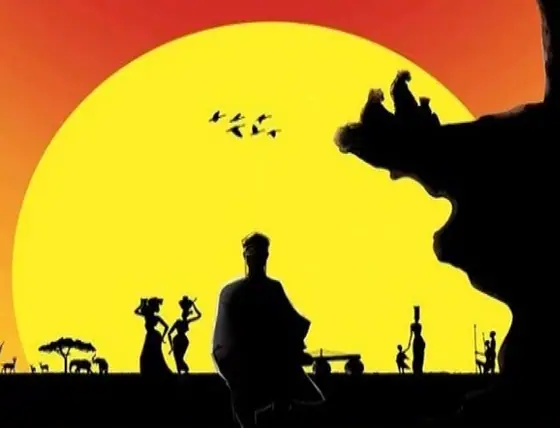
Photo: David Clode / Unsplash (Unsplash License)
ℹ️ This is an English translation of a Turkish oral folk tale. The regional dialect of the source text could not be fully preserved in translation. Read the Turkish original Büyülü Ağaç Kumonge (Bir Afrika Masalı).
The Magic Tree Kumonge is an African folk tale. It tells what happens to two siblings who go near a magic tree despite the warnings of their parents, who go off to the fields each day.
ℹ️ This is an English translation of a Turkish oral folk tale. The regional dialect of the source text could not be fully preserved in translation. Read the Turkish original here: Büyülü Ağaç Kumonge (Bir Afrika Masalı).
#### The Magic Tree Kumonge (An African Tale)
Once upon a time, in a village, there lived a man named Rachbokoane1 with his wife Machbakoane. They had two children, a son, Chabakoane, and a daughter, Takane.
The mother and father went to the fields every day. Chabakoane herded the animals, and Takane did the housework. Every day, as the mother and father left for the fields, they warned the children sternly:
"Never drink the water of the Kumonge tree beside the house. Only we grown-ups may drink it."
One day, when the mother and father had gone to work in the fields again, Chabakoane said to his sister:
"Takane, give me some of the water of the Kumonge tree."
"No, Chabakoane, only my mother and father may drink the water of the magic tree. Don't you know that?"
"Fine," said her brother, "then I won't take the animals out to pasture."
Hearing this, Takane fell silent. So as not to quarrel with her brother, she took an axe and made a small notch in the trunk of the tree. She collected the few drops of milk that oozed from the tree in a small bowl and gave it to her brother. But he found it too little and did not even touch the bowl. So Takane took the axe again and this time made a deeper notch. Milk gushed out of the tree in streams. Takane filled all the vessels in the house, but the flow of the milk would not stop. The milk gathering on the ground began to flow as a stream growing ever larger. It flowed and flowed and reached the field where the mother and father were working. Rachbokoane started in fear. At once they threw down their hoes and began to drink the magic milk. They nearly burst, but then the flow of the milk stopped. When they came home in the evening, the father asked:
"Who has drained the milk of the Kumonge tree?" "I did," answered Takane, and she told what had happened in her sorrowful song:
I took the milk of the Kumonge tree for Chabakoane, For the herdsman of our flocks — Otherwise he would not have taken the herds out to pasture. That is why I gave him the milk of Kumonge. Oh Kumonge, ah Kumonge
The father listened to his daughter in silence. Then he went outside, sacrificed two rams, and cooked them on the fire. He smeared the rams' hides thoroughly with the fat of the meat and rubbed red earth over them. When he had finished, he put on the rams' hides and gathered the tribe.
"I have to send Takane away from here."
"What are you saying?" said the people in astonishment. "Isn't Takane your only daughter?"
"I have to send her away2. She has drunk the milk of the magic tree Kumonge."
Taking Takane by the hand, he set out for the neighboring village where the cannibals lived. He was going to give his daughter to them to eat.
When they had left the village, they came upon some rabbits.
"Rachbokoane, where are you taking this beautiful girl?" they asked.
"Ask her, she can talk," said the father gruffly.
And the girl told what had happened in her sorrowful song:
"I took the milk of the Kumonge tree for Chabakoane, For the herdsman of our flocks — Otherwise he would not have taken the herds out to pasture. That is why I gave him the milk of Kumonge. My father was angry with me because of this, He is taking me to the cannibals. Oh Kumonge, ah Kumonge"
"The cannibals ought to kill you instead, cruel Rachbokoane!" cried the rabbits, and they went away.
They had gone a little farther when father and daughter met some deer this time.
"Rachbokoane, where are you taking this beautiful girl?" they asked.
"Ask her, she can talk," grumbled the father. And the girl told once more what had happened in her sorrowful song:
"I took the milk of the Kumonge tree for Chabakoane, For the herdsman of our flocks — Otherwise he would not have taken the herds out to pasture. That is why I gave him the milk of Kumonge. My father was angry with me because of this, He is taking me to the cannibals. Oh Kumonge, ah Kumonge"
"The cannibals ought to tear you to pieces instead, cruel Rachbokoane!" said the deer angrily, and they bounded away.
Father and daughter continued on their way. After a while some gazelles appeared on their path.
"Rachbokoane, where are you taking this beautiful girl?" they asked.
"Ask her, she can talk," muttered the father. And Takane sang her song again:
"I took the milk of the Kumonge tree for Chabakoane, For the herdsman of our flocks — Otherwise he would not have taken the herds out to pasture. That is why I gave him the milk of Kumonge. My father was angry with me because of this, He is taking me to the cannibals. Oh Kumonge, ah Kumonge"
"The cannibals ought to eat you, cruel Rachbokoane!" cried the gazelles, and they ran away. At last they came to the cannibals' village. Just as they were passing in front of the house of Masilo, the chief's son, the company sitting inside invited them in. They went in, showed Takane a place on an ox hide sagging in the middle, and then turned to the father and asked:
"Sir, where are you taking this beautiful girl?"
"Let her tell it herself, she can talk," said the father with a sour face. And Takane sang her sorrowful song for the last time.
Masilo, the chief's son, liked the girl very much.
"Do not be afraid, we no longer eat human flesh in this village. Only my father, the chief, is still a cannibal. It is best if your father first pays him a courtesy visit. You will see, dear Takane, nothing will happen to you," he comforted the girl.
Rachbokoane went to greet the chief. But because the chief could never get enough of human flesh, he did not even ask why he had come. Right there on the spot he ate Takane's father.
Masilo, the chief's son, liked Takane more and more. In the meantime Takane had fallen in love with Masilo. Things being so, the wedding was celebrated before long. The two lived in happiness. And when after a while their daughter was born, they were overjoyed, most of all Masilo. Everyone was very glad. Only Masilo's mother said, "Oh, my dear daughter, you will never have your fill of your child."
"Why not?" said Takane in fear.
"It is the custom in our village. Every mother must give the girl she bears to my cannibal husband. He gobbles them up at once."
"I will not give up my child," Takane cried out.
But Masilo commanded:
"Take the girl to my father. He will take care of the child."
"No, I will not give up my child. He will eat her as he ate my father. I would rather bury her with my own hands," said Takane resolutely, and she dashed out of the house. She ran to the river, to the cove where the reeds grew, and sat down at the water's edge and sobbed her heart out. Suddenly an old woman rose from the water. She looked at the wretched mother and asked:
"Why are you crying?"
"I have to drown my child. That is why I am crying. Otherwise my father-in-law, the cannibal, will eat her."
"I know," said the old woman, "the chief of your village eats all the little girls. But do not cry any more. Give your daughter to me, and I will look after her. Come to visit her at this time every year. I give your child the name Dilahloane3. It means 'the girl her father abandoned.'"
Takane handed her child over to the old woman. When she got home, she said that she had drowned the child in the cove. A year passed. A year later Takane came to the cove and sang her song:
"Granny, granny, give me my child, Dilahloane, Dilahloane, abandoned by her father"
At that moment the old woman came out of the water and gave her the child. Takane embraced her daughter with joy. But when evening came and it began to grow dark, the old woman took the child and vanished into the water. For years Takane went to the river. Happily she watched how her daughter grew and thrived. One day, when she met her daughter again at the cove, neither of them noticed that a young man gathering reeds had seen them. The young man ran straight to the village and told Masilo what he had seen. The chief's son understood at once that Takane had been meeting her daughter. When he returned home, he said to his wife:
"Tomorrow I will go to see my daughter."
"How can you see your daughter? You know very well that I drowned her in the river," said Takane in fear.
"No, I know very well that my daughter did not die," said Masilo, "she is alive and growing into a very beautiful girl."
"I knew nothing of this," said Takane, deeply uneasy.
"No, you know it very well too. You are only afraid that if I give my daughter to my father, he will eat her. But I promise you that nothing like that will happen." In the end Takane confessed everything in tears. She told how she had given her daughter to the old woman in the river to look after her, and how their daughter grew and thrived from year to year. Masilo was overjoyed. They both decided to ask for their daughter back. The next day Takane went to the river and called the old woman with her song:
"Granny, granny, give me my child, Dilahloane, Dilahloane, abandoned by her father"
The old woman came out of the water, but this time she was alone.
"Why have you come? You were here only yesterday. Can you see your daughter only one day a year, have you forgotten that?" she said angrily.
"No, I have not forgotten," said Takane, "but my husband Masilo has found out everything. We ask you to give our daughter back to us."
"Good," said the old woman, "I will give her back to you, but you must give me a herd of a thousand cattle."
Takane ran straight home and told Masilo what the old woman had said.
"If she wishes, I will give her two thousand cattle. If it were not for the old woman, our child would have died," Masilo replied. The next morning he sent word to all the villages and asked everyone to give the animals they had for her. When the animals had been gathered, he picked out the best bulls and cows among them. Then he went to the cove with Takane and the villagers. With a voice ringing with joy, Takane sang her song:
"Granny, granny, give me my child, Dilahloane, Dilahloane, abandoned by her father"
She had hardly finished her song when the sun went dark all at once, and out of the water came the old woman and Dilahloane. When they reached the shore, the darkness lifted and the sun shone bright and clear. Masilo and the villagers watched in amazement Dilahloane, whom her grandfather had wanted to eat and whom her mother had saved. They all went home together. Happiness filled the whole village. Even the cannibal grandfather was glad.
A few days later the chief's wife said to Masilo:
"Now the time has come. Take your wife and daughter and go to the neighboring village to visit Takane's family."
Masilo gladly agreed. Taking a large herd as Takane's bride-price, he went to the neighboring village to visit, with his family and the procession that accompanied them. Everyone in the village wept for joy, and a great feast was prepared in their honor.
Translator’s Notes
1. The Turkish text spells the characters' names inconsistently (for example "Rachbokoane," "Rachbakoane," and "Rachbokoa ne" for the father; "Chabakoane" and "Chabakoarıe" for the son; "Masilo" and "Maslo"). One spelling of each name is used throughout; the correct forms could not be verified. [verification needed] ↩
2. The Turkish word here is "gördermek," which does not exist as written; the context (the previous sentence has "yollamak," to send away) suggests "to send away." The meaning is uncertain. [verification needed] ↩
3. The Turkish text explains that the name Dilahloane means "the girl her father abandoned." In the songs the name appears as "Dilahloanemi," which may be a spelling variant or a misprint; this could not be verified. [verification needed] ↩
Source
From the collection Afrika Masalları (African Tales) by M. Kosova, translated into Turkish by Alev Kırım. Okyanus Yayınları, 1996.
Translated from the Turkish. The Turkish original is published in this archive as Büyülü Ağaç Kumonge (Bir Afrika Masalı).