The Padishah's Daughter and the Yörük's Son — A Muğla Folk Tale
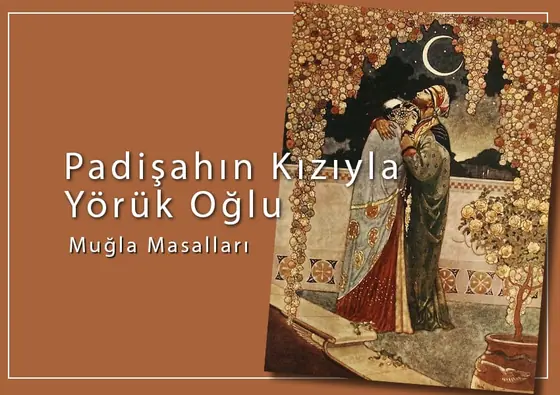
Photo: snap wander / Unsplash (Unsplash License)
ℹ️ This is an English translation of a Turkish oral folk tale. The regional dialect of the source text could not be fully preserved in translation. Read the Turkish original Padişahın Kızıyla Yörük Oğlu (Muğla Masalı)*.
The Padishah's Daughter and the Yörük's Son is a folk tale from the Muğla region; it tells of the events that begin when a padishah, out on a tour of his realm, meets a mysterious man in a graveyard.
ℹ️ This is an English translation of a Turkish oral folk tale. The regional dialect of the source text could not be fully preserved in translation. Read the Turkish original here: Padişahın Kızıyla Yörük Oğlu (Muğla Masalı).
Once there was, once there wasn't1. In the time of old, when the sieve was in the straw, there was a padishah in a certain land. One day the padishah set out on a tour of his realm. As he went along the road he came upon a graveyard. There was a man in the graveyard, and he would break one twig and add it to another, break another twig and add it to yet another2. This caught the padishah's attention. The padishah greeted the man, but the man did not return the greeting. He greeted him again, and again the man did not answer. He greeted him a third time, and the man turned, looked at him, and said:
"And peace be upon you." Then the padishah said:
"What is it, friend? What is this absent-mindedness, this agitation of yours? What are you doing? What are you busy with?"
The man said:
"I am joining twigs." The padishah said:
"To whom have you joined my daughter?" The man said:
"I have joined her to the son of a Yörük3 who lives in a tent at the top of such-and-such a mountain."
The padishah became alarmed and begged him to take it back: "Don't! Don't do it!" The man said:
"It is too late now. I have already joined them." Once the twigs had been joined, it was certain that the match would come to pass. The padishah gave an order:
"Kill the Yörük's baby son, the one lying in his cradle at the top of such-and-such a mountain."
The padishah's men set out at once. They found the child the padishah had named. They wounded and bruised the baby in the cradle and thrust a dagger into his back. They threw him into the channel4 of a mill. The child was swept along by the water of the channel and came rolling down until he lodged in the mill's oban5. The miller was grinding grain at the time. At the moment the child fell in, there was a splashing and rushing, and water was everywhere.
The miller said to the workers beside him:
"Oh, water everywhere again! Surely a tortoise6 has got into the water again, and it has rolled down here too. Go out and take a look."
They went out and looked, and what did they find but a child with a dagger in his back. They lifted the child out of the water at once and pulled the dagger from his back. They set the dagger down at one side of the mill. They tended his wound until it healed. A scar remained on the child's face. The miller had no children of his own, so he was overjoyed. They took the child in and raised him. The boy reached the age of adolescence and became a handsome young man, but the scar on his face never healed. In those days our padishah went out traveling once more. As he traveled, he stopped at the mill. They asked the miller for water.
The miller called out to the boy:
"My son, bring water for our guests."
The boy brought the water and they drank. Then they set off on the road again.
One of the padishah's men noticed the scar on the boy's face.
He said to the padishah: "My padishah, did you recognize that boy at all?" The padishah said, "I did not recognize him."
The padishah's man said:
"That boy is the Yörük's child from the top of such-and-such a mountain. He is the child we threw into the water to kill."
At this they turned back. They pressed the miller hard, and the miller told them the truth. The padishah and his men were about to take the boy away, but the miller did not want to let him go. Having no child of his own, he had adopted and raised him, and he did not want to part with him. The padishah did not listen to the miller; he took the boy and carried him off. He wrote a note, put it in the boy's pocket, and sent the boy to the palace. The note read: "Before I return from my tour, have this one's head struck off by the executioners." The Yörük's son could neither read nor write. The boy tucked the note into his pocket and went to his padishah's palace. As he drew near, he became very tired. He lay down in the shade of a tree, intending to rest a while and then hand the note to the people at the palace so that the order would be carried out. The boy did not know that the note was going to the executioner. The padishah's daughter had gone out for a stroll as well. As she walked, she saw a young man lying at the foot of the tree, handsome as the most beautiful in the world. The padishah's daughter was deeply moved by the young man. She began to watch the boy. As she watched, she noticed that the pocket of the boy's jacket had come open. There was a white piece of paper in the jacket pocket. The padishah's daughter became curious about this paper. Without waking the boy, she took the paper from his pocket and read it. She saw that it said, "Before I return from my tour, have this one's head struck off by the executioners," and she could not bear it; she tore up the paper and threw it away. The girl had already fallen in love with the boy. On another piece of paper she wrote, "Before I return, this boy is to be married to my daughter at once, and the wedding is to be held," and she stamped it with her father's seal and, again without waking the boy, put it in his jacket pocket. The boy, of course, knew nothing of any of this. After sleeping for a while he woke, went to the palace, and gave the note to the person it was meant for. They read the note and saw that it said, "Before I return, this boy is to be married to my daughter at once, and the wedding and everything is to be done." At once they made the preparations for the wedding and festivities. The wedding was held. Before the padishah returned, the padishah's daughter and the Yörük's son were married. The padishah's daughter became pregnant, and they had a baby boy. Months later word came that the padishah was returning from his tour. The girl took her husband by one side and the child by the arm on the other, and together with everyone they went out to welcome him. As the padishah approached, he looked and saw his daughter on one side and the Yörük's son on the other. The Yörük's son had not only escaped being killed but had married a padishah's daughter, and they even had a child. There they all were in front of him, waiting for him, every one of them.
The padishah said: "Alas, I have made a mistake. My daughter has married. This Yörük's son has not died."
He begged forgiveness of God. He understood that fate cannot be avoided. He put his own cloak from his back on his grandson, saying, "From now on the throne passes to you." However hard he tried, he could not separate his daughter from the Yörük's son. The Yörük's son became the padishah's son-in-law. Now they live together as happily as roses. They attained their wish; let us climb onto our bench7.
Translator’s Notes
1. "Bir varmış bir yokmuş" ("once there was, once there wasn't") is the standard opening formula of Turkish folk tales, roughly equivalent to "once upon a time." The following phrase, "evvel zaman içinde kalbur saman içinde" ("in the time of old, when the sieve was in the straw"), belongs to the same formula. ↩
2. "Çöp çatmak" literally means to join twigs. As the dialogue that follows shows, the man's act of joining twigs fixes a marriage match between the padishah's daughter and a boy, and once done it cannot be undone. ↩
3. The Yörüks are traditionally nomadic Turkic herders of the Anatolian mountains, who live in tents. The word is kept in its Turkish form. ↩
4. The source word is "arık" (here "arığı"), a dialect form for a water channel, such as a millrace. ↩
5. The source word "oban" (here "obanına") is a dialect word whose meaning is uncertain. From the context it probably refers to the opening or sluice through which water enters the mill, where the child lodged. [doğrulama gerekli] ↩
6. The source word "tosbağa" is a dialect form that most probably means "tortoise" (standard Turkish "kaplumbağa"). [doğrulama gerekli] ↩
7. "Onlar ermiş muradına biz çıkalım kerevetine" is a standard closing formula of Turkish folk tales, roughly "they attained their wish; let us climb onto our bench (kerevet, a wooden bench or sleeping platform)." ↩
Source
Narrator: Emine Akyol. Collected in Dalaman. From Muğla Masalları: Metin-İnceleme (Muğla Tales: Text and Analysis), a master's thesis by Esra Akyol, advisor Assoc. Prof. Dr. İbrahim Dilek, Ankara, 2010. Text edited by Ersin Şen.
Translated from the Turkish. The regional dialect of the original could not be fully preserved; this translation renders the story in standard English prose. The Turkish original is published in this archive as Padişahın Kızıyla Yörük Oğlu (Muğla Masalı).


