The Snake and the Man — A Tarsus Folk Tale
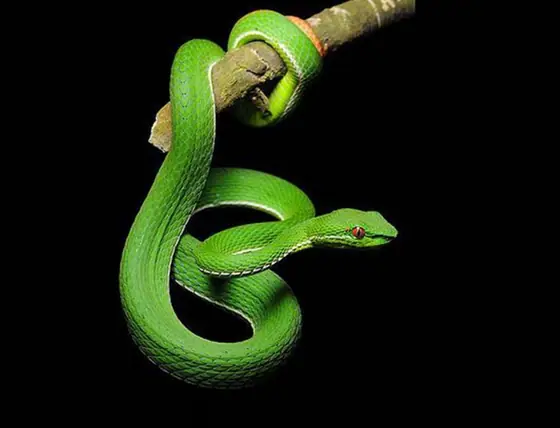
Photo: sippakorn yamkasikorn / Unsplash (Unsplash License)
ℹ️ This is an English translation of a Turkish oral folk tale. The regional dialect of the source text could not be fully preserved in translation. Read the Turkish original Yılan ve Adam (Tarsus Masalı).
The Snake and the Man is a folk tale from the Mersin/Tarsus region; it tells what passes between a man who sets out on the road and the snake he meets as he rests under a fig tree.
ℹ️ This is an English translation of a Turkish oral folk tale. The regional dialect of the source text could not be fully preserved in translation. Read the Turkish original here: Yılan ve Adam (Tarsus Masalı).
Once there was, once there wasn't1. In olden times, when the sieve was in the straw, when camels were town criers and fleas were barbers, one day a man, for no known reason, set out on the road. He went a little, he went a lot, over streams and hills he went straight on. He thought he had gone far, but in truth he had gone no farther than a barleycorn's length. When he grew tired of walking, he sat down under a fig tree. He was also quite hungry. He quickly lit a fire and filled his stomach. When his stomach was full, he could no longer keep his eyes open from weariness. He fell into a deep sleep. Meanwhile the fire he had lit began to wrap around the dry trunk of the tree. As it happened, there was a snake on one of the branches of the tree. The poor snake was caught in the middle of the fire. It hissed and hissed, and the man woke up. He saw that there was a snake on a branch of the tree. He said to himself:
"Let me do a good deed and save this poor creature from burning alive," and with a stick he lowered the snake from the burning branch to the ground.
Well, the snake was not about to feel grateful to the man for saving its life. It did what snakes do. As soon as it came to itself a little, it hissed:
"I have lit your kindling2, son of man. Now let me bite you and watch you die with delight," it said, and attacked the traveler.
Stunned, the poor man said in bewilderment:
"What are you doing, brother snake? I saved your life, and instead of thanking me you want to kill me."
The snake hissed again:
"What is it to me, brother, if you hadn't saved me? Did anyone tell you to save me? Now let me bite you, so that you come to your senses."
The man saw that the snake understood nothing of words. He thought of another remedy. He said: "Look, brother snake, snakes never do wrong to anyone, that is what the sons of man know about them. Come, let us ask three persons, and if they find you in the right, then you may bite me."
Thinking itself a great one, the snake hissed:
"Very well, I accept," it said. So the two of them set off together. Presently they met an ox grazing in a meadow. The snake called out to the ox:
"Brother ox, here is how it is. Tell me, should I bite this man?"
The ox bellowed bitterly: "One should not do good to the sons of man, brother snake. If I were in your place, I would have bitten him long ago." The snake was beside itself with joy, and they set off again. After going on a while longer, they came upon a jackal drinking at the edge of a stream. The snake hissed:
"Brother jackal, our situation is thus and so. This man saved me from burning. Tell me, may I bite this man?"
The jackal's mouth watered:
"What do you mean, brother snake, of course you may bite him. A poor wretch like me will have supper out of it too. Bite him at once, I say," he said.
The snake thanked the jackal. Turning to the man, it said:
"If one more person agrees with me, I will bite you on the spot."
The man hung his head helplessly, and they set off again. They went a little, they went a lot, they crossed streams and hills, but they did not meet a single soul. The snake grew tired of crawling. It said to the man: "Listen3, son of man, I am tired of this business now. Whatever the next one we meet says, you will do it at once. If yes, yes; if no, no. Enough, let us finish this matter. Everyone agrees with me anyway."
Well, they continued on their way. Then suddenly a fox appeared before them. The snake was very pleased with this. The poor man turned pale. The snake told the fox the situation point by point. The poor man began to tremble with fear. The cunning fox understood the matter at once. He said to the snake:
"Before I decide, I want to have a word with this son of man, but in private."
The fox went up to the man and asked quietly:
"Look, your life is at stake, let us settle this matter. I don't ask much, don't worry. Forty hens will do for your life. Do we have a deal?"
What could the poor man say, he had no choice:
"Very well. I will give you what you want," he said.
The fox, pretending as if he had heard the matter from the man as well, said:
"You have both told me the matter. As far as I can see, you are in the wrong here, brother snake. The man saved your life, and what are you doing to him! Without him you would have burned up in the fire. In my opinion you have no right at all to bite the son of man."
At this answer from the fox, the snake said:
"If that is so, I will not bite this man. That way we will be quits. Now, farewell to you both."
While the snake slithered away, winding and winding, the fox said to the man:
"I have done my duty. I saved your life. Now you keep your word, too, and bring me my forty hens."
Glad to be free, the man took the road to the village. He reached his home safe and sound. Remembering the promise he had given, he walked straight to the henhouse. When he reached the henhouse:
"Oh, come on... Have I nothing better to do than carry forty hens to a fox with my own hands? Did we sign a deed or something? I got off, so to hell with the fox. Am I going to bother with him?" he said.
He went home and settled down. But he could not find peace inside. He thought to himself:
"What if this fox comes and tells everyone that I did not keep my word, what shall I do?"
Thinking this, he grew uneasy. In the end he took a big sack and caught forty greyhounds in the village. He set off at once and reached the fox, out of breath.
The fox grinned:
"So you have come, my eyes were tired of watching the road."
The man said:
"I have come, I have come, brother fox, tell me, do you want the hens one by one, or shall I let them loose all at once?"
The greedy fox said:
"Let them all loose. It is more fun to catch them and eat them as they run."
Snickering, the man opened the sack and let all forty greyhounds loose on the fox at once. The fox, who had been expecting hens, saw the greyhounds before him and said:
"Shame on your humanity," and began to run.
The fox in front and the greyhounds behind, a chase began. When they vanished from sight, the man returned home joyfully. The fox crossed mountains and crossed hillsides, leapt over cliffs and flew over precipices, and in his panic lost his trail.
The fox, who had saved his life, said to himself:
"You will pay for this. If I am a fox, would I let this pass? So you do not keep your word; just see what I will do to your hens."
From that day on the fox preyed on the man's henhouse and never let go of it. The number of hens he carried off from the coop was beyond counting. But he has still not forgotten the pain of those forty hens. And so the tale ended.
Translator’s Notes
1. "Bir varmış bir yokmuş" ("once there was, once there wasn't") is the standard opening formula of Turkish folk tales, roughly equivalent to "once upon a time". The lines that follow ("when the sieve was in the straw, when camels were town criers and fleas were barbers") are a traditional nonsense-rhyme introduction. ↩
2. "Yaktım senin çıranı" (literally "I have burned your kindling") appears to be an idiomatic threat, roughly "I have you finished"; the exact meaning is uncertain. [verification needed] ↩
3. The source has "Dua el insanoğlu"; the word "dua el" is unclear and may be a dialect or typing variant of an exclamation such as "listen". Rendered as "Listen" on the strength of context. [verification needed] ↩
Source
Narrator: Fatma Belen.
Tarsus Masalları (Tarsus Folk Tales). Compiled by Öznur Kaya. Advisor: Prof. Dr. Ali Berat Alptekin. Konya, 2007.


