The Snake Padishah Şahmaran — A Tatar Folk Tale
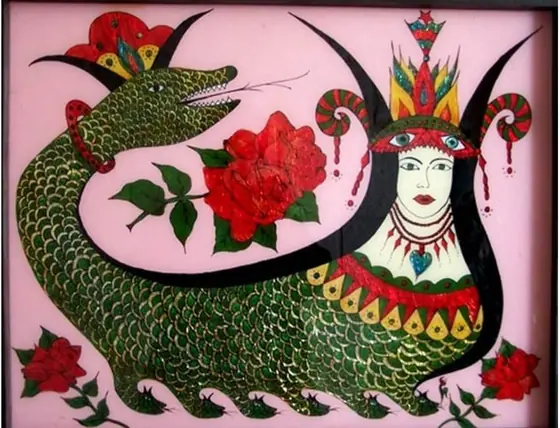
Photo: Nivedh P / Unsplash (Unsplash License)
ℹ️ This is an English translation of a Turkish oral folk tale. The regional dialect of the source text could not be fully preserved in translation. Read the Turkish original Yılan Padişahı Şahmaran (Tatar Masalı).
The Snake Padishah Şahmaran is a Tatar folk tale. It is the Tatar variant of the Şahmaran tales of Anatolia and concerns a poor young man who earns his living by cutting wood in the forest and selling it, and his encounter with the Şahmaran.
ℹ️ This is an English translation of a Turkish oral folk tale. The regional dialect of the source text could not be fully preserved in translation. Read the Turkish original here: Yılan Padişahı Şahmaran (Tatar Masalı).
THE SNAKE PADISHAH ŞAHMARAN
Long ago, a poor young man cut wood in the forest and sold it, and lived on that. He would take one load back, he would take two loads back. As he was carrying wood like this, one day he sat down at the foot of a thick tree. A poor man thinks a great deal. He was sitting there thinking. He was scratching the ground this way and that. Making a living was hard, and so he sat there thinking. As he sat thinking in this way and scratching at the earth, his hand touched something made of iron. He thought: "What kind of iron is this?" he said, and took hold of it and looked. He dug and dug, and in the end a large lid came out. "This belongs to bandits, it must be that the bandits put it here," he said. With stones and wood he pried at the lid, groaning, and opened it. When it was open he pushed in a stick. The stick touched something soft. He took it out and looked. "This is something like honey," he said. He rubbed his finger on the stick and licked it, and it was honey. He closed the lid and went back to his house.
When he got home he took a bucket. He went to the forest, filled the bucket with honey, and closed the lid again. He went to a village and sold the honey and earned very good money, and he gave up selling wood. Selling honey like this, he grew tired of going around, and at last he went to his neighbor and said:
"I have found something, don't tell anyone. Come, let's go," he said. They took basins, buckets, and pots and went.
When they arrived, his neighbor's eyes grew wide. They took out all the honey. They took it all and returned home. They did not even have places to put the honey. They shared the honey. In this way all of it was used up. And so both the neighbor and he stopped.
The poor young man's money ran out again. Even if there was no honey, he wanted to go there, thinking, "Wouldn't something turn up again?" One day he set out and went again. Putting his trust in God, he went down. "There must be some wisdom in this place," he said. When he went down, his hand touched a handle like a door handle. Having found the handle, he thought: "There must be something here." Putting his trust in God, he opened it. When it opened, what should he see but a place as bright as the world. Heaps and heaps of snakes were lying there. In the middle of the snakes, on something like a raised platform1, a white sheet. On it, a white snake. The snakes raised their heads to swallow him. At that moment the white snake wagged its tail as if to say, "Stop!" Beside that platform-like thing there was a white stone. It was shining, very imposing. The snakes went and licked that stone.
The poor young man was very hungry. Being hungry, he had no strength at all. He lay hungry for many days. The white snake wagged its tail at him to make him come over. Afraid to move, he sat there thinking, "If I move the snakes will swallow me." At that moment the white snake found speech:
"Young man, you sold the honey that was my food and profited from it. Then you came in here. You have a family, you have children, they will miss you," it said. "Now you cannot go back from here; you have to live here with us," it said.
He began to weep. The white snake said:
"Do not be afraid, I will not let them touch you," it said. "If you are hungry, come and lick this stone. You will not be hungry and you will not be thirsty," it said.
Though he was startled and afraid, he went and licked the white stone. When he licked it, both his thirst and his hunger went away.
One day he thought of his wife and children and wept. The white snake took pity on him. At that moment the young man said to the white snake:
"Who are you? You are not afraid of these snakes at all," he said. Now that his tongue had been loosened, he wanted to talk.
The white snake said:
"I am their padishah. My name is Şahmaran2," it said.
The young man said:
"Can you not get me out of here? Please! Listen to my words," he said.
The Şahmaran said:
"I would get you out, but you would cause my life to be cut short. You would tell people about me. Your telling people will be my end," it said.
The young man said:
"I will not tell," he said, swore an oath, begged, and said, "whatever I have seen here stays here."
When he said this, the Şahmaran ordered one of the snakes: "Go, take him out," it said, giving permission in its own way with its tail. To the young man it said: "If you tell people, my life will end; do not tell, I will be hurt."
"I will not tell," said the young man, begging and weeping. Then the young man clung to the snake's tail, and the snake took him and went up. Then the snake went back inside and disappeared. The young man returned to his house. His family wept and rejoiced. The one who had been lost for months had come back, and there was great happiness. The padishah of this city had fallen ill. The padishah consulted sorcerers. The sorcerers said:
"To be freed from this illness we need a person who has seen the Şahmaran."
The padishah said:
"What kind of thing is this Şahmaran? I do not know it," he said.
One sorcerer said:
"The Şahmaran is a white snake; the padishah of the snakes," he said.
The padishah said:
"Is there anyone who has seen it, how would we know it?"
"We know how. Have a bathhouse built. Make all the people go in. This is how we will know: the skin of a person who has seen the Şahmaran is mottled," said the sorcerers.
The padishah had a bathhouse built and had it heated. When it was finished, he invited the people to bathe free. Everyone came and eagerly entered the free bathhouse. The names of all the people who entered the bathhouse were written down. At the end, asking, "Did you enter the bathhouse?" they checked and began letting people in. They also brought the poor young man who had seen the Şahmaran.
"Did you enter the bathhouse?" they asked him.
"I did," he said.
They looked in the register:
"What is your name?" they asked.
"So-and-so," he said.
His name was not in the register. They took him to the bathhouse by force. He took off his shirt. His skin was black and white, spotted. The sorcerers understood, and asked:
"Why is your skin like this?"
"I have been like this since I was little," he said.
The sorcerer said:
"No, your skin has not been like this since you were little. You have seen Şahmaran, the padishah of the snakes, and your skin is mottled because of that," he said.
"No, I have seen neither the padishah of the snakes nor a snake," he said. He did not want the padishah of the snakes to be killed, and denied it.
Because he would not tell, the padishah had him thrown into prison. The young man lay in prison hungry for three days. Every day they came and asked:
"If you have seen it, tell," they said. He did not tell. When it did not work like this, they took him out of prison:
The sorcerer said:
"We need to stick needles into his skin one by one, then he will tell," he said.
They brought them. They stuck in one needle. He cried out very loudly. They stuck in the second. Again he cried out very loudly. He still did not tell. When they stuck in the third, he told:
"I saw it," he said.
"Why did you not tell until now?" said the sorcerer. "How many days did you spend in prison, or did you have to tell only now? Where did you see it?" he said.
The young man said:
"I saw it in the forest, and it ran away. I did not understand that it was a padishah," he said.
The sorcerer asked:
"In which forest, in what place?"
The poor young man said:
"I do not know in what place it was, it was long ago," he said.
The sorcerer said:
"Then, if you do not tell, we will squeeze your hand in the machine and pull out your nails with the mastika3," he said.
He still did not tell. They sat him at the machine and caught his hand in it. The machine tore off the nails of one of his hands. He did not tell. They caught his second hand. When the nail of the little finger of the young man was torn off:
"It is like this, like this, I saw it there, but I will not take people there; I will go and get it myself and come back," he says. He takes a gold plate and goes to fetch it politely. When he reaches the forest, he opens the lid. He does not go down into it now; from above he shouts in a loud voice:
"Şahmaran!"
The Şahmaran, hearing his voice, slowly comes out, like water flowing:
"O young man, was this your pledge and your word? Until this day we were passing our lives. I trusted you, and now my life is over," it says.
Seeing the Şahmaran, the young man weeps:
"I was not telling at all. I lay three days in prison. They stuck needles in my skin. When they tore out the nails of one of my hands, I did not tell. The pain of death is heavy; when they were tearing the nails of my second hand, I could not bear it and told," he says.
The Şahmaran says:
"Very well, it is the reason my life is ending," it says. "I am not hurt; you have suffered very great torments for me," it says. Then the Şahmaran begins to give the young man advice: "Now you will take me to be cooked. They will order you to cook me," it says. "When you return, cut me into three pieces. They will order you to put aside the water that boils first, and they will say, 'Drink it yourself first,'" it says. "They will order you to put aside the second boiling as well," it says. "They will order you to put aside the third boiling as well," it says. "Put them aside separately in this way. But swap the places of the first boiling and the last boiling. Say that the last boiling was the first," it says.
The young man takes the Şahmaran and returns. They tell him to cook the Şahmaran. The young man cuts the Şahmaran into three. They give him three bowls and tell him to boil it three times. The young man takes the first boiling and puts it aside; he takes the second boiling and puts it aside; he takes the third boiling and puts it aside. Then he immediately swaps the places of the first boiling and the last boiling.
The sorcerer comes:
"Have you boiled it?" he says.
"I have boiled it," he says.
"Which one boiled first?" he says.
"Here," he says, and points.
"Which one is the second boiling?" he says.
"Here, this one," he says.
The young man had swapped their places as the snake had told him, and put them down. He himself still did not know what it was for.
"Here, I will drink this one, and you will drink this one," says the sorcerer. He makes the sorcerer drink the first, calling it the third. The sorcerer's belly bursts on the spot. The young man himself drinks the third boiling, and begins to understand the speech of the pieces of the Şahmaran boiling in the cauldron.
The pieces of the Şahmaran in the cauldron speak. The head piece says:
"If he eats me, the padishah's head will be set right," it says.
The belly piece says:
"If he eats me, his insides will be set right," it says.
The tail piece says:
"If he eats me, his feet will be set right," it says.
The sorcerer had wanted to drink this third boiling in order to know the language of horses, cattle, and all animals. Now this poor young man understood the language of all animals.
First they fed the Şahmaran's head to the padishah, and his head was set right. Then they fed him the middle part, and his insides were set right. They fed him the tail, and his feet became sound. The padishah became stronger than before.
In the end, the poor young man became a physician. He learned to cure all diseases, and he learned the languages of animals too.
Translator’s Notes
1. A "kerevet" is a raised wooden platform or divan, used for sitting or sleeping. ↩
2. The Şahmaran is a figure of Anatolian and Middle Eastern folklore, usually described as a being that is half woman and half snake and as the queen or ruler of snakes. In this Tatar variant the Şahmaran is described only as a white snake and padishah of the snakes, and the pronoun "it" is used here because Turkish does not mark gender. ↩
3. The source reads "makine ile elini sıkarız, mastika ile tırnaklarını sökeriz" and later "makine." A "makine" (machine) and a "mastika" (ordinarily "mastic," a resin) here seem to be instruments of torture, perhaps a press and pincers, but the exact meaning could not be determined. They are rendered literally. [verification needed] ↩
Source
Mustafa Gültekin, Tataristan Masalları Üzerine Bir Araştırma ("A Study on the Tales of Tatarstan"), doctoral thesis, page 1182. İzmir, 2010. Advisor: Prof. Dr. Metin Ekici.


