The Twelve Brothers — A German Folk Tale
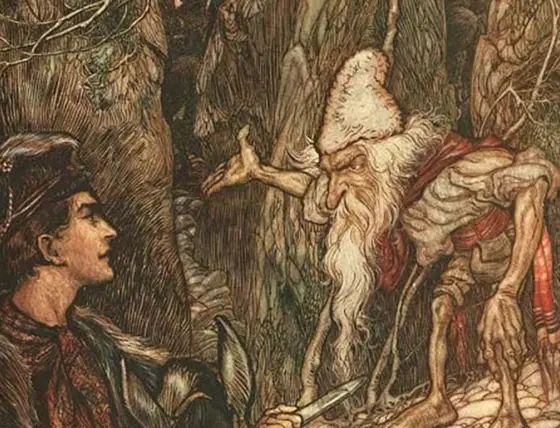
Photo: Peter Herrmann / Unsplash (Unsplash License)
ℹ️ This is an English translation of a Turkish oral folk tale. The regional dialect of the source text could not be fully preserved in translation. Read the Turkish original On İki Kardeş (Grimm Masalları).
The Twelve Brothers is a German folk tale collected by the Brothers Grimm; it deals with the events that begin when a king with twelve sons considers sacrificing them if his thirteenth child turns out to be a girl.
ℹ️ This is an English translation of a Turkish oral folk tale. The regional dialect of the source text could not be fully preserved in translation. Read the Turkish original here: On İki Kardeş (Grimm Masalları).
#### THE TWELVE BROTHERS (Grimm Tales)
Once upon a time there was a king and a queen. They got on very well with each other. They had twelve children, and all of them were boys. One day the king said to his wife:
"If the thirteenth child you bear is a girl, these twelve boys must die. Then the girl will become very rich, and the kingdom will be left to her alone."
He actually had twelve coffins made. They were filled with plane shavings. A death pillow was placed in each one. The king had the coffins put in a locked room. Then he gave the key to the queen. He warned her not to tell this secret to anyone.
The mother sat all day long shedding tears. Benjamin, her youngest son, who was always at the queen's side, asked his mother:
"Dear Mother, why are you so sad?"
His mother said:
"My dear child, I cannot tell you why."
The boy gave his mother no peace until the woman opened the room and showed him the twelve coffins, all ready. Then the woman said:
"My dear Benjamin, your father had these coffins made for you and your brothers. If I bear a girl, all of you will be killed. You will be put into them and buried."
The woman wept without stopping as she told him this. To soothe his mother's sorrow, the little boy said:
"Dear Mother, don't cry! We will look after ourselves. We will run away from here."
The woman said:
"Go to the forest with your brothers. Let one of you always sit at the top of the tallest tree, keeping watch. Let him watch the tower of the palace. If I bear a boy, I will have a white flag raised. When you see it, you may come back here. But if I have a girl, I will have a red flag raised. Then do not stay here at all, but run away with all your strength and save yourselves. May God be your helper! Every night I will rise and plead for you. I will beg God that you may find a warm hearth in winter, and that you may not fall ill from the heat in summer!"
After the woman had prayed good prayers for them, the twelve brothers went to the forest. Taking turns, they climbed a tall oak tree and began to watch the palace tower.
Eleven days went by. That day it was Benjamin's turn on watch. He saw a flag fluttering on the tower. The color of the flag was not white but red. It was a sign that they all had to die. When his brothers heard this, they were deeply troubled:
"We all have to die because of a girl, do we?.. Then we swear an oath to take our revenge: wherever we find a girl, we will shed her red blood!..." they said.
After swearing this oath they plunged into the forest, and when they reached its darkest part they found an enchanted, empty hut:
"We will live here!" they said. Turning to their brother Benjamin, they said:
"Benjamin, you are both the youngest and the weakest among us. For that reason you will stay at home and do the housework. We will go out and bring back food!"
From that day on the other boys went to the forest and shot hares, wild deer, birds, and pigeons, and brought Benjamin many kinds of food they had gathered. Benjamin cooked this food well, and they all filled their bellies. So the twelve brothers lived in this hut for ten whole years, but the time did not seem very long to them.
Meanwhile the little girl the queen had borne grew up and became a good-hearted, beautiful girl. She had a golden star in the middle of her forehead. On one of the days when the great washing was done at home, the girl saw twelve men's shirts among the laundry and asked her mother:
"Whose are these twelve shirts?.. If I said my father's, they would be too small for him."
Her mother sighed and said:
"My dear child, these shirts belong to your twelve brothers."
The girl asked:
"Where are these twelve brothers of mine? I have never heard their names mentioned until today."
The mother said:
"Only God knows where they are. I think they are wandering about in some corner of the world!"
She took her daughter by the hand and led her away. She unlocked the door. Pointing to the twelve ready-made coffins, she said:
"These coffins were made for your brothers, but they ran away in secret before you were even born," and she told her everything that had happened.
Then the girl said:
"Dear Mother, don't cry! I will go and look for my brothers," she said.
The girl took the twelve shirts and set out. She went straight into the great forest. After traveling through the forest all day, toward evening she reached the enchanted hut. She went in and met a little boy. The boy asked:
"Where do you come from? Where are you going?"
He was amazed to see that the girl was very beautiful, that she wore palace clothes, and that a star shone on her forehead.
The girl said:
"I am a princess. I am looking for my twelve brothers. Until I find them, I will go even to the other end of the world," and she showed the boy her brothers' twelve shirts.
When Benjamin saw them, he understood that the girl was his own sister:
"I am Benjamin, your youngest brother," he said.
The girl began to weep for joy. Benjamin wept too. They embraced and kissed each other with great love. Then Benjamin said:
"Dear sister, we must be careful. We swore among ourselves that we would kill every girl who came our way. For it was because of a girl that we had to leave our kingdom." The girl said:
"If I can save my twelve brothers, I am ready to die gladly!" The boy said:
"No, you must not die. Hide under that barrel until my brothers come. When they come, I will come to an agreement with them."
The girl did as her brother said. At night the others returned from the hunt, and their meal was ready. As they sat down to eat, they asked:
"What's new?"
Benjamin said:
"Don't you know anything?"
"No!"
"You were in the forest. I stayed at home. And yet I know much more than you."
His brothers shouted:
"Come on, tell us..."
Benjamin asked:
"Will you promise not to kill the first girl we meet?" His brothers said:
"All right, Benjamin, we forgive her, but tell us!" Then the boy said:
"Our sister is here," and when he lifted the barrel, the princess came out in her fine clothes, with the star on her forehead. This girl was very beautiful, graceful, and delicate. When they saw her they were all delighted. They threw their arms around her neck and kissed her. They loved the girl with all their hearts.
From that day on the girl stayed at home with Benjamin. She helped him. The other eleven brothers went to the forest every day and brought back deer, birds, and pigeons to eat. Benjamin and the girl cooked them. The girl would find and bring firewood for cooking. She gathered vegetables and herbs and put the pots on the hearth. When the eleven came back, the meal was ready. In addition, the girl wiped and swept the inside of the house, put the things in order, and made the beds spotless. For this reason her brothers loved her very much. They lived together sweetly.
One day the two of them again cooked a fine meal at home. When all the brothers had gathered, they sat down at the table, ate, and drank. They were all in good spirits. In front of the enchanted hut where they lived there was a small garden. Twelve lilies bloomed in this garden. To please her brothers, the girl picked these twelve lilies. She meant to give each of them one of these flowers after the meal. But as soon as she picked them, the twelve brothers turned into crows and flew away into the forest. The hut and the garden where they had lived also vanished. The poor girl was left all alone in this deserted forest. While she was looking around in bewilderment, an old woman appeared beside her.
The woman said:
"My child, what have you done? Why did you not leave the twelve white flowers where they were? They were your brothers. Now they have taken the shape of crows, and from now on they will always be crows!"
The girl said, weeping:
"Is there no way to save them?"
The old woman said:
"No," she said. "Although there is one remedy in the world, even that you cannot manage. To save your brothers you must remain mute for seven whole years. In those seven years you must neither speak nor laugh. If you say a single word in the meantime, all your labor will be wasted, and because of that single word your brothers will die at once."
Hearing this, the girl made up her mind:
"I know what I will do to save my brothers," she said. She set out, found a tall tree, climbed it, and sat down. She began to knit. She neither spoke nor laughed.
As time went by... One day a king was hunting in the forest. The king had a large greyhound. The dog ran toward the tree where the girl was. It began to jump about it, barking and howling. Then the king came to the tree and saw the princess with the golden star shining on her forehead. He was so taken with the girl's beauty that he called to her at once and asked whether she would like to be his wife. The girl gave no reply but nodded her head slightly. Then the king climbed the tree and brought the girl down. He put her on his horse and took her to his home. The wedding of the king and the girl was celebrated with great splendor. But the bride neither laughed nor spoke. After the king and the girl had spent several happy years, the king's wicked-hearted mother began to slander and defame the young queen. One day she said to her son:
"This bride is an immoral, ill-bred beggar girl. How can we tell that there is no hidden wickedness in her? Let us say she is mute and cannot speak. We understand that, but she could at least laugh. A person who does not laugh has a heart full of malice."
At first the king did not want to believe this, but the old woman repeated these words so many times and slandered the poor girl so much that in the end the king was taken in by them, and he decided to have the girl put to death.
A great fire was lit in the courtyard of the palace. They were going to burn the girl in this fire. The king looked on with tearful eyes from a window of the palace, because he still loved her. They tied the girl to the stake in the middle of the fire. Just as the fire was setting her clothes alight, the seventh year was also completed. Suddenly the rustling of wings was heard in the air. Twelve crows came and landed on the ground. As soon as their feet touched the earth, they became twelve men. The boys ran and scattered and put out the fire. They rescued their dear sister. They embraced and kissed her. When the girl opened her mouth and began to speak, she told the king why she had been mute and why she had not laughed. The king was overjoyed when he learned that the girl was innocent. After that they all lived together in peace and harmony until they died.
The wicked-hearted stepmother1 was brought before the court. They put the woman into a barrel full of olive oil and poisonous snakes. She moaned and gave up her life inside it.
Translator’s Notes
1. The Turkish text has called this woman the king's mother ("kralın kötü yürekli annesi") up to this point and only here calls her "üvey ana" (stepmother). The source is inconsistent, and the wording is kept as it stands. ↩
Source
Turkish source text: Grimm Masalları, MEB German Classics Series, as credited at the end of the Turkish text. This English version was translated from that Turkish text.


