Two Brothers in Semerkant — An İspir Folk Tale
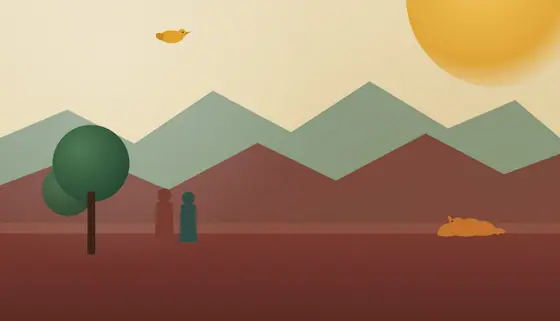
Photo: Yiran Ji / Unsplash (Unsplash License)
ℹ️ This is an English translation of a Turkish oral folk tale. The regional dialect of the source text could not be fully preserved in translation. Read the Turkish original Semerkant'ta İkki Gardaş — İspir/Pazaryolu (Ambaralan Köyü) Masalı.
This tale is a folk tale collected from villages in the İspir and Pazaryolu districts of Erzurum. Told by Hünkar Aygün, born in 1945, from the village of Ambaralan (later attached to the district of Pazaryolu), it was recorded in the master's thesis "İspir ve Pazaryolu Yöresi Masalları (Metin ve İncelemeler)" (Tales of the İspir and Pazaryolu Region: Texts and Studies), which Ferit Ayyıldız prepared at Atatürk University in 2001.
ℹ️ This is an English translation of a Turkish oral folk tale. The regional dialect of the source text could not be fully preserved in translation. Read the Turkish original here: Semerkant'ta İkki Gardaş — İspir/Pazaryolu (Ambaralan Köyü) Masalı.
Once there was, once there wasn't1. God's days were many. In a city called Semerkant2 there lived two brothers. One of them was a jeweler. He was very rich. The other made his living as a shepherd. The jeweler had no children at all. The poor brother had two sons.
While the poor brother's boys were playing, they saw a golden bird in a tree. They caught it and brought it home. As it happened, the jeweler had heard of this bird before. He said to his brother:
"Give me this bird, and I will pay you for it."
Because the poor brother did not know what the bird was, he took it and gave it to his brother. The jeweler quickly closed his shop and hurried home. He said to his wife:
"Slaughter this bird, but cook it without wasting any part of it. I will come in the evening and eat it."
While the woman was cooking the bird, the poor brother's children came and ate the bird's heart and kidneys3. The woman looked and saw that the heart and kidneys were missing. In a hurry she went and slaughtered a chicken, brought its heart and kidneys, and put them into the dish. When her husband came in the evening, she set it in front of him. Her husband said:
"You haven't wasted any part of it, have you?" And the woman said:
"No."
The jeweler ate his fill and went straight to bed to sleep. In the morning he was in a hurry. When morning came, he at once slipped his hand under the pillow and felt for gold. But there was none. Trying once more, he lifted the pillow and looked. Truly, there was nothing. He called to his wife at once:
"Woman, did you lose any part of it?" The woman said:
"No." she said. "Everything was in its place." Out of fear.
For the jeweler was a very ill-tempered and wicked man. While the jeweler raged and wailed in this way, on the other side, the poor man's children woke up in the morning to find two gold pieces under their pillow.
As it turned out, one had to eat the bird's heart and kidneys. This went on in the same way for several days. When the poor brother took the gold pieces and carried them to the jeweler, the jeweler understood what had happened. He said to his brother:
"You must get rid of those children at once! Otherwise I will kill you and your children."
When the poor man heard this, he was very afraid. His brother was truly the kind of man who would do it. He came home and told the matter to his wife. The woman, with tears of blood in her eyes, prepared the children's provisions and sent them with their father.
They walked a little, they walked a great deal. They crossed streams and hills. They grew very tired. The children said to their father:
"Father, please, let us rest a little." Naturally the children knew nothing of what was going on. They thought they were going to cut wood. When they came to a stream, their father had them sit down. He took out the provisions bag. While the children ate, he watched them and wept inside. The children said:
"Father, why aren't you eating?"
"No, my children, you eat. I have no appetite."
The man was thinking how he would leave his children on this mountaintop. When the children had filled their bellies, they grew sleepy. They lay down and fell asleep. The man saw that the children were asleep. He took a few gold pieces from his pocket and put them in their pockets. He kissed both of them to his heart's content on their eyes and left.
The children, however long or short they had slept, woke up to find that it had grown dark. There was no one at all around. They said to each other:
"Our father has surely gone to cut wood. He will come back in a little while."
But a good deal of time passed. No one came and no one went. The elder of the brothers said:
"Come, my brother, let us lie down at the foot of this tree, and when morning comes we will surely go somewhere."
They lay down and fell asleep. After a while they were woken by the sound of bells. They looked and saw a flock of sheep. While they were looking about in bewilderment, the shepherd came up to them. The boys did not yet realize what had happened. The shepherd was astonished too. What business could two children have on the top of this mountain at this hour? He went up to them and asked:
"What are you doing here?"
The children told what had happened to them, but they did not believe that their father had left them there.
"Our father will come in the evening and take us," they said.
The shepherd sensed something but did not say it to them. He said:
"Come along with me now, and your father will come and find you."
His intention was to take them and bring them to his house. In fact the shepherd had no children either. They wandered about together until evening. When evening came, he took them to his house.
Years passed. Each of them became a young man. One day they said to the shepherd:
"You have been a father to us. You have raised us. It is enough that we have been a burden to you. Give us leave, and let us go and wander the world. Let us see what there is and what there isn't."
Since two gold pieces came out from under their pillow every day, the shepherd's circumstances had improved. He no longer worked as a shepherd. The shepherd and his wife loved them like their own sons. But they said nothing. They prepared the young men's provisions for the road and sent them off the next day. As they were saying their farewells, the shepherd said:
"One of you go east and one west; then come back and meet again at the same place. Take this dagger as well. Stick it into a tree at the place where you part. If something happens to you, the dagger will rust. If not, it will shine. If part of it is rusty and part of it shines, understand that one of you is in trouble, and go to help." So saying, he kissed their eyes and sent them off.
They took the dagger and their provisions and set out. On the way they found two foxes, two hares, two bears, and two lion cubs, and took them along. They walked on until they came to a fork in the road. They stuck the dagger into a tree, bade each other farewell, divided the animals, and parted. One went east and the other west.
Now let us give news of the one who went east. He walked and walked until he came upon an inn. He saw that everything was decked out with black flags. No one's throat would let a bite pass. He asked the innkeeper for water; the innkeeper brought stale water. He looked and saw that it smelled bad. He asked the innkeeper what was going on there. The innkeeper said:
"We can get water here only once a month. Today it is the turn of the padishah's daughter. That is why the city is decked out with black flags."
The young man said to the innkeeper:
"Will you take me to that dev4?"
The innkeeper took the young man and they went out with the water vessels. The young man saw that everyone was waiting with a water vessel in his hand, and the girl as well. The dev was going to eat the girl so that he would let them take water. He said to those who had brought the girl:
"Give the girl to me. I will take her."
The young man took the girl and went to the dev. The dev opened his mouth to swallow the girl, but the young man put the girl behind him, drew his sword, and cut off the dev's head. The people rushed to that blood-stained water. He said to the girl:
"Now go to your father. I am going to sleep. I will come later."
As they parted, the girl took a handkerchief from her bosom and gave it to him. The girl went to the palace, and the young man went to the inn where he was staying and lay down. Before lying down, he said to the lion:
"I am going to sleep; you do not sleep."
The lion said to the bear, the bear said to the fox, the fox said to the hare; but the hare grew sleepy, and they all fell asleep. On the other side, the padishah's men had been watching him. As soon as he slept, they would cut off his head and tell the padishah:
"We killed the dev." They would receive the reward. Whatever the case, after the young man, the animals lay down too. The padishah's men took the chance, came, and cut off the young man's head.
Let us come to the padishah's daughter. The girl went to the palace and began to wait for the young man. She waited and waited, but no one came. Meanwhile the padishah's men came into the padishah's presence and said:
"My padishah, the chief vizier killed the dev."
As it happened, this chief vizier had his eye on the padishah's daughter. But he had not been able to say so for fear of the padishah. Seeing a good opportunity, he had had this done. The padishah was no longer angry with his vizier, because his daughter had been saved. He even gave the order for the wedding preparations to begin. He sent word to all the surrounding padishahs. He invited them.
Now let us come to the young man. Before the others woke, the hare woke first. It saw that the young man's head was lying on the ground. It called the fox; the fox called the bear, and the bear called the lion, saying, "Now what shall we do?" While they were thinking, sunk in gloom, two doves perched on the window of the inn. They began to talk with each other:
"Poor brave fellow. It was we who caused this, but if only these creatures, though they understand our language, would take the feather5 we left and rub it on the young man's neck." And they flew off.
As it happened, the lion understood the language of all creatures. At once he said to the fox:
"Run and bring me the feather that those birds left."
The fox went and brought the birds' wing and gave it to the lion. The lion took the young man's head from the ground, set it on top of his body, and stroked it with the wing.
As they stroked, the young man began to come to himself. He woke completely. The animals embraced each other with joy. The young man said:
"Oof, how I have slept!"
When they went outside, they saw that the whole place was decorated with red flags. Drums were beaten, zurnas played, and dancers danced. It was as if there were a holiday. The young man said to the innkeeper:
"What is going on here? What is this celebration?"
The innkeeper said:
"You know nothing about it. You have been sleeping for five days. Today the padishah is marrying off his daughter. The chief vizier is being given the padishah's daughter because he saved her from the dev."
So it was6. The young man took the handkerchief the girl had given him from his pocket, tied it around the hare's neck, and sent it to the padishah's daughter. When the padishah's daughter saw it, she was overjoyed. For her heart was with the young man. But since he had not come out into the square, she had not been able to object. She said to the hare:
"Where is your master?"
The hare told her what had happened. The girl at once asked for a set of clothes for the young man. She gave them to the hare and sent it off:
"Go at once and tell him to come here. Otherwise my father will give me to the chief vizier."
The hare took the clothes and, without showing itself to anyone, came to its master. It told him what had happened. The young man at once put on the clothes and went to the palace. When he came to the palace, the ceremony was ready. All the invited guests were presenting their gifts. The padishah sat with his daughter on one side and his chief vizier on the other. When the young man walked straight forward toward them, the guards tried to stop him. The padishah's daughter saw this commotion. In any case her eyes had been on the road, waiting for the young man. She saw that the young man who had saved her was coming. She shouted at the guards:
"Let him come. He is my guest."
She told her father what had happened. The chief vizier, too, told the truth. The padishah announced it to his guests. He gave his daughter to this young man.
Whatever the case, they went to bed that evening. In the morning the young man said to his wife:
"We are two brothers. We were once parted." He told her what had happened. The girl said:
"All right, go. But you will come back, won't you?"
"I will come back," said the young man. They took their leave of each other. The young man took his animals and came to the place where they had parted. He went to the tree and saw that his brother had not yet come. His side of the dagger had rusted a little. But not all of it. From there he set off on the road his brother had taken.
He walked a little, he walked a great deal, and evening came. He said to himself:
"Let me lie down tonight, and tomorrow at first light I will continue on my way." Ahead he saw a cave. He headed toward it. As he approached the mouth of the cave, he saw that all around lay stones in the shapes of animals and people. Curiosity took him and he wanted to go inside. A voice of an old woman came from within. He looked and saw that an old, dry, ugly hag was sitting by the fire, stirring it. As the young man went in, she cried out:
"Young man, take this stick and strike each of those animals with it, so that they do not snatch me. I am afraid of them."
When the young man took the stick and struck his animals, all of them turned to stone at once. But just as that witch of an old woman was about to strike the young man with her own stick, the young man seized the stick from her hand. He understood that the stones outside were his brother and his brother's animals:
"Quick, what have you done to my brother?" he said to the witch.
The witch hag said:
"Stop, son of man, do not strike me. Take this stick and strike each of the stones you saw outside, and they will come to life."
The young man went outside and touched each of them with the stick. One by one they came back to life. He embraced his brother, and they kissed. The animals played with each other. He told his brother what had happened to him. He took him and went to his wife's city.
He took him to meet his wife and the padishah. They gave a girl to him too. They married him off as well.
They lived happily, eating and drinking, until they went into the ground.
Translator’s Notes
1. "Bi varmiş, bi yohmiş" ("once there was, once there wasn't") is the standard opening formula of Turkish folk tales, roughly equivalent to "once upon a time"; the phrase that follows, "Allah'ın güni çohmiş" (literally "God's days were many"), is its usual companion and a variant of "Allah'ın kulu çokmuş" ("God's servants were many"). ↩
2. Semerkant is the Turkish form of Samarkand, the city in present-day Uzbekistan. ↩
3. The source word "börbeh" (plural "börbehler") is a dialect form that most probably means "kidney" (standard Turkish "böbrek"). In the tale-type known internationally, the magic bird's heart and liver or kidneys are what is eaten. [verification needed] ↩
4. A dev is a demon or ogre figure from the Persian-influenced storytelling tradition, distinct from the giants of European folklore. ↩
5. "telek" in "pirahduğumuz telegi" is an uncertain dialect word. Because the fox later brings "the birds' wing," "feather" is the most probable sense. [verification needed] ↩
6. The source reads "Ele mi ele," a dialect expression whose exact meaning is unclear; it is rendered as "So it was." [verification needed] ↩
Source
Ayyıldız, Ferit. İspir ve Pazaryolu Yöresi Masalları (Metin ve İncelemeler). Master's thesis, Atatürk University, Institute of Social Sciences, Department of Turkish Language and Literature. Advisor: Prof. Dr. Bilge Seyidoğlu. Erzurum, 2001 (YÖK National Thesis Center, Thesis No. 109368), vol. 2, pp. 187-192. Narrator: Hünkar Aygün (İspir / Ambaralan village, later attached to the district of Pazaryolu; born 1945; not literate; housewife). Tale type: EB 174-175, AaTh 567.
The Turkish text is given in the local dialect of the İspir and Pazaryolu area, with distinctive spellings and grammar (for example "gardaş" for "kardeş," "guş" for "kuş," "yoh" for "yok," and verb endings such as "-ir" for "-er/-iyor"); this translation renders the story in standard English prose rather than attempting an equivalent English dialect. The archive's Turkish file marks the narrator, author, and place of collection as awaiting verification. The Turkish original is published in this archive as Semerkant'ta İkki Gardaş — İspir/Pazaryolu (Ambaralan Köyü) Masalı.


